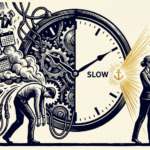
There is a lie that every developer has told themselves at least once. It usually happens at 4:45 PM on a Friday. You are staring at a complex function that needs to be written properly, but the deadline is looming. So, you type the most dangerous characters in the programming world: // TODO: Refactor this later.
You push the code. The feature works. You feel like a genius because you beat the clock. But deep down, you know the truth: “Later” is not a time on the calendar. “Later” is a mythical place where unicorns live and developers have infinite free time.
By skipping the proper structure to “ship fast,” you haven’t saved time; you have taken out a loan. This is Technical Debt. And just like a predatory credit card, the interest rate is exorbitant. Every time you touch that code in the future, it will take twice as long to understand, twice as long to debug, and twice as long to extend. You are paying compound interest on a decision you made three months ago.
The Anatomy of Spaghetti
When this habit becomes a culture, you end up with “Spaghetti Code.” The term is funny, but the reality is tragic. It describes a system where everything is so tangled that you cannot touch one part without breaking another.
Imagine you want to change the color of a button on the checkout page. In a clean architecture, this takes five minutes. In a spaghetti architecture, you change the button, and for some reason, the user’s password resets and the inventory database crashes. You pull one noodle, and the meatball falls off the table.
This chaos rarely starts in the code editor. A chaotic Backlog is the father of Spaghetti Code.
If your project management is messy, your code will be messy. When requirements are vague, developers write defensive, convoluted logic to handle the ambiguity. When priorities shift every six hours, the architecture becomes a patch quilt of half-finished ideas. A developer cannot build a skyscraper if the blueprints are drawn on a napkin that keeps getting coffee spilled on it.
Frontend vs. Backend
The most expensive disasters happen in the gap between the Frontend and the Backend. This is where the lack of planning turns into a crime scene.
Consider a scenario where the Frontend team starts building a user profile page based on a mock-up. They assume the API will send the user’s data in a specific format. Meanwhile, the Backend team is building the API based on a database schema that looks completely different.
They work in isolation for two weeks. When they finally try to connect the two (integration), nothing works. The data types don’t match. The endpoints are wrong. The logic is incompatible.
Now, instead of shipping, they have to tear down two weeks of work and start over. This isn’t a coding error; it’s a visualization error. The dependencies were not visible before the first line of code was written.
Architecture Before keystrokes
To stop paying the high interest of technical debt, you must treat your Backlog like a blueprint, not a wish list. You need to identify the dependencies before the sprint begins.
You must be able to see that Ticket A (Backend API) blocks Ticket B (Frontend UI). When you visualize this on a board, you prevent the bottleneck. You allow the backend engineer to lay the foundation before the frontend engineer tries to hang the curtains.
Coding is the easy part. Knowing what to code and in what order is the hard part. Stop building traps for your future self.
Reduce your technical debt and organize your sprints with absolute clarity using the Kanban and List views of GGyess WorkSuite.