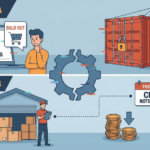
The most dangerous optical illusion in business is the “Green Checklist.”
To understand why projects fail even when people are working hard, we have to look at the story of Elias, a project manager for a logistics software firm. Elias was a master of the “List View.” He was disciplined, organized, and focused. Every morning, he opened his project management software and stared at a spreadsheet of 400 rows.
To Elias, this list was his shield. As long as he saw checkmarks appearing, he felt safe. He felt in control. He watched tasks turn from “Pending” to “Done” with a satisfying click, triggering a small hit of dopamine every time. The list told him the project was 85% complete.
But Elias was suffering from Strategic Myopia.
While he was zoomed in on Row 342—“Update font size on login button”—he failed to see the storm gathering on the horizon. Because he was looking at a linear list, he couldn’t see the relationships between the tasks. He didn’t see that while the design team was finishing their tasks early, the backend team was drowning in a bottleneck that had pushed the critical path back by three weeks.
The “Green Paradox” struck two days before the launch. The checklist said 90% complete, but the 10% remaining was the structural foundation of the entire product. The project collapsed, not because of a lack of effort, but because of a lack of perspective. Elias was meticulously polishing the leaves of a tree that was already burning down.
The Theory of Cognitive Depth: The Tree and The Forest
Complex thinking—the kind required to manage modern, high-stakes teams—requires a paradoxical skill: The ability to see the tree and the forest simultaneously.
This is the Art of the Zoom.
In the physical world, an object looks different from above than it does from the side. A map of a city tells you where the streets are, but it doesn’t tell you how bad the traffic is. To truly understand reality, you need multiple dimensions of data.
A static manager picks a side. They either become a Micromanager, obsessed with the granular details of a single subtask, or an Absentee Strategist, floating in the clouds of quarterly goals while ignoring the daily friction that kills momentum.
A great manager is like a cinematographer. They know exactly when to use the wide-angle lens to establish the scene, and when to use the macro lens to inspect the details.
The Multidimensional Reality of Work
This is why having different views—List, Board, Calendar—is not a redundancy in your software. It is a cognitive necessity. Each view represents a different dimension of reality, and each answers a specific, critical question that the others cannot.
1. The Microscope: The List View
- The Dimension: Detail & Execution.
- The Question: “What is the immediate next step?” The List View is linear and binary. It is essential for “Deep Work.” It strips away the noise of the schedule and the clutter of the process, leaving only the raw data of the task. It is perfect for the individual contributor who needs to focus on execution. However, if a manager stays here too long, they lose the sense of time and dependency.
2. The Flow: The Board View (Kanban)
- The Dimension: Physics & Process.
- The Question: “Where are we stuck?” When you switch to a Board View, you are no longer looking at data; you are looking at the physics of your work. Suddenly, the list disappears, and piles emerge. You can visually see that the “In Review” column is towering over the “Done” column. This view reveals the bottlenecks, the friction, and the capacity issues that a spreadsheet hides. It is the view for optimization.
3. The Horizon: The Calendar View
- The Dimension: Time & Strategy.
- The Question: “When do we collide?” The List tells you what. The Board tells you how. But only the Calendar tells you when. This view reveals the temporal reality—the collision of deadlines, the weekends that eat up production time, and the overlaps that cause burnout. It transforms abstract tasks into a concrete timeline. It is the view for survival.
The Agility of Perspective
The failure of Elias wasn’t that he used a list. It was that he only used a list. He tried to navigate a three-dimensional world with a two-dimensional map.
To navigate complexity, you must treat your project management tool like a flight instrument panel. You cannot fly a plane just by looking at the fuel gauge, and you cannot fly it just by looking at the horizon. You need to scan both, continually and fluidly.
Mastery is in the Switch.
- Zoom In: To unblock a developer who is stuck on a specific file, providing the clarity they need to move forward.
- Zoom Out: To realize that the marketing team is sprinting toward a deadline that the product team has already pushed back, allowing you to save them from wasted effort.
- Zoom In: To check the syntax of a requirement to ensure quality control.
- Zoom Out: To assess the emotional burnout risk of the department based on the density of the calendar tasks for next week.
Conclusion: Don’t Choose, Integrate.
True control isn’t about knowing everything; it’s about seeing the right thing at the right time. The “Zoom” is the mechanism that connects the daily grind to the annual vision. It bridges the gap between the frantic “now” and the strategic “future.”
Don’t get stuck in the weeds, and don’t get lost in the clouds. Change your perspective instantly, from the daily detail to the annual panorama, with the multidimensional views of GGyess WorkSuite.