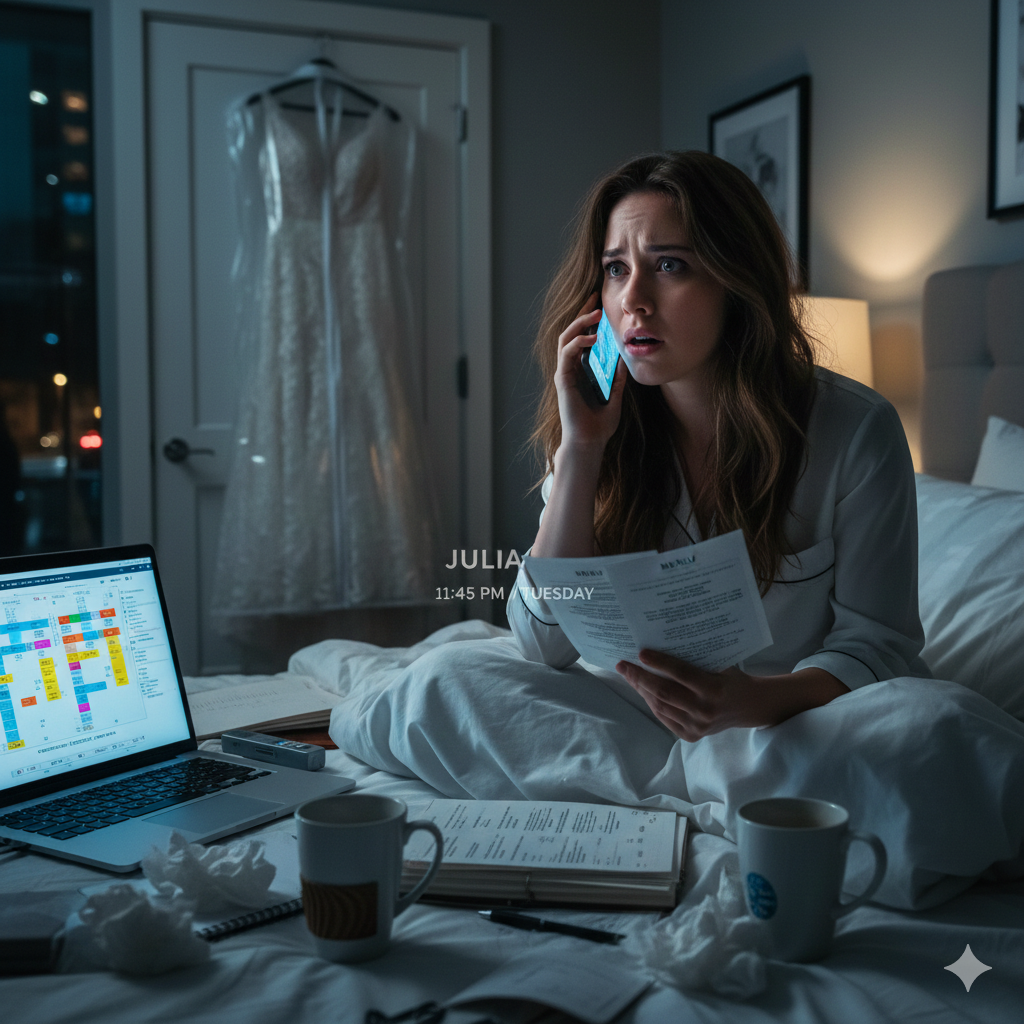
It is 11:45 PM on a Tuesday, three days before the wedding. Your phone buzzes. It is a text message from the bride, Julia. She has decided, in a moment of late-night panic, that Table 5 cannot sit next to Table 9 because her uncle and her cousin have a feud dating back to 1998. She also vaguely remembers sending a voice note three weeks ago asking to switch the vegetarian option from pasta to risotto. Or was it the other way around?
In the event planning industry, we often use the term “Bridezilla” with a roll of the eyes, dismissing the behavior as irrational entitlement. But this is a failure of empathy. Julia is not crazy; she is terrified. She is essentially an inexperienced Project Manager attempting to execute the most expensive, emotionally charged, and publicly scrutinized event of her life. Her “micromanagement” is actually a symptom of a lack of visibility. She keeps changing things and calling at midnight because she does not trust that the information has landed safely. She feels out of control, so she tries to control everything.
The Quicksand of Informal Communication
The real enemy of the event planner is not the difficult client; it is the informal communication channel. When changes are negotiated over WhatsApp, Instagram DMs, email threads, and casual phone calls, you are building a house on quicksand. This creates the “He Said/She Said” nightmare. The caterer arrives with 200 plates of pasta because that was on the original contract, but the bride is furious because she “definitely sent a text” changing it to risotto.
The problem is that a text message is not a work order. Relying on screenshots of chat logs to run operations is a recipe for disaster. When information is scattered across three different messaging apps, there is no “Single Source of Truth.” The planner becomes a desperate archivist, digging through weeks of emojis and voice notes to prove a point, while the relationship with the client deteriorates into a battle of memories. This fragmentation fuels the client’s anxiety. Because she cannot see where her request went, she assumes it was lost, leading to more panic and more changes.
The Platform as an Emotional Anchor
To tame the chaos of the high-stress client, you must move the conversation out of the chat app and into a centralized ecosystem. A management platform acts as a digital peace treaty. It provides a formal, visible container for every request. When Julia wants to move Uncle Bob to Table 12, she shouldn’t text you; the change should be logged in the system. When that request is marked as “Approved” and the floor plan updates in real-time, something magical happens to the client’s psychology.
The platform provides the “Audit Trail” that anxiety demands. It shows the client that their voice was heard, recorded, and acted upon. It eliminates the ambiguity of “I think I told you.” When the client sees their requested changes reflected instantly in a professional dashboard—guests seated, menus updated, timelines adjusted—their heart rate drops. They stop calling at midnight not because they stopped caring, but because they can verify the reality of the event without needing to interrogate the planner.
Professionalism is the Best Sedative
By enforcing a strict protocol for change management, you are not being bureaucratic; you are being protective. You are protecting your team from last-minute surprises, and you are protecting the client from their own memory. You transform the relationship from a chaotic friendship based on text messages into a professional partnership based on data. Peace of mind is a product, and you deliver it by showing them that the machinery of their event is running perfectly, regardless of how many times they change their mind.
Keep your clients calm and manage every last-minute change without losing control with GGyess WorkSuite.