The MTV Video Music Awards (VMAs) have transcended their original function as a music awards ceremony to become a paradigmatic case study of cultural “eventization” in the digital age. Each year, the event achieves an increasingly complex feat: dominating Google search trends and the global conversation on social media. This dominance is not a simple byproduct of its popularity, but the central objective of a meticulously designed digital marketing machine. Despite the fact that traditional cable television viewership has experienced a notable decline in recent years, with numbers that even fell below one million viewers on MTV for the 2021 ceremony, the event has not only maintained but increased its cultural relevance. It has achieved this through an innovative digital strategy that generates a massive social impact, such as the 40 million social interactions recorded in 2022, surpassing the Super Bowl and the Oscars.
The thesis of this report is that the sustained success of VMAs in becoming a trend is based on a strategic formula that integrates three fundamental pillars: the deliberate activation offandomspassionate, the engineering of viral moments designed for controversy and surprise, and a mastery of real-time marketing that turns live streaming into the epicenter of a global digital conversation. MTV has managed to navigate the transition from a television channel that defined youth culture in the 1980s and 1990s to a multi-platform entertainment brand. The organization has understood that the battleground for attention is no longer in front of the television, but in thefeedsof social networks and in Google search bars.
In fact, the erosion of its primary distribution channel, cable television, wasn’t a harbinger of its irrelevance, but the catalyst that forced a strategic reinvention. Unable to compete on traditional viewership metrics, MTV redefined the concept of an “event.” The strategy, as described by Tyler Hissey, SVP of digital marketing at Paramount, focused on reaching its core audience (13- to 18-year-olds) “on their terms” and on the platforms most relevant to them. Thus, declining television viewership is not a metric of failure, but the factor that drove innovation toward the metric that now defines the VMAs’ success: theengagementsocial and mastery of search trends.
The Basis of Relevance: Why Audiences Keep Connecting
For any digital marketing strategy to work, it must be built on a product that resonates with its target audience. The VMAs’ ability to generate massive search spikes is based on a brand positioning carefully cultivated over decades, which clearly differentiates it from other award ceremonies.
The “Anti-Grammy”: A Space for Pop Culture
Since their inception, the VMAs have positioned themselves as the “anti-Grammy.” While more formal awards shows focus on critical acclaim and musical excellence, the VMAs celebrate visual impact, spectacle, and pop culture. This approach manifests itself in an overall more relaxed and “fun” atmosphere, evident both on the red carpet, which is less formal and more colorful, and during the ceremony itself. This deliberate positioning creates a space for artists who are immensely popular but don’t necessarily fit the traditional awards show mold, becoming a perfect platform for stars who dominate the charts and social media.
Platform for Emerging Talent and Diversity
One of the keys to its continued relevance is its role as a powerful showcase for emerging talent. By providing a global stage for new artists like Chappell Roan, Gracie Abrams, and Benson Boone, the VMAs not only stay fresh but also play an active role in shaping the future of music. This “taste-setting” role is vital to its connection with a young audience eager to discover the new. Simultaneously, the event celebrates the global diversity of modern music, with categories dedicated to genres like K-Pop, Latin, and Afrobeats, recognizing artists like Lisa, Anitta, and Tyla. This inclusion broadens its appeal to international and diverse audiences, ensuring that the event reflects the true global music landscape.
Symbiosis of Music, Fashion and Visual Narrative
The VMAs understand that in the digital age, impact is inherently visual. The ceremony not only honors music, but also “fashion and the visual narrative each artist constructs onstage.” This celebration of the music video as a cinematic art form and of fashion as a powerful cultural statement creates moments that are, in essence, “made for Instagram.” Every red carpet outfit and every stage performance are designed to be photogenic, shareable, and ultimately viral. This fusion creates a multisensory spectacle that directly feeds into the social media ecosystem.
This brand positioning is what makes the VMAs marketing strategy so effective. It doesn’t need to create interest from scratch; its main function is to activate and channel the pre-existing energy of fan communities. The strategy is based on “lean into thefandomsof artists”, explicitly targeting highly organized and digitally active fan bases such as Nicki Minaj’s “Barbz” or BLACKPINK’s “BLINKs”. MTV provides the tools (custom content, voting, hashtags), and thefandomsThey provide the engine of virality. The brand acts as a catalyst, not the primary energy source, creating an organic and highly scalable marketing model.
The Anatomy of a Viral Campaign: The Digital Blitz in Three Phases
The VMAs’ dominance in search trends is not a product of chance, but the result of a meticulously orchestrated digital campaign. This strategy is deployed through a “three-pronged approach,” where each phase is designed to build, capitalize on, and extend the digital conversation, maximizing theengagementand, consequently, Google searches.
Phase 1 (Pre-Event): The Methodical Construction of Expectation
Weeks before the gala, MTV begins a drip-feed campaign designed to generate a constant buzz. Announcements of nominees, presenters, and, crucially, performances are revealed in a staggered manner to maintain a continuous flow of news and give media and fans something to talk about every few days. The core of this phase is the creation of content focused on thefandoms. MTV’s social media team developsassetsCustom visuals (graphics, short videos) for each nominee. These materials are designed to be shared by the artists themselves on their official accounts, leveraging their massive organic reach and mobilizing their fanbases to vote and generate conversation, especially on visual platforms like Instagram. Additionally, the pre-event strategy incorporates innovative activations, utilizing emerging technologies like Augmented Reality and forging partnerships with Gen Z-relevant platforms like Roblox and TikTok, to engage younger audiences in immersive and participatory ways.
Phase 2 (During the Event): The Domination of Real Time
On the night of the gala, MTV’s digital marketing team operates as a media “war room.” The strategy is based on instant reaction marketing, where every key moment of the broadcast—a striking red carpet look, a memorable line from an acceptance speech, a captured audience reaction—is instantly converted into digestible content: video clips, GIFs, or memes. This content is distributed at breakneck speed across all social platforms, capitalizing on the conversation at the exact moment it occurs.
This tactic is intrinsically linked to fostering the “second screen.” The VMAs viewing experience is designed to be inseparable from following the conversation on platforms like Twitter. Through the use of official hashtags and live audience interaction, MTV transforms passive viewers into active participants in the event’s narrative, encouraging them to share their opinions and reactions, which exponentially amplifies the conversation’s reach. In 2022, this strategy culminated in 40.1 million social interactions, making the VMAs the most social television event of the year.
Phase 3 (Post-Event): The Strategic Extension of the Conversation
The VMAs’ strategy doesn’t end when the stage lights go out. In fact, the post-event phase is crucial to cementing its search impact. One of its most effective tactics is capitalizing on YouTube. Full performances by artists like Sabrina Carpenter, Eminem, and Chappell Roan, along with speeches and highlights, are uploaded to MTV’s official channel almost immediately after their live broadcast. This serves a dual purpose: it satisfies the immediate search demand of those who missed a specific moment or want to relive it, and it keeps the content accessible and generating views for days, weeks, and even years.
Beyond simply archiving content, MTV reinvents it. One innovative strategy is the creation of “Animated Performances,” where iconic performances from years past (such as those of Miley Cyrus or Britney Spears) are reimagined in animated format. This allows the brand to capitalize on its valuable historical archive, reintroducing legendary moments into the current cultural conversation and attracting new audiences. Finally, MTV works in synergy with media coverage. By actively feeding the media with recaps, high-quality photos, and video clips, it ensures that the VMAs dominate the entertainment news cycle for days following the event.1Every article, every blog post, and every news segment generates a new round of searches, extending the event’s lifespan far beyond a single night.
This comprehensive approach demonstrates a fundamental shift in the event’s philosophy. The live television broadcast is no longer the final product; it’s simply the source of the raw material. The event has transformed into a massive content-generating operation, where the real point of contact with the audience occurs in the digital ecosystem. As evidence shows, many people learn about awards show events without ever having tuned into MTV on their television, irrefutable proof that the rules of the game have changed.
Your brand can stand out: learn how Access the ebook
The Search Engine: The Making of “Unmissable” Moments
The most potent and deliberate element in the VMAs’ formula for dominating search trends is the engineering of high-impact moments. Whether controversial, emotional, shocking, or surprising, these moments are designed to go viral and generate massive searches. Their effectiveness lies in the exploitation of human psychology, specifically the “fear of missing out” (FOMO) and innate curiosity. When digital conversation explodes around a “must-see” moment, the immediate reaction of millions of people is to search for it on Google and YouTube to see it for themselves, understand the context, and form an opinion. This behavior creates an instant, organic search spike.
These viral moments aren’t lucky accidents; they’re strategic marketing assets. They function as cultural “SEO bombs,” designed to detonate in the digital ecosystem and generate earned media value that would be impossible to buy. MTV creates a high-pressure, less formal, live environment that encourages spontaneity and controversy. Historically, the network tolerated “bad behavior” from artists in exchange for “ratings, ratings, ratings.” Today, that philosophy has adapted to the digital age, where controversy translates into clicks, searches, andengagement.
Case Study 1: The Kanye West and Taylor Swift Incident (2009) – The Birth of a Meme
In 2009, as a young Taylor Swift was accepting her award, Kanye West stormed onto the stage, snatched the microphone from her, and declared Beyoncé’s video superior.2This act, at the dawn of the Twitter age, became an instant global phenomenon. The phrase “Yo, Taylor, I’m really happy for you, I’ma let you finish…” became immortalized as one of internet culture’s first great memes. The reaction from other celebrities and the public was intense and polarizing, generating massive media coverage that lasted for weeks. This moment established a template for the VMAs, proving that a single, seemingly unscripted act of controversy could generate more attention and conversation than the entire planned ceremony, cementing the show’s reputation as an event where anything can happen.
Case Study 2: Miley Cyrus’s Performance (2013) – Controversy as a Rebranding Strategy
Four years later, Miley Cyrus’s performance with Robin Thicke was a masterful example of controversy as a calculated marketing strategy. The goal was clear: to definitively break away from her Disney Channel “Hannah Montana” image and relaunch herself as a provocative, adult artist. The performance, which included controversial twerking, was designed to “get attention” and dominate the conversation. And it succeeded spectacularly. The event generated more than 300,000 tweets per minute.2More importantly, from an SEO and digital marketing perspective, the impact was quantifiable. An analysis of Google search data from the time showed that search interest for the terms “Miley Cyrus” and “twerking” surpassed that of the event itself, “MTV VMAs.”3This data is irrefutable proof that an artist’s controversy can be a more powerful search engine than the event’s brand itself, validating the creation of viral moments as a marketing strategy with measurable results.
Quantitative Evidence: Visualizing the Impact on Google Trends
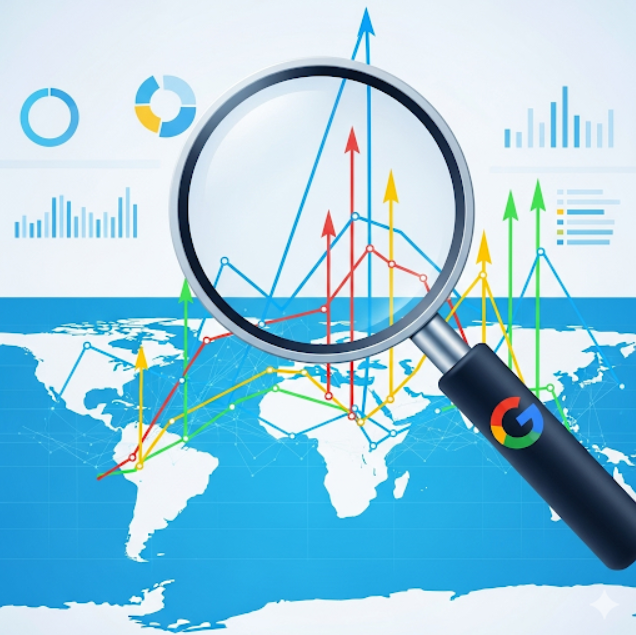
The claim that the MTV VMAs dominate search trends isn’t hyperbole, but an observable and quantifiable fact. Google Trends provides the most direct evidence of this correlation, visualizing how specific moments during the broadcast trigger immediate and massive spikes in search interest worldwide. These graphs aren’t just a statistical curiosity; they’re a quantitative manifestation of the success of the VMAs’ multifaceted marketing strategy.
The following table summarizes the central argument of this report, linking iconic moments of different types—controversies, surprise announcements, performances by emerging artists, and tributes—with their measurable impact on search behavior. This analysis demonstrates the versatility of the “VMA formula,” which doesn’t rely on a single type of gimmick but instead utilizes an arsenal of narrative and emotional levers to capture audience attention and direct it toward search engines.
Table 1: Correlation between Iconic VMA Moments and Google Search Interest
| Year of the Event | Iconic Moment | Search Terms with Peak Interest | Observed Impact on Google Trends and Supporting Evidence |
| 2009 | Kanye West interrupts Taylor Swift | “Kanye West Taylor Swift”, “Imma let you finish”, “VMAs 2009” | A massive and sustained spike. The incident was named the “wildest” moment in VMA history by Rolling Stone and spawned lasting memes that cemented the event in internet culture. |
| 2013 | Performance by Miley Cyrus and Robin Thicke | “Miley Cyrus twerking”, “VMAs Miley”, “Robin Thicke” | Search interest in the artist surpassed that of the event itself, validating the controversy as a successful marketing strategy.3The performance generated more than 300,000 tweets per minute. |
| 2022 | Album announcementMidnights de Taylor Swift | “Taylor Swift Midnights”, “New Taylor Swift album” | An immediate, global search spike demonstrated the power of the VMAs as a launching pad for high-impact surprise announcements, generating massive conversation and anticipation. |
| 2024 | Performance by Chappell Roan | “Chappell Roan VMA”, “Good Luck Babe performance” | A significant spike in interest dramatically raised the profile of an emerging artist, fulfilling the brand’s mission to launch new stars into stardom and generating discovery searches. |
| 2024 | Homenaje a Katy Perry (Video Vanguard) | “Katy Perry Vanguard Award”, “Katy Perry VMA performance” | The spike in interest celebrated the career of a pop icon, sparking nostalgia and conversation among an established fan base, and attracting searches related to her past hits and her performance at the show. |
The table above is crucial because it transforms the analysis from a series of anecdotes into a systematic demonstration. By linking a specific cause (the moment on screen) to a measurable effect (the search peak), it illustrates the exact mechanism through which VMAs achieve their goal of trending. It demonstrates that the strategy is adaptable and can generate search interest through different levers, ensuring its relevance and dominance year after year.
Conclusions and Strategic Lessons for Brands
An analysis of the MTV Video Music Awards’ digital marketing strategy reveals a sophisticated and highly effective “formula” for generating and dominating Google search trends. This formula is not a simple set of tactics, but a virtuous, self-reinforcing cycle that ensures the event’s cultural relevance in an ever-changing media landscape.
The cycle can be summarized in the following steps:
- Building on a Foundation of Cultural Relevance:Positioning itself as the “anti-establishment” of awards shows, focused on entertainment and pop culture.
- Activate Fandoms:Use existing fan communities as an organic marketing force, giving them the tools to amplify your message.
- Viral Moments Engineering:Deliberately create content—whether controversial, surprising, or emotional—that will fuel the digital conversation.
- Master in Real Time:Amplify those moments instantly across all digital platforms during the live stream.
- Extend the Conversation:Capitalize on post-event interest with an on-demand content strategy, primarily on YouTube, and by fueling the media news cycle.
- Generate Search Spikes:Harvest the results in the form of dominance on Google Trends, which in turn reinforces the event’s cultural relevance for the next cycle.
Key principles and strategic lessons can be drawn from this model that any brand, regardless of scale or industry, can adapt for its own event marketing initiatives.
- Think Like a Content Producer:A live event, whether physical or virtual, should not be seen as an end in itself, but as a golden opportunity to generate high-value content. Brands must plan how to capture, package, and distribute key moments so they live long beyond the event day, creating lasting marketing assets.
- The Power of Community:The most effective marketing is the kind that doesn’t feel like marketing. Engaging your audience, loyal customers, and brand ambassadors before, during, and after an event is crucial to achieving organic and authentic reach. Communities are the driving force behind virality.
- Planning for Spontaneity:The most powerful viral moments often seem spontaneous. However, the environment that fosters them and, more importantly, the strategy to capitalize on them, must be meticulously planned. Brands must have agile teams ready to identify and amplify opportunities in real time.
- Measuring What Really Matters:In the digital age, traditional metrics like TV viewership can be misleading. Social interactions,share of voiceIn digital conversations, search interest measured through tools like Google Trends can be much more valuable key performance indicators (KPIs). The ultimate goal shouldn’t simply be achieving impressions, but rather achieving a tangible cultural impact.
Engineer Your Own Viral Success
The VMAs’ success proves that dominating trends requires meticulous orchestration and real-time execution. The biggest challenge isn’t the idea—it’s managing the complex, three-phase digital campaign (Pre-, During-, and Post-Event).
Stop using fragmented tools and start executing your strategy like a well-oiled machine.
GGyess WorkSuite gives your team the structure to handle high-stakes digital events:
- ⚡ Real-Time Coordination: Manage your content war room with shared tasks and instant communication.
- 🗓️ Event Planning: Use Kanban boards or Gantt charts to map out the entire pre-, during-, and post-event content flow.
- ✅ Accountability: Assign ownership and track progress on every post, clip, and viral moment from a single dashboard.
Register to Orchestrate Your Brand’s Next Big Trend Today.
Start Your Digital Project Management with GGyess WorkSuite
Sources cited
- MTV Video Music Awards – Wikipedia, the free encyclopedia, accessed September 8, 2025,https://es.wikipedia.org/wiki/MTV_Video_Music_Awards
- 5 Most Memorable Scandals in the History of the MTV VMAs – AS …, accessed: September 8, 2025,https://as.com/us/us/2020/08/30/tikitakas/1598822626_138317.html
- Did Miley Cyrus’s MTV Marketing Strategy Work?, accessed September 8, 2025,https://www.analiticamente.es/funciono-la-estrategia-de-marketing-de-miley-cyrus-en-mtv/