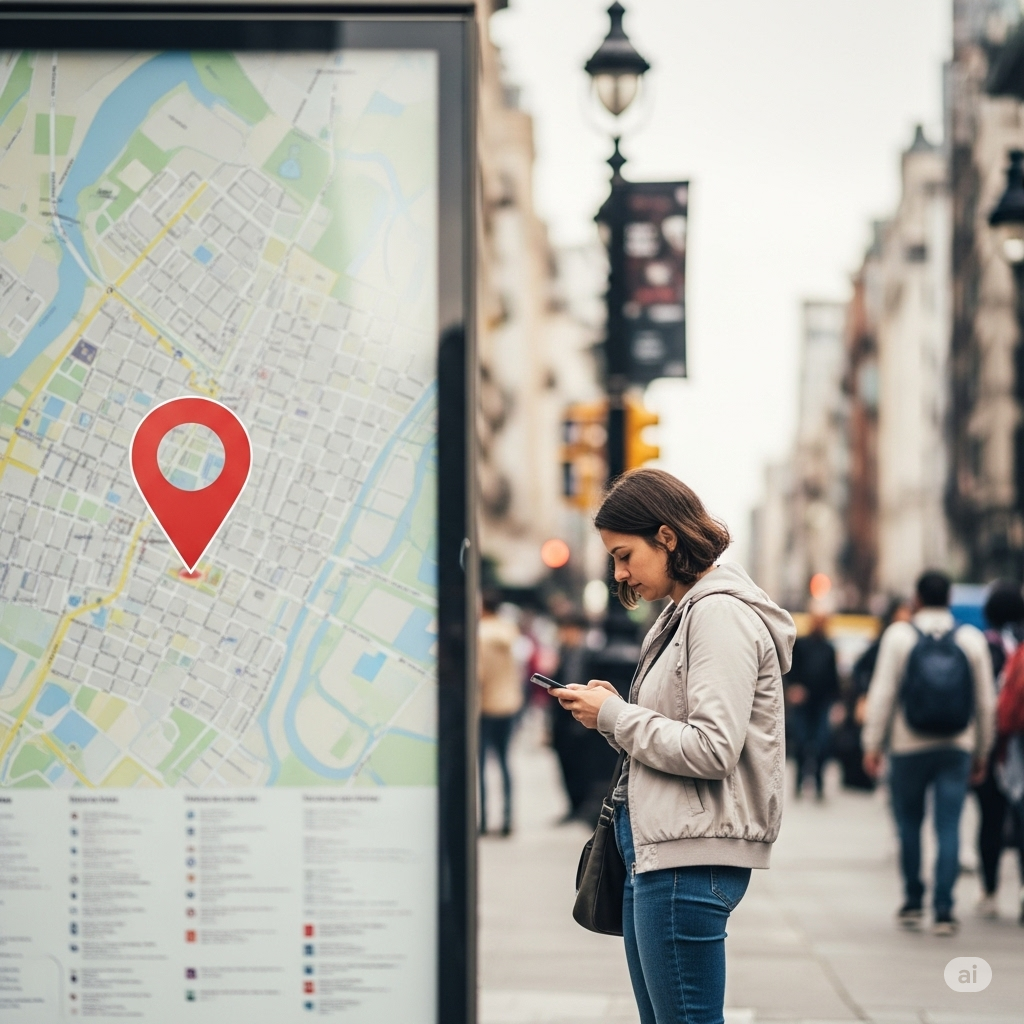
Imagine a potential customer standing a few blocks from your business. They pull out their phone and search for “coffee near me,” “laptop repair in Zone 10,” or “best pizza in Antigua.” In that instant, a golden window of opportunity opens. Will your business appear in the top results, with a clear address, an accessible phone number, and dozens of positive reviews? Or will it be buried on the second page, invisible to that customer ready to buy? This isn’t a matter of luck; it’s the direct result of a deliberate and powerful strategy:SEO LocalFor a brick-and-mortar business in 2025, mastering local SEO isn’t just another marketing option; it’s the lifeline that connects the digital world to your front door, transforming online searches into real, tangible sales.
Local SEO (Search Engine Optimization) is the process of optimizing your online presence to attract more business from relevant local searches. Unlike traditional SEO, which focuses on national or global visibility, local SEO focuses on a specific geographic area. Its goal is simple and straightforward: when someone near you searches for the products or services you offer, your business should be the most visible, trustworthy, and engaging response. In a world where more than 46% of all Google searches have local intent, ignoring this discipline is the digital equivalent of keeping your storefront shutters down. This guide isn’t a list of quick fixes; it’s a detailed roadmap for building a local digital stronghold that attracts a steady stream of customers to your business.
Don’t just create any brand; make one that inspires Download it now
The Heart of Your Strategy: Google Business Profile, Your Digital Showcase
Before talking about websites, content or links, we must focus on the epicenter of the Local SEO universe: yourGoogle Business ProfileThis free tool is by far the most influential factor in your ability to rank in local search results and on Google Maps. It’s not simply a listing in a directory; it’s your digital storefront, your interactive business card, and often the first impression a customer will have of your business. An incomplete or neglected profile is like having a dirty, dimly lit physical storefront. In contrast, a meticulously optimized and actively managed profile can generate calls, directions, and visits to your website directly from the search results page, without the user even needing to click on another link.
Optimizing your profile goes far beyond simply claiming and verifying it. Each section is an opportunity to provide Google and your potential customers with relevance and trust signals. The consistency of yourNAP (Name, Address, Phone Number)It’s the foundation of everything; it should be identical on your profile, on your website, and everywhere else on the internet. Choosing your categories—both primary and secondary—is crucial for Google to understand what you do. Your business description should be compelling and contain relevant keywords. But modern optimization demands more: you should regularly upload high-quality photos of your location, products, and team, use theGoogle Poststo announce offers, events or news, and to encourage and answer questions in the sectionQ&AEach of these actions sends a signal to Google that your business is active, relevant, and engaged with its customers, rewarding you with increased visibility.
The Foundations: On-Page Web Optimization with a Local Accent
If your Google Business Profile is your storefront, your website is your main storefront. It’s where customers can dig deeper, learn about your story, and ultimately become loyal buyers. For your Local SEO strategy to be strong, your website must consistently reinforce the same geographic signals you send through your profile. This is known as local on-page optimization, and it involves weaving your local identity into the very fabric of your website. Google is incredibly smart, but it needs clear clues to understand that your plumbing business doesn’t just serve a country, but specifically a neighborhood or city. This is achieved by naturally integrating your local keywords—like “dentist in Guatemala City”—into your page titles, meta descriptions, headings (H1, H2), and body copy.
For businesses with multiple locations, creating individual location pages is an indispensable tactic. Each page should be unique, offering information specific to that branch, such as hours, staff, local photos, and customer testimonials from that area. This creates a much richer user experience and sends incredibly powerful geographic signals to search engines. Additionally, there are technical elements that act as location beacons for Google. Embedding a Google MapAn interactive NAP on your contact page not only helps users, but also confirms your location to Google. Ensuring your NAP is visible and consistent on every page, usually in the footer, is another key practice. To take it a step further, implementing Schema MarkupFor local businesses, the LocalBusiness schema allows you to communicate detailed information about your business to search engines in their own language, such as opening hours, price ranges, and accepted payment types. This can result in rich snippets in search results, making you stand out even more.
Building Authority and Trust: The Power of Citations and Reviews
Once you’ve got your storefront (Google Business Profile) and your website in order, it’s time to build your reputation in the digital “neighborhood.” In Local SEO, this is achieved through two fundamental pillars:citations and thereviewsA citation is any online mention of your Name, Address, and Phone Number (NAP). Think of them as your business’s online references. Every time your NAP appears in a trusted local directory, an online Yellow Pages, an industry website, or a local blog, a citation is created. The key here is theconsistency Each citation should present your information identically to how it appears in your Google Business Profile. Inconsistencies, such as different street abbreviations or outdated phone numbers, confuse search engines and dilute your local authority. Building a strong and consistent citation profile in relevant directories is a methodical but essential process for solidifying your geographic presence.
If citations build your authority in the eyes of Google,reviewsBuild your trust in the eyes of customers. In the digital economy, reviews are the new currency of trust. A steady stream of positive reviews is one of the most powerful ranking factors in Local SEO and, more importantly, the main conversion factor. Customers trust other customers. Therefore, you must have a proactive strategy to encourage your satisfied customers to leave a review. This doesn’t mean offering incentives (which goes against the policies of many platforms), but rather making the process easy: a direct link in a follow-up email, a QR code in your store, or a simple verbal request upon completion of a successful transaction. Equally crucial is your response. You must respond toallReviews, both positive ones, to express gratitude and strengthen the relationship, and negative ones, to show that you care, that you listen, and that you’re committed to resolving issues. A well-handled negative review can actually build more trust than a dozen unanswered five-star reviews.
Locally Flavored Content: Demonstrating Your Relevance in the Community
The last piece of the puzzle is to show that you are not onlyina community, but you arepartof it. Local content marketing is your tool to achieve this. Instead of writing generic articles, focus your blog and resources on topics that resonate directly with your local audience. An architectural firm in a colonial city could write about “How to Restore Historic Facades While Respecting Antigua’s Heritage.” A bike shop could create a “Guide to the Best Mountain Biking Trails Near Lake Atitlán.” This type of content not only attracts a highly qualified local audience through specific searches, but it also positions you as an authority and valuable resource within your community.
This strategy goes beyond a blog. You can create content about local events you participate in, highlight collaborations with other businesses in the area, or create resource guides for residents of your neighborhood. Each piece of local content you create is a new digital gateway to your business and a new signal to Google that your geographic relevance is deep and authentic. By connecting your expertise with the lives, interests, and needs of the people around you, you stop being simply a business and become a pillar of the community. This connection is what fosters long-term loyalty and turns customers into true ambassadors for your brand. Local SEO, at its best, isn’t just about algorithms and keywords; it’s about building lasting relationships, one local search at a time.
Stop Letting Inconsistency Cost You Local Sales
Local SEO success is built on meticulous, consistent execution: maintaining NAP uniformity, proactively managing reviews, and scheduling local content creation. Stop letting this complex checklist get lost in fragmented tools.
GGyess WorkSuite is the operational engine that ensures flawless Local SEO project execution:
- Consistency Control: Document, track, and assign the verification of your official NAP (Name, Address, Phone Number) across all directories to eliminate costly ranking errors.
- Review Response Workflow: Create and assign response tasks immediately to the right team member, ensuring you handle every review—positive and negative—quickly and professionally.
- Local Content Coordination: Plan and assign the creation of all local blog posts, offers, and Google Posts content briefs in a single, organized project board.
Register to Build a Flawless Local SEO Strategy Today.
Start Executing Your Local SEO with GGyess WorkSuite
References and Resources for Further Study
- Google’s guide on how to improve your local ranking: Google Business Profile Help
- The Moz Blog – Local SEO: Moz Local SEO Learning Center
- Search Engine Land – Local SEO: Search Engine Land’s Guide To Local SEO
- Whitespark – Local Citation Finder & Resources: Whitespark Blog