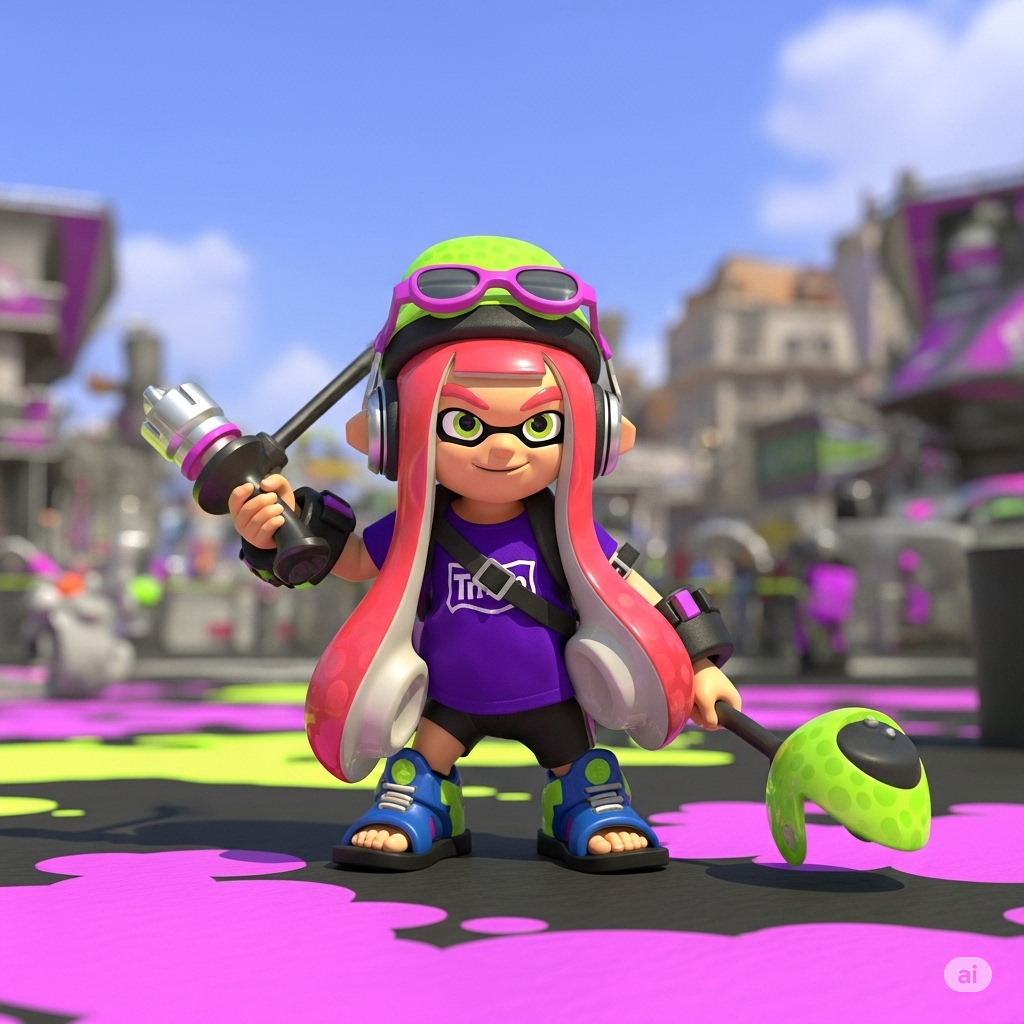
I. Introduction: The Digital Imperative in the Gaming Industry
The video game industry has undergone a fundamental transformation in recent decades, moving from relying predominantly on traditional marketing methods to embracing digital strategies. This shift is not merely an evolution, but a necessary adaptation to the way consumers interact with content and brands in the modern era. In this context, digital marketing has become an indispensable pillar for success, and the case ofSplatoonNintendo’s offers an eloquent example of how a new intellectual property can flourish through a strategic application of these tools.
1.1. From Physical to Digital: The Evolution of Video Game Marketing
Historically, video game promotion relied heavily on print advertising, television broadcasts, and physical events. However, widespread internet use and the proliferation of mobile devices have shifted consumer attention toward the online world, forcing companies to adopt a digital-first approach.1This transition represents more than just the addition of new channels; it’s a fundamental strategic reorientation. Marketing must now follow audiences where they spend a significant portion of their time: online.1This shift isn’t a proactive innovation by companies, but rather a reactive adaptation to market forces that have redefined the media consumption landscape. Nintendo, a company with a rich history dating back to the manufacturing of playing cards, has demonstrated a remarkable ability to navigate this evolution, transforming itself into a global pioneer in video games.2
1.2. The Critical Relevance of Digital Marketing Today
In today’s marketplace, digital marketing is not simply a competitive advantage, but a necessity for any business that aspires to thrive and maintain its relevance in an increasingly digital-centric environment.1Its importance lies in its ability to guide decision-making and resource allocation, ensuring that all marketing efforts are consistent and aligned with business objectives.1For new intellectual properties, this need is even more pronounced. Unlike established franchises that already have brand recognition, new IPs lack that foundation. Therefore, a robust digital strategy becomes a fundamental requirement for competing effectively and building a sustainable audience in the saturated video game market, rather than an optional add-on.
1.3. Splatoon: A Case Study of Success in a New IP
Splatoonemerged as Nintendo’s first new global intellectual property in over 15 years, with ambitions to match the level of success of already established franchises such asMario Kart 8.3Despite its release on the Wii U console, which faced commercial challenges, the game achieved an “incredibly impressive tie-in rate” of over 1/3, selling 4.9 million units on a console with only 13.5 million units sold.4This exceptional performance on a platform with limited sales underscores the product’s and its marketing’s ability to transcend the hardware’s limitations. The initial success validated the appeal of the game’s core concept and the effectiveness of the marketing strategies employed to capture and convert the existing Wii U audience. This success was subsequently consolidated, turningSplatooninto a “monumental success” and a “pillar for Nintendo” on the most popular platform, the Nintendo Switch.4The game was known for being an “accessible shooter for all ages,” replacing violence and blood with squid and paint, offering a unique and family-friendly approach to the shooting genre.6
II. Fundamentals of Digital Marketing for Business Success
To understand the application of digital marketing in the video game industry, it’s essential to first establish a solid foundation in its principles and key components. This section details the definition of digital marketing, its essential channels, and key metrics for measuring its effectiveness.
2.1. Definition and Key Components of Digital Marketing
Digital marketing encompasses any online platform or medium that a business can use to communicate with and engage its audience.8It involves the integration of various digital strategies to reach consumers in the online spaces where they spend a significant portion of their time.1The breadth of this definition implies that digital marketing cannot be approached as a collection of isolated efforts across different platforms. Instead, it requires strategic integration to ensure all channels work together, forming a coherent strategy. This cohesion is essential to avoid fragmented messages and to provide a unified brand experience, which is crucial for building strong brand recognition and fostering long-term customer loyalty.
2.2. Essential Channels of Digital Marketing
A successful digital marketing strategy is built on a combination of channels, each with its own strengths and specific applications. The selection and optimization of these channels are crucial to effectively connecting with your audience.
- Search Engines (SEO and SEM):Search engine optimization (SEO) improves the organic visibility of a website or content, naturally attracting traffic. Additionally, search engine marketing (SEM), which includes pay-per-click (PPC) advertising like Google Ads, offers immediate reach and can quickly generate leads, balancing long-term growth with short-term demand generation.1Google Ads, for example, have an average ROAS (Return on Ad Spend) of 200%.8
- Email Marketing:This channel provides a direct, personalized connection to subscribers, allowing them to nurture relationships through educational content, discounts, announcements of new offers or events, and coupons.8Subscriber list segmentation and campaign automation are key to guiding customers through their journey.9Nintendo, for example, employs a robust email marketing system to inform its subscribers about new releases and exclusive offers.2
- Social Media Platforms:Social media is ideal for engaging audiences with high-value content, such as how-to videos or inspirational quotes, boosting brand awareness and driving traffic to websites or online stores.8They also function as platforms for promotions, customer service, and community building.10Nintendo considers social media a “cornerstone” for interacting with its audience.2
- Paid Advertising:Paid digital advertising allows you to expand your marketing efforts beyond organic reach, reaching new audiences through formats such as display ads, social media ads, video advertising, and native advertising.9A/B testing visuals and messaging is crucial to refining your approach and maximizing engagement and conversions.8
- Web Pages and Landing Pages:They act as an “online anchor” and a powerful marketing channel for a brand. Their structure, design, content, and calls to action (CTAs) must be optimized to motivate visitors to subscribe or make a purchase.8
- Content Marketing:Creating and promoting valuable and relevant content assets (such as blog posts, articles, videos, or podcasts) is critical to building brand awareness, increasing traffic, and attracting leads, positioning your brand as an authority in your niche.1
- Mobile Apps and Push Notifications:They are a direct channel for communication and engagement with users.8
- Podcasts:An emerging channel that offers new ways to reach specific audiences.8
- Affiliate Marketing:It involves earning commissions by promoting third-party products, which may include collaborations with influencers using tracking codes.1
- Events:Hosting live or virtual events can attract potential customers and generate brand interest, fostering community and engagement.9
The effectiveness of a digital marketing channel is not inherent; it depends on the context. Flexibility and continuous optimization are crucial to respond to changes in technology, algorithms, and user preferences, which can affect the effectiveness of a strategy over time.8This means that simply having a presence on these channels isn’t enough; the real value comes from understanding which ones are most effective for a specific audience and continually adapting strategies based on performance data.
Table 1: Key Digital Marketing Channels and Their Application
| Canal Digital | Brief Description | Key Application/Benefit | Relevant Metrics |
| Search Engines (SEO/SEM) | Optimization for organic visibility and paid advertising in search results. | Improve visibility, generate organic and immediate traffic. | Organic Traffic, CTR, ROAS, Keyword Positioning. |
| Email Marketing | Sending personalized messages to subscribers. | Nurture relationships, convert customers, communicate offers and events. | Open Rate, Click Rate, Conversion Rate, Unsubscribe Rate. |
| Social Media Platforms | Using networks like Facebook, Twitter, and Instagram for content and engagement. | Drive brand awareness, drive traffic, customer service, and build community. | Reach, Impressions, Engagement Rate, Click-Through Rate, Mentions. |
| Paid Advertising (PPC) | Paid digital ads on various platforms (display, social, video). | Expand your reach beyond organic, with precise targeting. | CTR, Cost per Click (CPC), Cost per Acquisition (CPA), ROAS. |
| Web Pages and Landing Pages | Main online presence of the brand. | Digital anchor, convert visitors into leads or customers. | Conversion Rate, Time on Page, Bounce Rate, Web Traffic. |
| Content Marketing | Creation and distribution of valuable content (blogs, videos, podcasts). | Generate brand awareness, traffic, authority, and leads. | Organic Traffic, Time on Page, Backlinks, Shares. |
| Mobile Apps/Push Notifications | Direct communication through apps and alerts. | Direct engagement, reminders, personalized offers. | Notification Open Rate, User Retention. |
| Podcasts | Audio content for specific audiences. | Build authority, niche engagement, reach new listeners. | Downloads, Listens, Audience Reach. |
| Affiliate Marketing | Promotion of third-party products in exchange for commissions. | Expand reach through partner network, performance-based sales. | Conversion Rate, Affiliate Revenue, ROI. |
| Events (Virtual/Physical) | Organization of meetings, workshops, tournaments. | Attract potential customers, generate interest, build community. | Assistance, Lead Generation, Social Media Mentions. |
Make your brand tell a unique story Download here
2.3. The Importance of a Comprehensive Strategy and KPI Measurement
A well-defined digital marketing strategy is essential for guiding decision-making and resource allocation, ensuring that all marketing efforts are consistent and aligned with business objectives.1Key steps include setting clear and measurable (SMART) goals, choosing the right channels, defining key metrics, allocating a budget, and creating a content calendar.1Continuous monitoring and optimization are essential for long-term success.1
The emphasis on measurable objectives and the use of Key Performance Indicators (KPIs) mark an evolution from purely creative marketing to an analytical, data-driven approach. This means that marketing decisions are increasingly informed by data analysis, enabling precise optimization and a clear understanding of return on investment (ROI), bringing marketing closer to a more scientific discipline.
Essential Performance Metrics (KPIs):
- Conversion Rate (CRO):Measures the effectiveness of a website or campaign in transforming visitors into leads or customers. It focuses on optimizing design, content, and user experience to increase the number of people who take desired actions, such as a purchase or newsletter subscription.14
- Customer Acquisition Cost (CAC):It is the total expenditure incurred to acquire a new customer, including marketing and sales spending. It allows us to understand the effectiveness of marketing efforts and the sustainability of the business model.14
- Customer Lifetime Value (CLV):It estimates the total revenue a company can expect from a customer over the course of their relationship. It helps understand the long-term value of the customer base and guide acquisition and retention strategies.14
- Click Through Rate (CTR):Quantifies the percentage of people who click on a link after viewing it. A higher CTR indicates that the content resonates with the audience and generates engagement.14
- Brand Awareness:Measures how effectively content marketing activities increase brand awareness among target audiences.15
- Engagement:Track audience or customer engagement generated by content marketing efforts across multiple channels.15
- Lead Generation/Sales:It measures performance in the final stages of the buyer’s journey, typically related to the number of conversions or revenue generated by content marketing.15
- Retention:Metrics related to the company’s ability to retain its customers over time.15
- Time on Page:It measures how long a user stays on a web page before moving to another URL or ending their session, which can indicate the quality of the content or its relevance.15
- Organic Traffic:Refers to visitors who arrive at a website through unpaid search results from search engines.15
III. Strategic Application of Digital Marketing in Video Games

The video game industry presents a unique environment for the application of digital marketing, where strategies must adapt to the specifics of audiences, product life cycles, and the interactive nature of the medium.
3.1. Identification and Segmentation of the Gamer Target Audience
Before any promotional effort, it is essential to define the ideal player.16This goes beyond basic demographics, involving a deep analysis of game characteristics, such as its genre, age rating, and themes.16Players can be segmented into categories such as casual, competitive, streamers, and developers.11For example, Nintendo targets a broad spectrum of gamers: children attracted by colorful and accessible games, casual gamers who value the platform’s convenience and social aspects, and more dedicated gamers seeking deep and challenging experiences.2This audience segmentation in the gaming space extends to psychographics and play styles, enabling the creation of highly personalized marketing messages that resonate deeply with each group. Understanding not only who the player is, but also why they play and how they interact with games, is just as crucial as their demographic characteristics. This approach enables hyper-targeted messaging and optimized channel selection, maximizing relevance and minimizing ineffective marketing spend.
3.2. Selection of Distribution and Promotion Platforms
Choosing distribution platforms, whether online stores or marketplaces, is a critical step that depends on whether the game is intended for PC (such as Steam, Epic Games Store, or Itch.io) or mobile devices (such as Google Playstore).16This decision is not merely technical, but a strategic marketing decision, as it directly influences audience access and the game’s monetization model (for example, direct sales versus a free-to-play model with in-game purchases).17Distribution platforms function as inherently virtual storefronts, meaning that the decision of where to launch a game directly impacts the potential audience size, the competitive landscape, and available monetization strategies. Therefore, platform selection is an early and critical marketing decision that shapes the entire digital marketing funnel.
3.3. Content Strategies Adapted to Gaming
Content for the gaming industry must be high-quality, dynamic, and visually stunning.11Short videos and clips with quick transitions, energetic music, and engaging editing often perform better on platforms like TikTok and Instagram.11It’s essential that content encourages interaction, inviting users to comment, react, and share posts.11User-generated content (UGC) is of immense value and should be actively encouraged.11Additionally, advertising can be integrated directly into the game experience, with in-game ads promoting brands, products, or events prominently displayed in game centers and arenas.18The integration of in-game advertising and the promotion of UGC transform the game itself into a dynamic and vibrant marketing channel, blurring the lines between the product and its promotion. Players become active participants in the brand’s narrative through their creations and interactions within the game world, amplifying reach and authenticity far beyond traditional advertising.
3.4. Building and Promoting Online Communities
Building a strong community is crucial to generating brand enthusiasm and fostering loyalty.13Strategies include:
- Request Feedback:Involving the community in product development from day one, asking for their feedback on features or issues, creates a sense of ownership and belonging.13
- Events and Updates:Frequent in-game events and updates keep players engaged and excited, providing opportunities to meet and collaborate.19
- Gamification:Applying game mechanics to real-life interactions (e.g., challenges, loyalty programs) can immerse members, foster healthy competition, and encourage ongoing communication.13
- Direct Communication:Offering in-game chats, online forums, and dedicated social media spaces allows players to share tips, strategies, and experiences.19
- Recognition and Rewards:Rewarding loyalty and contributions with honorary titles, customization items, and exclusive items is essential to maintaining engagement.19
- Moderation and Safe Environment:Effective moderation and clear conduct policies are vital to maintaining a healthy, safe, and inclusive community environment.19
- Listen to the Community:Developers should be willing to accept feedback and act on it, demonstrating that they value player opinions and continually improve the player experience.19
- Design for Harmonious Passion:Game design should foster intrinsic enjoyment, establish clear collaborative goals, allow for diverse play styles, and provide robust communication tools, avoiding exploitative monetization or excessive grinding that can lead to obsessive passion.21
Community building in video games isn’t simply a marketing tactic, but a core product development philosophy that fosters deep player loyalty and value co-creation. The emphasis on soliciting feedback “from day one”13, integrate events and updates19, and design for “harmonious passions”21indicates that community engagement is deeply embedded in a game’s lifecycle. It’s not just about promoting the game; it’s about making players feel like active stakeholders in its evolution. This creates a virtuous cycle where player investment drives retention and word of mouth, which in turn fuels marketing.
3.5. Marketing theInfluencersand Associations
Collaborating with social media personalities and streamers can significantly expand your reach and build brand trust.2It’s crucial to select influencers based on their brand affinity, not just their number of followers, and to use affiliate codes or UTM links to measure the real impact of these collaborations.11The community ofSplatoon, for example, has a vibrant ecosystem of streamers.23Influencer marketing in the gaming space thrives on authenticity and alignment with community values, transcending traditional celebrity endorsements. This suggests that successful influencer campaigns in gaming focus less on transactional deals and more on fostering organic advocacy from trusted voices within the community, leveraging their credibility to drive engagement.
3.6. Player Retention and Monetization Strategies
Player retention involves keeping games relevant through ongoing updates and expansion packs, adding new content to reinvigorate interest and provide ongoing value to the community.2This includes non-intrusive content, exclusive rewards, events, guides, and tournaments.11Personalization (e.g., game recommendations based on history, achievements, birthday offers) and gamification within communications (e.g., emails with challenges or rewards) are key elements to keeping players engaged.11Player feedback is crucial to improving the game and, consequently, retaining the user base.20Additionally, customization options (clothing, hairstyles, tattoos, ink colors) and quality of life improvements (unified menus, improved gestures, accessibility options) are frequent community requests that contribute to long-term engagement.20
The “games as a service” model, supported by ongoing digital marketing, transforms the initial purchase of a product into a relationship and an ongoing revenue stream. The emphasis on “upgrades and expansion packs”2, the “exclusive rewards, events, guides, tournaments”11and attention to “player feedback”20demonstrates that the initial sale of a game is just the beginning. Nintendo effectively uses digital marketing to promote this ongoing stream of content, turning the game into an evolving service. This cultivates sustained engagement and provides multiple opportunities for ongoing monetization (e.g., DLC, cosmetic items), extending customer lifetime value well beyond the initial purchase.
IV. Case Study: The Marketing Strategy ofSplatoon

The success ofSplatoonoffers a valuable case study of how a new IP can establish itself and grow in the competitive video game industry through a multifaceted digital marketing strategy.
4.1. Positioning and Initial Success
SplatoonIt was positioned as Nintendo’s innovative offering in the shooter genre, a “shooter accessible to all ages” that replaced violence with colorful paint.6This unique value proposition was instrumental in differentiating it in a saturated market. Despite being released on the Wii U, a console with subpar performance,Splatoonachieved “incredibly impressive” sales, with a link rate of over 1/3, and even outsold some titles ofMarioon the same console.4Its launch in Chile included a successful live event in shopping malls, where more than 3,000 people participated in a real-life version of the game, resulting in the game selling out in just two days.7This early success on a challenging platform highlighted the strength of their concept and the effectiveness of their initial marketing. The ability toSplatoonThe launch event in Chile, in particular, provided a tangible and memorable experience that translated directly into sales, validating the product’s core appeal.
4.2. Content and Advertising Tactics
Nintendo implemented a “substantial campaign” toSplatoon, comparable in scale to that ofMario Kart 8.6This 360° digital campaign was structured in three phases: an initial one focused on the game’s humor, a second one that introduced global demos, and a third one that showed thegameplayand the reviews.3Advertising channels included digital billboards, co-sponsorships with Cartoon Network programming, television commercials, and Digital Out-of-Home (DOOH) experiences, marking Nintendo’s first foray into this medium.3
In terms of creative content, the early ads were “cheesy and over-the-top” with catchy songs. Despite some criticism, these ads “clearly worked” to sell the game.25The trailers ofSplatoon 3They showed off new weapons, stages, and the chaotic “Tricolor Turf War” mode, keeping the excitement going through “content pulses.”26
A distinctive aspect of the strategy ofSplatoonIts in-game marketing. The game itself features video and graphic ads within its universe for brands (e.g., Barazushi, Takoroka, Z+F), products (e.g., Jellyfish skateboard), and locations (e.g., Museum d’Alfonsino, Wahoo World).18During special events like Big Run and Splatfests, these ads adopt visual elements and thematic borders, integrating marketing directly into the gameplay experience.18The advertising strategy ofSplatoonachieved a successful balance between general appeal and immersion in the game universe, creating a cohesive brand experience that transcended traditional marketing. This holistic approach not only attracted new players but also deepened the immersion of existing ones by making marketing part of the game world, reinforcing the brand identity and keeping players engaged within the universe.Splatoon.
4.3. The Power of Social Media and Community
The strategy ofSplatoonon social media and building their community have been pillars of their success.
- Tumblr Launch and Art Contest:For himSplatoonOriginally, Nintendo launched an official Tumblr page, acknowledging the visual nature of the platform and the existing fan art community.29An art contest was held, inviting fans to submit drawings using specific hashtags, promoted on other Nintendo social channels and with paid advertising.29This generated 479 official posts and attracted over 10,000 new followers in one month, demonstrating the power of leveraging user-generated content (UGC) and engaging existing fan bases.29
- Splatfests:These periodic festival-themed in-game events are central to community engagement.Splatoon.30Players join teams based on a themed question (e.g., “Cat vs. Dog,” “Grass vs. Fire vs. Water” for the Pokémon collaboration), compete in special Turf War battles, and receive exclusive in-game gear.30Splatfests are designed to be “broad and silly enough to become general topics of conversation among players’ friends and family, as well as among social media users.”30They feature unique changes to game centers, alternate costumes for idols, and Miiverse/Mailbox posts that appear as neon signs and graffiti.30
- Announcing Characters (Idols):The in-game idol groups—Squid Sisters, Off the Hook, and Deep Cut—serve as central figures for Splatfest announcements and game updates.30Their catchy phrases and songs, though often gibberish, contribute to the game’s unique culture and are frequently translated for merchandise.34The developers intentionally create a detailed environment, including bands and their music, so that the world ofSplatoonfeel more realistic.35
- Community and Player Behavior:The game encourages knowledge building through interaction and collaboration, with players learning tactics, map geography, and teamwork.36The community expresses itself through in-game posts, fan art, and even player-created taunts like squidbagging.30Nintendo actively listens to community feedback to improve the player experience.19
Splatoonexemplifies how integrating community-driven content and interactive events directly into game design creates a self-sustaining marketing ecosystem that fosters deep loyalty and organic virality. The Tumblr art contest29and the design of the Splatfests30demonstrate a strategic decision to empower players as content creators and brand ambassadors. By turning in-game events into talking points and providing in-game tools for expression, Nintendo taps into the innate human desire for social connection and self-expression. This transforms players from passive consumers into active participants in the brand narrative, leading to organic reach and sustained engagement that are more authentic and impactful than traditional advertising alone. Idol groups further personify this community, blurring the lines between gaming and reality.
4.4. Influencer Marketing and Brand Collaborations
Nintendo has demonstrated a remarkable ability to expand the reach ofSplatoonthrough strategic partnerships.
- Partnerships with Influencers:Nintendo leverages influencers to showcase its products, expanding its reach and building consumer trust.2The community ofSplatoonIt has a notable presence of streamers on platforms like Twitch and YouTube, many of whom focus on competitive gaming, challenges, or creating “comfortable” content.23
- Brand Collaborations: Splatoonhas participated in numerous collaborations with real-world brands, often linked to Splatfest events or the creation of merchandise. These include:
- Food and Beverages: McDonald’s 22, 7/11 and Calbee.38
- Clothing and Lifestyle: Uniqlo 31, NIKE 38, King of Games 38and ZOZO.39
- Other Intellectual Properties: Pokémon 32, The Legend of Zelda 32, Super Smash Bros. 32, Sanrio18 y Teenage Mutant Ninja Turtles.32
- Nintendo Internal Brands:Collaborations with other Nintendo intellectual properties are also frequent.32
Strategic collaborations with brands and partnerships with influencers allowSplatoontranscend the video game niche, tapping into broader cultural trends and reaching diverse consumer segments. By partnering with brands in food, fashion, and other entertainment industries, Nintendo leverages existing consumer interests and brand loyalties to presentSplatoonto new demographics. This not only increases brand awareness, but also reinforces the identity ofSplatoonas a cultural phenomenon, not just a game.
Table 3: Digital Marketing Strategies ofSplatoonby Channel
| Canal de Marketing Digital | Splatoon Specific Tactic/Example | Key Objective Achieved |
| Social Networks (Tumblr) | Official Tumblr page launch with art contest (#Splatoon, #GetInked). | Awareness generation, fan engagement, UGC promotion. |
| Eventos In-Game (Splatfests) | Regular themed events with exclusive gear and rewards. | Encourages community engagement, generates social conversation, and player retention. |
| Digital Advertising (360°) | Multi-phase digital campaign (humor, demos, gameplay/reviews) on billboards, TV, DOOH. | Creating massive buzz, reaching broad audiences, and boosting pre-orders. |
| Content Marketing (In-Game Ads) | Brand and location announcements within the game universe. | Player immersion, brand identity reinforcement, subtle promotion. |
| Marketing the Influencers | Collaborations with streamers and social media personalities. | Expanding reach, building trust, validating the product. |
| Email Marketing | Robust system for reporting launches and offers. | Direct and personalized communication, sales boost, and strengthening of e-commerce. |
| “Game as a Service” model | Continuous content updates (weapons, scenarios, modes, spin-offs). | Long-term player retention, ongoing value, recurring monetization. |
| Experiential Events (Chile) | Launch event in shopping centers with live gaming. | Generating excitement, direct sales, creating memorable experiences. |
Table 4: Featured Brand CollaborationsSplatoon
| Collaborative Brand | Type of Collaboration | Key Impact/Benefit |
| Pokémon | Splatfests temáticos (ej. “Grass vs. Fire vs. Water”). | Expanding reach to the fanbase of other Nintendo IPs, generating conversation. |
| The Legend of Zelda | Thematic Splatfest (eg “Power vs. Wisdom vs. Courage”). | Similar to Pokémon, taking advantage of the popularity of an iconic franchise. |
| McDonald’s | Thematic Splatfest (eg “Fries vs. McNuggets”). | Integration with consumer brands, reach non-gamer audiences, cross-promotion. |
| Uniqlo | Themed Splatfests and merchandising (UT graphic tees). | Penetration into the fashion/lifestyle market, creating tangible products for fans. |
| Sanrio | Merchandise collaborations and in-game ads. | It attracts a broader and more diverse audience, especially those interested in pop culture. |
| NIKE | In-game merchandising and product collaborations. | Reinforces the brand image ofSplatoonAs “cool” and “urban”, it attracts fashion enthusiasts. |
| 7/11, Calbee | Themed Splatfests and Consumer Products. | Integration with consumers’ daily lives, visibility at points of sale. |
| Super Smash Bros. | Thematic Splatfest (eg “Hero vs. Villain”). | Strengthens the position ofSplatoonwithin the Nintendo ecosystem, character recognition increases. |
| ZOZO | Pop-up events and exclusive novelty items. | Engagement with Japanese fashion culture, creating exclusivity. |
4.5. Email Marketing and Content Updates
Nintendo employs a robust email marketing system to keep subscribers informed about new releases, special offers, and exclusive content, strengthening its e-commerce infrastructure.2Email campaigns are personalized based on player behavior (games viewed, downloaded), can include gamification elements, and are optimized through A/B testing.11The combination of a solid email marketing strategy and a “game as a service” model allowsSplatoonMaintain an ongoing dialogue with their player base, fostering long-term engagement and generating predictable revenue streams beyond the initial purchase. Email marketing provides a direct, personalized channel for communicating new content, which aligns perfectly with the game-as-a-service model, where the game is continually updated. This synergy means that marketing isn’t limited to the launch; it’s a continuous process of promoting new experiences, which in turn drives continued player engagement, potential in-game purchases, and sustained interest in the franchise, including spin-offs. This creates a highly adherent ecosystem.
Splatoonthrives on a model of continuous content updates and expansion packs to keep games relevant and deliver ongoing value.2 Splatoon 3, for example, is designed to “stay fresh for at least 2 years after release with the gradual addition of additional weapons and scenarios.”27Regular trailers for “Sizzle Season” announce new stages, music, gestures, and weapons.28Nintendo also uses “public demos” to build hype before major releases.40The announcement ofSplatoon Raiders, a narrative spin-off for the upcoming Switch 2, along with a major update forSplatoon 3, demonstrates a strategy to expand the franchise while taking advantage of new hardware capabilities and maintaining engagement with the existing player base through cross-platform play.41
V. Key Lessons and Recommendations for the Gaming Industry
The analysis of the trajectory ofSplatoonin the digital marketplace offers crucial learnings and actionable recommendations for video game developers and publishers looking to replicate similar success.
5.1. Summary of the Learnings from the Success ofSplatoon
The trajectory ofSplatoonemphasizes that success in the digital age requires a combination of innovation, community-centric design, and strong marketing adaptability. Its ability to thrive on a struggling console, the Wii U, demonstrates that a compelling and differentiated product, supported by a robust and creative digital marketing strategy, can overcome significant market challenges.4The franchise’s continued evolution through content updates and spin-offs highlights the importance of a “games-as-a-service” model for long-term engagement.27The success ofSplatoonserves as a testament to Nintendo’s willingness to innovate not only in gameplay, but also in marketing, treating the game as a living, evolving brand rather than a one-off product. The constant reference toSplatoonas a “new intellectual property”6and its “monumental success”4on a challenging platform indicates that Nintendo didn’t rely solely on its established franchises. Instead, it applied a fresh, integrated marketing approach.3that evolved with the game.27This demonstrates a strategic shift from traditional product launches to cultivating a lasting brand ecosystem, where the game itself is a dynamic marketing platform.
5.2. Actionable Recommendations for Video Game Developers and Publishers
Based on the model ofSplatoon, several strategic recommendations for the gaming industry can be drawn:
- Investing in a Holistic Digital Strategy from Pre-production:It is essential to integrate digital marketing considerations into the game’s concept and design phases.17This includes defining the target audience, monetization strategy, and potential marketing channels from the outset. Doing so ensures that the game is not only fun, but also inherently marketable and community-friendly from its inception.17
- Prioritize Community Building and User Generated Content (UGC):Actively involving players in the development process through feedback mechanisms and community events is key.13Game design should encourage social interaction, collaboration, and player expression.21It is vital to cultivate a safe and inclusive environment through effective moderation.19Additionally, leveraging UGC through contests, fan art promotion, and in-game showcases amplifies organic reach and fosters a sense of belonging.29
- Leverage MarketingInfluencersand Strategic Collaborations:Identifying and partnering with authentic influencers whose content aligns with the game’s values and target audience is crucial.2The real impact of these collaborations should be measured using tracking codes. Exploring cross-industry brand partnerships (e.g., with food, fashion, or other entertainment IP companies) allows you to expand your reach beyond the core demographic of gamers and participate in broader cultural conversations.32
- Keeping the Game Relevant with Strong Post-Launch Support:Adopting the “game as a service” model is essential, committing to regular content updates, expansion packs, and in-game events.2These updates should be used as ongoing marketing opportunities to re-engage players and attract new ones. Considering spin-off titles that expand the game’s universe and take advantage of the hardware’s new capabilities can also be beneficial.41
- The Importance of Personalization and Player Experience (CX):Marketing communications (e.g., email campaigns) should be personalized based on player behavior and preferences.11It’s critical to continually collect and act on player feedback to improve the gaming experience, including customization options, quality-of-life features, and accessibility settings.19Prioritizing intrinsic motivation and harmonious passion in game design fosters deeper, healthier player engagement.21
The most impactful digital marketing strategies for gaming are those deeply integrated into the product lifecycle and design, transforming players into active participants and advocates rather than mere passive consumers. By empowering players, continuously delivering value, and strategically expanding the brand, companies can build highly resilient and profitable gaming ecosystems.
VI. Conclusion: The Future of Digital Marketing in Video Games
This report has highlighted the indispensable role of digital marketing in the modern video game industry, detailing essential channels and key metrics. Through the case study ofSplatoon, it’s become clear how a new IP can achieve monumental success by combining product innovation with a comprehensive, community-focused digital strategy. Key elements include leveraging social media for user-generated content, fostering engagement through dynamic in-game events like Splatfests, strategic collaborations with influencers and brands, and a robust “game-as-a-service” model supported by ongoing content updates and personalized communications.
The future of digital marketing in video games will likely see a continued emphasis on cross-platform gameplay and experiences.41, narrative-driven spin-offs that expand beloved universes33, and deeper integration of artificial intelligence for personalized marketing and in-game experiences.1Attention to building and fostering strong, inclusive communities will remain paramount, with developers increasingly designing for “harmonious passions” and player well-being.21As video games continue to evolve, adaptability, data-driven decision-making, and a commitment to authentic player engagement will be the cornerstones of successful digital marketing strategies. The evolution of digital marketing in video games points toward an increasingly immersive and personalized experience, where the game itself becomes the primary marketing vehicle, driven by community engagement and continuous innovation.
Visualize your “2-Year Content Roadmap” at a glance. Success in gaming is a marathon, not a sprint. Use the Calendar View to balance your major DLC releases with daily engagement posts. Ensure a steady rhythm of “Content Pulses” that keeps your player base active and your “Game as a Service” revenue predictable. Visualize your month at GGyess.com
Sources cited
- Digital Marketing Essentials: A 2024 Guide – AI Marketing Engineers, accessed June 11, 2025,https://aimarketingengineers.com/es/guia-de-fundamentos-del-marketing-digital-2024/
- Nintendo Marketing Strategy: Evolving Tactics in the Gaming …, acceso: junio 11, 2025, https://profiletree.com/nintendo-marketing-strategy/
- Splatoon – Candyspace, acceso: junio 11, 2025, https://www.candyspace.com/work/splatoon/
- I’m honestly surprised Splatoon even became a franchise at all considering how infamously terrible the Wii U sold. : r/casualnintendo – Reddit, acceso: junio 11, 2025, https://www.reddit.com/r/casualnintendo/comments/1i0rkb7/im_honestly_surprised_splatoon_even_became_a/
- “Tofu Is a Bit of a Hard Sell:” 10 Years Ago, Nintendo Transformed a Tofu Game Into the Splatoon Franchise – CBR, acceso: junio 11, 2025, https://www.cbr.com/nintendo-splatoon-franchise-tofu-game/
- ‘Splatoon’ Gets Big Marketing Push From Nintendo – AList, acceso: junio 11, 2025, https://www.alistdaily.com/media/splatoon-gets-big-marketing-push-from-nintendo/
- Why Live-Action Gaming Brand Activations Work – Battlefield Sports, acceso: junio 11, 2025, https://battlefieldsports.com/blog/why-live-action-gaming-brand-activation-work
- 7 Key Digital Marketing Channels: Definition and Use – Landingi, accessed: June 11, 2025,https://landingi.com/es/digital-marketing/canales/
- What Are Marketing Channels? 8 Types to Prioritize in 2023 – Coursera, access: June 11, 2025https://www.coursera.org/mx/articles/marketing-channel
- What are the most suitable digital marketing channels for my business?, accessed: June 11, 2025,https://ycgdigital.com/cuales-son-los-canales-de-marketing-digital-mas-adecuados-para-mi-negocio/
- Digital Marketing Strategy for Gaming Companies – Eximia Studio, access: June 11, 2025,https://eximiastudio.com/academia/marketing-digital-para-empresas-gaming/
- Free Splatoon Invitation Birthday Email Templates, Responsive with Easy Editing | PosterMyWall, acceso: junio 11, 2025, https://www.postermywall.com/index.php/email/templates/all/all/product-showcase-email-templates?lg=1&he=&safe_content=safe&q=splatoon+invitation+birthday
- How to Build a Community Around Your Brand | 5 Strategies to Build Excitement and Cultivate a Following – Gamification – Marketing Games – Drimify, accessed June 11, 2025https://drimify.com/es/guias-practicas/crear-comunidad-torno-marca-5-estrategias-generar-entusiasmo-cultivar-seguidismo/
- Top 10 Digital Marketing Metrics and KPIs | Klipfolio, acceso: junio 11, 2025, https://www.klipfolio.com/resources/kpi-examples/digital-marketing
- Top Content Marketing KPIs You Should Be Tracking in 2024 – ON24, acceso: junio 11, 2025, https://www.on24.com/blog/top-content-marketing-kpis-you-should-be-tracking-in-2024/
- Marketing Strategies for Video Games – Platzi, access: June 11, 2025,https://platzi.com/tutoriales/1746-marketing-vg/8633-estrategias-de-marketing-para-videojuegos/
- The Game Development Process, Part 1 – The Wacom Community, accessed: June 11, 2025,https://community.wacom.com/es-us/game-development-process-part-1/
- Video ads and graphics – Speedy, the Splatoon wiki, accessed: June 11, 2025, https://splatoonwiki.org/wiki/Video_advertisements_and_graphics
- CX in Online Gaming: Creating Engaging Digital Communities – ACTIONS, accessed June 11, 2025,https://actions.es/cx-en-los-juegos-en-linea-creando-comunidades-digitales-enganchadas/
- Splatoon 4 Feature Wish List – Game Rant, acceso: junio 11, 2025, https://gamerant.com/splatoon-4-feature-wish-list-open-world-customization-salmon-run/
- Player Compatibility via Harmonious Passions – Digital Thriving Playbook, acceso: junio 11, 2025, https://digitalthrivingplaybook.org/big-idea/player-compatibility-via-harmonious-passions/
- Essential Marketing Lessons to Take Away from Video Game Marketing | Medianetic, acceso: junio 11, 2025, https://medianetic.me/essential-marketing-lessons-to-take-away-from-video-game-marketing/
- Any good English-speaking Splatoon streamers who stream often and chat a lot? – Reddit, acceso: junio 11, 2025, https://www.reddit.com/r/splatoon/comments/1iuos80/any_good_englishspeaking_splatoon_streamers_who/
- The Most Watched English Splatoon 3 Twitch Streamers, June 2025 – Twitchmetrics, acceso: junio 11, 2025, https://www.twitchmetrics.net/channels/viewership?game=Splatoon+3&lang=en
- Are Splatoon Ads any Good? – YouTube, acceso: junio 11, 2025, https://www.youtube.com/watch?v=CUJh2dsfJKY
- How Splatoon 3’s Marketing Department be Like – YouTube, acceso: junio 11, 2025, https://www.youtube.com/watch?v=jOyeaB7IDIc
- Splatoon 3 – Overview Trailer – Nintendo Switch – YouTube, acceso: junio 11, 2025, https://www.youtube.com/watch?v=cJQRBlnoKHE&pp=0gcJCdgAo7VqN5tD
- Splatoon 3 – Official Sizzle Season 2024 Trailer – YouTube, accessed: June 11, 2025,https://www.youtube.com/watch?v=FH16sYqYCa4
- Launch of Splatoon U.S. on Tumblr – The Shorty Awards, acceso: junio 11, 2025, https://shortyawards.com/8th/splatoon-tumblr
- Splatfest – SpeedyLook encyclopedia https://splatoonwiki.org/wiki/Splatfest
- Special Splatfest – SpeedyLook encyclopedia https://splatoonwiki.org/wiki/Special_Splatfest
- Splatoon – Wikipedia, accessed June 11, 2025,https://en.wikipedia.org/wiki/Splatoon
- ‘Splatoon Raiders’ For Switch 2 Announced – It’s A Spinoff Featuring ‘Splatoon 3’s Deep Cut, acceso: junio 11, 2025, https://www.vice.com/en/article/splatoon-raiders-for-switch-2-announced-its-a-spinoff-featuring-splatoon-3s-deep-cut/
- Language in the Splatoon series – SpeedyLook encyclopedia https://splatoonwiki.org/wiki/Language_in_the_Splatoon_series
- Ask the Developer Vol. 7, Splatoon 3 – Chapter 1 | News – Nintendo, acceso: junio 11, 2025, https://www.nintendo.com/en-gb/News/2022/August/Ask-the-Developer-Vol-7-Splatoon-3-Chapter-1-2261049.html
- class_notes_splat | PDF | Epistemology | Knowledge – Scribd, acceso: junio 11, 2025, https://www.scribd.com/document/869470150/class-notes-splat
- Community Glossary – Enkipedia, the Splatoon wiki, accessed: June 11, 2025, https://splatoonwiki.org/wiki/Community_Glossary
- User:Yoshifan52/Sandbox/Collaboration – Enkipedia, the Splatoon wiki, accessed: June 11, 2025, https://splatoonwiki.org/wiki/User:Yoshifan52/Sandbox/Collaboration
- Splatoon ZOZO collaboration novelty – eBay, accessed: June 11, 2025,https://www.ebay.com/itm/226644037601
- Nintendo’s BRILLIANT Splatoon 3 Marketing Strategy?! – YouTube, acceso: junio 11, 2025, https://www.youtube.com/watch?v=utnLGip551U
- Splatoon Raiders is coming to Nintendo Switch 2 and getting a big Splatoon 3 update, acceso: junio 11, 2025, https://m.economictimes.com/news/international/global-trends/splatoon-raiders-is-coming-to-nintendo-switch-2-and-getting-a-big-splatoon-3-update/articleshow/121758050.cms
- Splatoon Raiders Makes a Splash on Nintendo Switch 2 – TECHi, acceso: junio 11, 2025, https://www.techi.com/splatoon-raiders-launches-on-nintendo-switch-2/
- Nintendo announces Switch 2 exclusive Splatoon spinoff via its official app, proving it’s very serious about getting you to download Nintendo Today – Yahoo, acceso: junio 11, 2025, https://www.yahoo.com/news/nintendo-announces-switch-2-exclusive-125457432.html
- Spin-Off Adventure Games : Splatoon Raiders – Trend Hunter, acceso: junio 11, 2025, https://www.trendhunter.com/trends/splatoon-raiders
- Video Game Development: What Stages It’s Divided Into – The Good Gamer, accessed: June 11, 2025,https://thegoodgamer.es/desarrollo-de-un-videojuego-en-que-etapas-se-divide/
- The Other Squid Game: How Splatoon 3 Promotes a Culture of Coziness, Inclusivity, and Becoming-Cephalopod – ResearchGate, acceso: junio 11, 2025, https://www.researchgate.net/publication/384825278_The_Other_Squid_Game_How_Splatoon_3_Promotes_a_Culture_of_Coziness_Inclusivity_and_Becoming-Cephalopod
- Splatoon 3 UT | UNIQLO US, access: June 11, 2025,https://www.uniqlo.com/us/en/spl/ut-graphic-tees/splatoon-3