Digital marketing planning has become a fundamental piece for the success of any company in today’s world. In a constantly evolving digital environment, companies must define clear and concise strategies to achieve their marketing objectives and stand out from the competition. This article explores in depth the stages of digital marketing planning, from situation analysis to measuring results, and how artificial intelligence (AI) is transforming each of these stages. Attracting, convincing, converting and making your clients fall in love are the keys to success 1.
Stages of Digital Marketing Planning
An effective digital marketing plan is a dynamic document that guides a company’s actions in the online environment. It is used to analyze the current situation of the company, the market and the competition, establish objectives, and define the strategies and tactics to achieve them. 2. Below are the key stages in digital marketing planning:
1. Analysis of the Situation:
Before defining any objective or strategy, it is crucial to understand the context in which the company finds itself. This analysis involves:
- Internal analysis: Evaluate the company’s strengths and weaknesses in the digital field, including its online presence, resources, capabilities and previous performance in digital marketing.
- External analysis: Investigate the market, sector trends, consumer behavior and competition. Identify opportunities and threats that can influence the digital marketing strategy.
- Customer Analysis: Define the target audience, their needs, motivations and online behavior. Create customer profiles (buyer personas) to better understand who the strategy is aimed at 3.
2. Definition of Objectives:
Digital marketing objectives should be specific, measurable, attainable, relevant and time-bound (SMART). Examples of objectives can be:
- Increase website traffic by 20% in the next six months.
- Generate 1,000 qualified leads through digital marketing campaigns in the next quarter.
- Improve website conversion rate by 5% in the next year.
Examples of Digital Marketing Plans from Little-Known Companies
While large companies often have complex and sophisticated digital marketing plans, lesser-known companies can also benefit from strategic planning in the digital sphere. Below are two examples of little-known companies and their unique approaches to digital marketing planning:
- Example 1: A small artisanal jewelry design company could focus its digital marketing plan on creating engaging visual content on platforms like Instagram and Pinterest, showcasing the beauty and quality of its pieces. Additionally, they could use influencer marketing strategies, collaborating with bloggers and fashion personalities to reach a wider audience.
- Example 2: A software development startup could focus its digital marketing plan on creating educational and technical content on its blog and on platforms such as YouTube, demonstrating its experience and knowledge in the sector. They could also use inbound marketing strategies, offering ebooks, webinars and other free resources to attract leads and convert them into customers.
These examples illustrate how businesses, regardless of size or industry, can tailor digital marketing planning to their specific needs and goals.
Don’t just create any brand; make one that inspires Download it now
Digital Marketing Strategies
Strategies define the general approach to achieving objectives. Some common strategies include:
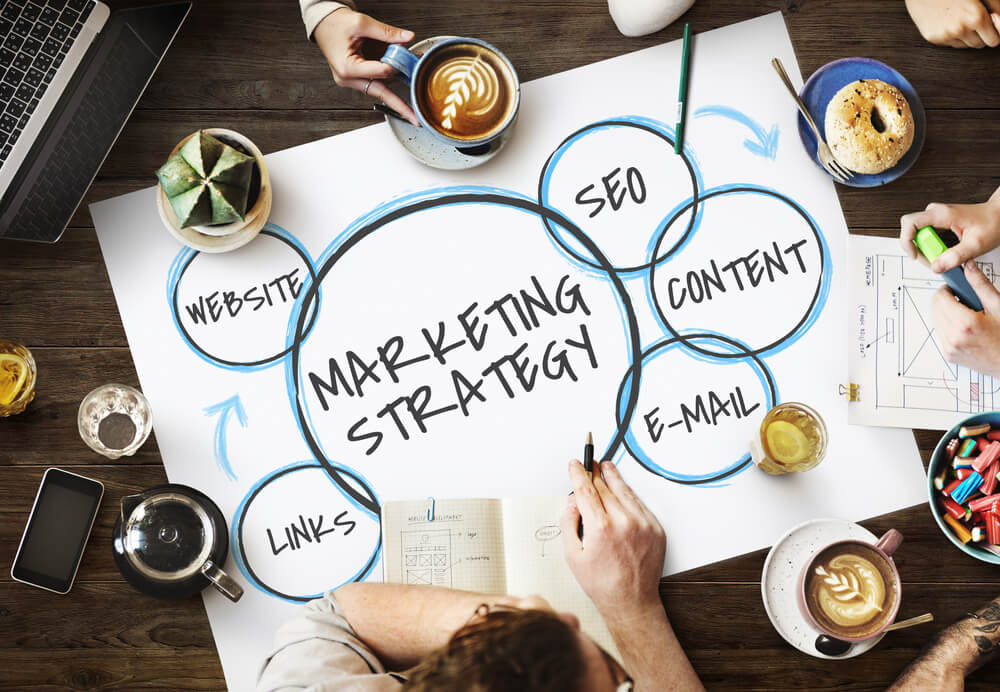
- Content Marketing: Create and distribute relevant and valuable content to attract and retain the audience. This can include blog articles, videos, infographics, ebooks, webinars, etc. The goal is to educate, entertain and inform the audience, building a relationship of trust that can eventually lead to conversion. For example, a travel company could create a blog with articles about travel destinations, travel tips, and inspiring travel experiences.
- SEO (Search Engine Optimization): Optimize the website and content to improve positioning in search results. This involves using relevant keywords, optimizing the website structure, improving loading speed, and getting links from other websites. The objective is to increase the visibility of the website in search engines, attracting organic traffic from users looking for information or products related to the company.
- SEM (Search Engine Marketing): Use pay-per-click advertising on search engines to generate traffic and leads. This involves creating relevant ads that are shown to users searching for specific keywords on search engines like Google. The goal is to drive qualified traffic to the website, increasing the chances of conversion.
- Social networks: Use social platforms to connect with the audience, build a community and promote products or services. This involves creating profiles on social networks relevant to the target audience, publishing attractive content, interacting with users and using the platforms’ advertising tools. The goal is to increase brand awareness, generate engagement with the audience and drive traffic to the website.
- Email marketing: Use email to communicate with your audience, nurture leads, and generate conversions. This involves building a subscriber list, sending emails with relevant content and special offers, and segmenting the audience to personalize messages. The goal is to keep the audience informed and engaged, generating leads and conversions.
- Personalized Marketing: This strategy is based on the use of historical data to create a personalized experience for the consumer. 4. This may include product recommendations based on previous purchases, special offers for loyal customers, or content tailored to each user’s individual preferences. The objective is to improve the customer experience, increasing satisfaction and loyalty.
- Operational Marketing: Unlike strategic marketing, which focuses on long-term goals, operational marketing focuses on short-term goals. 5. Define actions that can be achieved in less time, such as increasing sales during a specific campaign or promoting a new product. Operational marketing complements strategic marketing, allowing companies to react quickly to market opportunities and adjust their actions based on the results.
- Inbound Marketing: This methodology focuses on attracting customers through relevant and useful content, rather than interrupting them with traditional advertising. 6. It involves creating content that answers the questions and needs of the audience, optimizing it for search engines and promoting it on social networks. The goal is to attract qualified traffic to the website, convert visitors into leads and, finally, customers.
4. Digital Marketing Tactics:
Tactics are the specific actions that will be implemented to carry out the strategies. Examples of tactics:
- Create a blog with content relevant to the target audience: A blog is an excellent tool to attract organic traffic, educate the audience and position the company as a benchmark in its sector. Different content formats, such as articles, videos, infographics, and lists, can be used to keep the audience engaged. For example, a technology company could create a blog with tutorials, product reviews, and industry news.
- Optimize web pages with relevant keywords: Keyword optimization is essential to improve search engine positioning. Relevant keywords should be used in the title, description, tags and content of web pages, ensuring that the content is relevant to user searches.
- Launch advertising campaigns in Google Ads: Google Ads allows you to create ads that are shown to users who search for specific keywords on Google. Campaigns can be segmented by location, language, device and other criteria to ensure that your ads reach your target audience.
- Publish attractive content on social networks: Social networks are an excellent platform to connect with your audience and promote products or services. You should publish attractive content that generates engagement, such as images, videos, stories and surveys, and use the platforms’ advertising tools to reach a broader audience.
- Send newsletters with special offers to subscribers: Email marketing is an effective tool to keep your audience informed and engaged. You can send newsletters with relevant content, such as blog articles, special offers and company news, and segment your audience to personalize messages.
5. Digital Marketing Budget:
Defining the budget for each strategy and tactic is crucial to ensure that marketing actions are profitable. The costs of tools, advertising, content creation and other necessary resources must be considered. It is important to analyze the return on investment (ROI) of each action, to identify the most effective strategies and tactics. 7. For example, a spreadsheet can be used to track expenses and income for each campaign, calculating ROI and adjusting the budget based on the results.
6. Measurement and Analysis:
Establishing key performance indicators (KPIs) to measure the success of strategies and tactics is essential to evaluate progress and make adjustments to the plan. Web analytics and marketing tools can be used to monitor website traffic, conversions, social media engagement, and other relevant KPIs. For example, Google Analytics allows you to obtain detailed information about user behavior on the website, such as the most visited pages, dwell time and bounce rate. This information may be used to optimize the website and improve user experience.
AI as an Ally in Digital Marketing Planning
AI is transforming the way companies plan and execute their digital marketing strategies. Its ability to analyze large volumes of data, identify patterns and automate tasks is optimizing every stage of the process 8.
1. Data Analysis:
AI can analyze data from various sources, such as social media, websites, and CRM, to gain valuable insights into consumer behavior, market trends, and competition. This allows companies to make more informed decisions and create more effective strategies. 9.
2. Trend Prediction:
AI algorithms can identify patterns and predict future trends, allowing companies to anticipate market needs and adapt their strategies accordingly. For example, AI can predict which products will be most in demand in the future or what type of content will be most popular on social networks. 9.
3. Content Creation:
AI can assist in content creation in a variety of ways, such as generating topic ideas, writing copy, creating images and videos, and translating content into different languages. This allows businesses to create high-quality content more efficiently and at scale. 10. Additionally, AI can personalize content to each user’s individual preferences, improving engagement and conversion rates. 10. For example, an e-commerce platform can use AI to generate personalized product descriptions for each user, highlighting the features most relevant to their needs.
4. Task Automation:
AI can automate repetitive tasks in digital marketing, such as managing ad campaigns, audience segmentation, sending emails, and posting on social media. This frees up time for marketers to focus on more strategic and creative tasks. 11. AI-powered automation allows marketers to spend more time on high-level tasks such as strategy development, creativity and innovation, improving the efficiency and effectiveness of the marketing department. 12.
5. Personalization of the Experience:
AI allows companies to personalize the customer experience in real time. For example, chatbots can offer instant answers to customer questions, and product recommendations can be tailored to each user’s individual preferences. 13.
Limitations and Challenges of Using AI in Digital Marketing
Despite its benefits, AI in digital marketing also presents limitations and challenges:
- Data dependency: AI needs large amounts of data to function properly. If data is limited or low quality, AI results may be inaccurate or biased 14.
- Lack of human intuition: AI lacks human intuition and creativity. While you can automate tasks and analyze data, human intervention is still needed to make strategic and creative decisions. 15.
- Ethical concerns: The use of AI in digital marketing raises ethical concerns, such as data privacy, algorithmic discrimination, and manipulation of consumer behavior 16.
Examples of AI in Digital Marketing Planning
| Enterprise | Use of AI | Benefits |
|---|---|---|
| Sephora | Virtual beauty assistant with AI for personalized makeup recommendations | Improve the online shopping experience 17 |
| Netflix | AI to analyze user behavior and offer personalized movie and series recommendations. It also uses AI to optimize the design and presentation of its content. 18 | Improve customer satisfaction and retention 19 |
| Starbucks | AI to personalize the customer experience through your mobile app, offering drink recommendations, special offers and rewards | Improve customer loyalty and satisfaction 18 |
| Coca-cola | Use videos and contests that seek interaction and identification of users with the brand 20 | Increase engagement and brand loyalty |
Conclusions
Digital marketing planning is a complex process that requires extensive analysis, clear definition of objectives, and careful selection of strategies and tactics. AI is transforming this process, offering new tools and capabilities to optimize each stage. However, it is important to remember that AI is a tool that must be used responsibly and ethically, complementing human intuition and creativity. Companies that manage to integrate AI effectively into their digital marketing planning will be better positioned to achieve their objectives and stand out in the competitive digital environment.
Looking ahead, AI in digital marketing will continue to evolve, with increasingly sophisticated tools enabling greater personalization, automation, and data analysis. Companies must be prepared to adapt to these trends, investing in the training of their teams, adopting new technologies and prioritizing ethical considerations in the use of AI. Digital marketing planning in the age of AI requires a dynamic and adaptable approach, combining the power of technology with human intelligence and creativity.
Scale your personalization with ethical AI. Standing out in a crowded market requires reaching the right person with the right message at the right millisecond. Use GGyess SocialSuite to automate your multi-channel distribution. Leverage our AI tools to optimize your content for each platform while maintaining the human touch and ethical standards your audience expects. Automate with purpose at GGyess.com
Sources cited
1. How to structure your digital marketing plan – Wearemarketing.com, accessed: January 22, 2025, https://www.wearemarketing.com/es/blog/paso-a-paso-estructura-de-un-plan-de-marketing-digital.html
2. How to create a digital marketing plan in 6 steps? – BILIB, access: January 22, 2025, https://www.bilib.es/actualidad/articulos-tecnologicos/post/noticia/como-crear-un-plan-de-marketing-digital-en-6-pasos
3. Marketing Plan: Guide, Template and Examples [2024] – Genwords, access: January 22, 2025, https://www.genwords.com/blog/como-hacer-un-plan-de-marketing-ejemplos/
4. 19 types of marketing that you cannot miss [2024] – Asana, accessed: January 22, 2025, https://asana.com/es/resources/types-of-marketing
5. 10 Digital Marketing Strategies for your online business – Conekta, accessed: January 22, 2025, https://www.conekta.com/blog/10-estrategias-de-marketing-digital-para-tu-negocio-en-linea
6. Monkey Plus Digital marketing agency in Quito – Ecuador, accessed: January 22, 2025, https://monkeyplusbc.com/
7. Digital marketing plan phases, access: January 22, 2025, https://cebek-digital.com/wp-content/uploads/2021/07/IF6Fases-plan-de-marketing-digital.pdf
8. monkeyplusbc.com, accessed: January 22, 2025, https://monkeyplusbc.com/blog-marketing-digital-ecommerce/la-inteligencia-artificial-est%C3%A1-transformando-el-marketing-digital.html#:~:text=La%20IA%20puede%20analizar%20enormes,campa%C3%B1as%20m%C3%A1s%20enfocadas%20y%20efectivas.
9. Artificial intelligence in marketing – Mailchimp, accessed: January 22, 2025, https://mailchimp.com/es/resources/why-artificial-intelligence-in-marketing-is-vital/
10. 9+ Use cases of generative AI in marketing – Delve AI, accessed: January 22, 2025, https://www.delve.ai/es/blog/marketing-de-ia-generativa
11. Artificial Intelligence in Digital Marketing: Transforming the Future, accessed: January 22, 2025, https://www.digitalformulalab.com/blog/inteligencia-artificial-en-marketing-digital-transformando-el-futuro
12. 10 ways AI is changing digital marketing – Emeritus Latam, accessed: January 22, 2025, https://latam.emeritus.org/blogs/10-formas-en-que-la-ia-esta-cambiando-al-marketing-digital/
13. Artificial Intelligence (AI) and its application in Marketing – Digital Marketing Agency and Consulting and Customer Management, access: January 22, 2025, https://hayasmarketing.com/es/la-inteligencia-artificial-ia-y-su-aplicacion-en-marketing/
14. What limits does AI have in marketing?, accessed: January 22, 2025, https://aimarketingengineers.com/es/que_limites_tiene_ai_en_marketing/
15. Implications of Artificial Intelligence in Digital Marketing – Merkle, accessed: January 22, 2025, https://www.merkle.com/es/merkle-now/articles-blogs/2023/implicaciones-de-la-inteligencia-artificial-en-el-marketing-digital.html
16. 7 disadvantages of using AI Artificial Intelligence in digital marketing – Komunicando, accessed: January 22, 2025, https://www.komunicando.es/desventajas-ia-inteligencia-artificial/
17. 10 Success Stories of AI Implementation in Digital Marketing: Guide to Getting Started, accessed: January 22, 2025, https://www.duploagency.com/implementacion-de-ia-en-marketing/
18. Artificial intelligence applied to marketing: success stories – Ok Otto Agency, accessed: January 22, 2025, https://www.ok-otto.com/blog/inteligencia-artificial-aplicada-al-marketing-casos-de-exito/
19. 7 (brilliant) content marketing examples – fundo, accessed: January 22, 2025, https://mbudo.com/es/blog/7-ejemplos-de-marketing-de-contenidos-con-exito
20. Digital marketing agencies in Ecuador experts in Inbound – Monkey Plus, accessed: January 22, 2025, https://monkeyplusbc.com/blog-marketing-digital-ecommerce/agencias-de-marketing-digital-en-ecuador-expertas-en-inbound.html