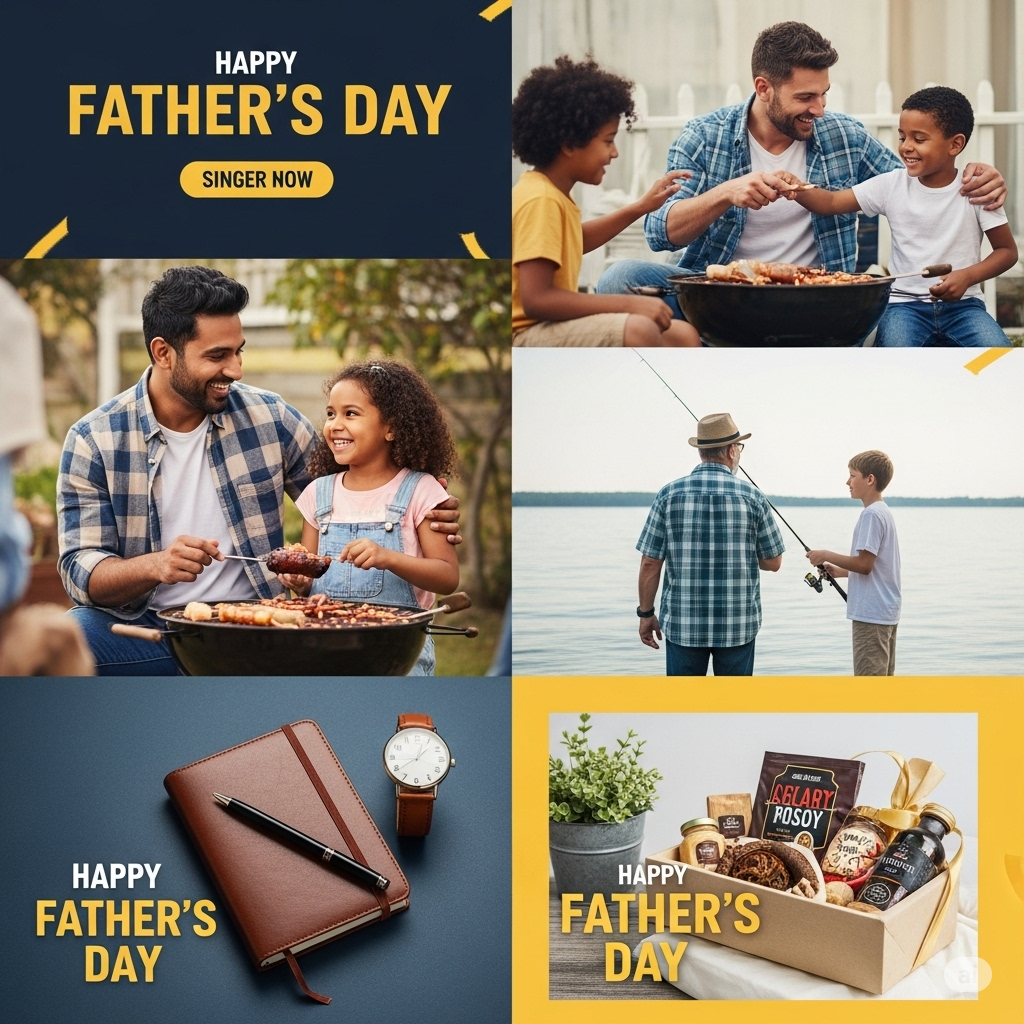
Father’s Day, a celebration dedicated to honoring fatherhood and the influence of dads in society, has transcended its origins to become a significant global commercial event. While its observance may vary in dates and traditions, its impact on consumer behavior and digital marketing strategies is undeniable. This report delves into the digital marketing tactics employed by large and small brands in the United States and Latin America to capitalize on this holiday, analyzing the similarities, differences, and best practices that drive success in an ever-evolving digital landscape. It will examine how brands can effectively connect with consumers, fostering engagement and conversions through strategic and culturally relevant approaches.
II. Father’s Day: A Cultural and Commercial Overview
Origins and Evolution of the Celebration

Father’s Day, as it is known throughout much of the world, has its roots in the United States. The first documented celebration in the country took place on June 19, 1910, in Washington State, initiated by Sonora Smart Dodd, who sought to honor her father, a Civil War veteran who raised his six children alone.1Despite initial efforts, it wasn’t until 1972 that President Richard Nixon officially declared it a national holiday in the United States, establishing it on the third Sunday in June.1
In Latin America, Father’s Day celebration dates are remarkably diverse. While many countries, such as Mexico, Argentina, Chile, Colombia, Peru, Paraguay, and Costa Rica, have adopted the American tradition of the third Sunday in June, there are significant variations.3For example, Brazil celebrates Father’s Day on the second Sunday of August.5, while Bolivia does so on March 19, coinciding with St. Joseph’s Day, a date also observed in Spain and other Catholic countries.4Colombia, although traditionally celebrating it on the second Sunday of June, has seen its 2025 date set for the third Sunday of June.6Chile, for its part, although officially commemorated on June 19, celebrates it commercially on the third Sunday in June.7These timing differences require highly adaptive and localized digital marketing planning.
Economic Impact and Consumer Behavior
Father’s Day represents a substantial commercial opportunity. In the United States, record spending of $24 billion is projected for this holiday, a significant increase from previous years, with an average of $199.38 per shopper.13Consumers between the ages of 35 and 44 lead the spending, with an average of $278.90.13
Gift preferences have evolved. While greeting cards (58%) and clothing (55%) remain the most popular purchases, a significant portion of spending goes toward special outings, such as dining out or recreational activities (53%, with $4.8 billion in total spending), and gift cards (50%).15There’s a growing trend toward experiences and personal touches; 43% of consumers plan to gift a subscription box, and 30% will opt for an experience.13Other gift categories include personal care products (33%), electronics (26%), tools or appliances (25%), and sporting goods (23%).15
A crucial aspect of consumer behavior is the tendency toward last-minute shopping. Nearly 90% of consumers make their purchases in the month leading up to the holiday, and approximately 25% wait until the last week, generating a spike in late purchases.13This pattern underscores the need for marketing strategies that create urgency and offer convenient solutions for lagging buyers.
III. Digital Marketing Strategies for Major Brands
Major brands, with their considerable budgets and reach, are taking sophisticated approaches to Father’s Day digital marketing, focusing on emotional resonance, technological innovation, and third-party amplification.
Emotional Campaigns and Authentic Storytelling
For major brands, campaign effectiveness lies not only in visibility, but also in the ability to forge a lasting emotional connection. There is an understanding that massive advertising investment can lead to consumers experiencing ad saturation, which diminishes attention and impact. Therefore, authentic storytelling and content that evokes deep feelings become fundamental elements to overcome this disconnect.
Campaigns like Delta’s “To All the Pilots on the Ground,” which cleverly connects the airline’s service to a universally tender moment between fathers and sons, or GAP’s “Love Comes in Every Shade,” which features an intimate image of a father and son, demonstrate how emotionality can reinforce a brand message.16Gillette’s “Go Ask Dad” campaign, which addresses how technology has altered the transmission of knowledge between generations, and Volkswagen’s “Generations,” which explores the complexities of father-son relationships, are examples of how brands can address human truths with a depth that resonates.16This type of content transcends mere product promotion, creating a more powerful brand recall that’s less susceptible to ad fatigue than the constant barrage of transactional messages. By focusing on shared experiences and universal values of parenting, brands build a more meaningful relationship with their audience.
Use of Advanced Technology and Omnichannel
Major brands are using advanced technologies to create more immersive and dynamic advertising experiences. Digital billboards, for example, allow for real-time adaptation of messages, displaying last-minute offers or countdown times to generate urgency, or even adapting to the weather to promote relevant products.17Integrating augmented reality (AR) into outdoor campaigns transforms static ads into interactive experiences, allowing users to virtually try on products or participate in brand-related games.17This ability to transform passive viewing into active engagement is a key factor. Technology not only amplifies reach but also enriches interaction, making advertising more memorable and engaging, especially for gift campaigns where the shopping experience is key.
Furthermore, adopting an omnichannel approach is crucial. This involves integrating channels such as connected TV (CTV), digital out-of-home (DOOH), and traditional out-of-home (OOH) advertising.13This strategy ensures that brands reach consumers both online and offline, accompanying them at every stage of their purchasing journey. The combination of these channels allows for a consistent and coherent presence, maximizing visibility and engagement in a fragmented media environment.
Influencer Marketing and User-Generated Content (UGC)

Collaboration with influencers and the promotion of user-generated content (UGC) have become pillars for major brands seeking to scale their authenticity. Consumers tend to trust recommendations from real people more than direct brand advertising.17By partnering with content creators, brands can leverage this inherent trust to reach specific audiences in a way that feels more organic and compelling.
Examples of successful campaigns include Craftsman’s “Working With Dad” initiative, which used makers to showcase authentic moments of fathers and sons using tools, generating thousands of likes and high engagement.19Similarly, Tequila Herradura collaborated with influencers to showcase luxury cocktail experiences for Father’s Day, achieving an impressive engagement rate and a large number of impressions.19Dignity Health also found success with a campaign that celebrated the unique roles of fathers, inviting creators to share genuine moments with their children.19
The practice of influencer “whitelisting,” where brands obtain licenses to run paid ads through influencers’ social media accounts, is a particularly effective tactic.20This allows ads to appear under the influencer’s name, rather than the brand’s, making them feel less intrusive and more like organic content. This strategy combines the broad reach of paid advertising with the credibility of a personal recommendation, bridging the gap between mass marketing and individual trust.
IV. Digital Marketing Strategies for Small Businesses
Small businesses, often with limited budgets, must be resourceful and strategic in their digital marketing efforts for Father’s Day. Their competitive advantage lies in their ability to offer a personal touch and build a strong community.
Maximizing Online Presence with Limited Resources
For small businesses, a robust online presence is critical, as nearly two-thirds of shoppers interact with or share Father’s Day-related content on social media, and 70% use it to search for gift ideas.21This means going beyond a simple presence. It’s crucial to curate social media content that suggests gift ideas or unique experiences related to the company’s products or services.21
Building a relationship with the audience is key; this is achieved by inviting consumers to share their favorite memories about their parents, which fosters an emotional connection with the brand.21In addition to social media, small businesses can optimize their website with themed banners or pop-ups on the homepage, publish relevant blog posts with gift guides, and send timely newsletters highlighting special offers.21These companies’ ability to be agile and highly relevant locally allows them to outperform larger competitors, as they can quickly tailor their messaging to niche interests and build genuine relationships that larger brands often can’t replicate at scale.
Creative Promotions and Value Offers
Creativity in promotions is vital for small businesses. Instead of steep discounts, they can focus on perceived value and personalization. Offering customization options, such as personalized engraving, handwritten notes, or themed accessories, allows existing products to become unique gifts without requiring a large investment in new inventory.21
Creating themed gift packages tailored to different dad types (e.g., the barbecue enthusiast, the tech geek, the coffee connoisseur) simplifies the selection process for customers and can help move inventory of underselling products.19Flash sales and tiered discounts, such as “Early Bird” deals that increase as the date approaches, create a sense of urgency.19Even a small percentage discount or coupon code can be very effective.26
Offering free gifts with purchase, such as a small Father’s Day card or a brand-name item, can incentivize purchases and generate valuable word-of-mouth.19For last-minute shoppers, gift cards are a great option, and you can add value by offering e-cards with photos or small customizations.19Introducing limited-edition products or offering unique holiday experiences can also generate excitement.21Finally, integrating Father’s Day promotions with existing loyalty programs can maximize the impact, rewarding loyal customers with additional benefits.21The inventiveness of these offerings allows small businesses to compete effectively, demonstrating that creativity and relevance can offset a more modest marketing budget.
Community Building and Engagement Through Social Media
Social media is a powerful tool for small businesses to build community and generate engagement. Contests and sweepstakes are particularly effective. This includes photo contests, such as “Coolest Dad?” or “Working with Dad,” “Dad Joke” contests, or general sweepstakes on platforms like Facebook and Instagram.19These activities not only drive engagement and generate user-generated content (UGC), but also increase brand visibility.
Interactive content, such as polls, quizzes, or “tag your dad” challenges on Instagram and TikTok, also encourages engagement.14Gamified games, such as quizzes, hidden object games, or memory games, can significantly increase the amount of time users spend on brand channels.28Humanizing the brand is crucial; this can be achieved by encouraging employees to share how they celebrate Father’s Day.14or even allowing a parent (an employee or local figure) to “take over” social media to share authentic content.26By actively engaging their customer base, small businesses transform their buyers into a marketing force, generating authentic content that resonates more deeply than traditional advertising and expanding their reach through organic word of mouth.
Email and SMS Marketing as Cost-Effective Tools
Email marketing remains one of the digital tools with the highest return on investment (ROI) for Father’s Day campaigns, with open rates 12-15% higher than usual in the three weeks leading up to the holiday.13For small businesses, this represents a direct and cost-effective channel for connecting with customers.
Personalization is key: Sending personalized emails using merge tags (such as the recipient’s name) and segmenting your audience to send gift guides tailored to different “dad archetypes” can increase click-through rates by up to 30%.19Compelling copywriting with strong emotional appeal and clear calls to action is essential to motivating customers to make a purchase.23
SMS promotions are also a direct and effective strategy for reaching customers who have opted in to receive text messages. They can be used to send exclusive offers or last-minute reminders about Father’s Day deals.24This “low-cost, high-touch” approach allows small businesses to nurture customer relationships, drive repeat purchases, and capture last-minute shoppers without incurring significant advertising expenditures, thereby building lasting loyalty.
Local Partnerships and Local SEO Optimization
Small businesses can expand their reach and add value to their offerings through strategic partnerships with complementary local businesses. For example, a grooming product line could partner with a local barbershop for a sweepstakes package, or a bookstore could collaborate with a coffee shop to offer discount vouchers to book purchases over a certain amount.22These collaborations not only expose the brand to new audiences, but also enhance the customer value proposition.
Organizing or participating in local Father’s Day events is another effective way to connect with the community and attract foot traffic.26Additionally, local SEO optimization is crucial. Businesses should update their local listings (such as Google My Business and Yelp) with special holiday opening hours and any promotional initiatives. This ensures that potential customers find relevant information when searching for businesses in their area, attracting both online visitors and those looking for a physical experience.24
V. A Regional Analysis: US vs. Latin America
Digital marketing strategies for Father’s Day, while sharing fundamental principles, must adapt to the cultural and consumer specificities of each region. A comparative analysis between the United States and Latin America reveals significant points of convergence and divergence.
Similarities in Consumer Behavior
Despite geographical and cultural differences, there are consumer behavior patterns that remain consistent across both regions. One notable trend is the preference for experiences and personalization over generic material gifts.13Consumers look for gifts that create lasting memories or reflect the father’s unique interests.
The importance of visual and social content is universal; social media platforms significantly influence gift ideas and consumer engagement in both markets.13User-generated content (UGC) is particularly valued for its authenticity and ability to generate a genuine emotional impact.13Finally, the trend toward last-minute shopping is a constant in both regions, forcing brands to implement urgency and convenience strategies in the days leading up to the holiday.13
In the US: Gift Preferences and Dominant Channels
In the United States, the Father’s Day market is mature and diverse. While greeting cards and clothing are popular, a substantial portion of spending is directed toward special outings and gift cards.15The interests of American parents are varied and are reflected in the high brand equity of companies in sectors such as video games (Electronic Arts, Twitch), grilling (Omaha Steaks), lawn care (Lawn Doctor, TruGreen), finance (Dave, crypto.com, Robinhood), and travel/relaxation (Royal Caribbean).33This diversity suggests that marketing campaigns should be highly segmented and targeted to specific parent archetypes.
Established digital channels in the US include email marketing, which offers a strong return on investment.13, and social media like Instagram, Pinterest, Facebook, and TikTok, which are popular platforms for holiday marketing.32Additionally, pay-per-click (PPC) advertising and digital banners remain important sources of leads.34The sophistication of the US market demands refined segmentation and well-integrated multi-channel campaigns.
In Latin America: The Impact of Social Commerce, Short Video, and Cultural Storytelling
Latin America presents a rapidly evolving digital landscape, with explosive growth in specific areas. The social commerce market in the region is experiencing robust growth, projected to reach $14.62 billion by 2025.18This growth is driven by increased internet access, the integration of fintech technologies (such as Pix in Brazil), and high social media engagement. Latin American consumers are increasingly embracing direct purchases through social media platforms.18
Short-form mobile video consumption dominates the digital landscape. Smartphones are the preferred device for digital video streaming (88% of users), and short-form video viewing on platforms like Instagram Reels (with a 669% increase in engagement), TikTok, and YouTube Shorts is booming.35Content and ads should be optimized for these mobile platforms. Connected TV (CTV) is also gaining ground, accounting for more than 45% of YouTube viewing time in Argentina, Brazil, and Mexico.35Ad-supported video-on-demand (AVOD) models are on the rise, offering new monetization opportunities.35
Influencer marketing plays a key role, with brands collaborating with local influencers to directly promote products, taking advantage of the high level of trust consumers place in them.18Additionally, cultural storytelling and experiences are key elements. Campaigns that highlight diverse fatherhood experiences and cultural traditions, such as Tequila Herradura’s blend of Mexican heritage with sophisticated Father’s Day celebrations, resonate strongly with audiences.19Travel to vibrant Latin American destinations for shared experiences is also a significant trend.31
While the US market, with its established digital channels, requires high segmentation and sophistication, Latin America offers immense untapped potential in social commerce and mobile video. This means that significant investment in in-app shopping integrations, short-form video content, and partnerships with local influencers can generate disproportionately high returns as the market matures and consumers adopt new digital shopping habits. Furthermore, understanding and deeply integrating local cultural nuances, traditions, and values into digital campaigns is vital to establishing an authentic and lasting connection with Latin American audiences. This goes beyond mere language translation, seeking narratives that resonate with specific regional identities and family structures, allowing brands to build stronger emotional bonds and foster deeper loyalty than generic campaigns can achieve.
Table 1: Comparison of Consumer Preferences and Digital Channels (US vs. Latin America)
| Feature | USA | Latin America |
| Main Date | Third Sunday of June | Various dates (predominantly the 3rd Sunday of June, but also March, July, August)4 |
| Average Spending | Tall and growing ($199.38/person, $24B total)13 | High and growing (e.g. Social Commerce at $14.62B in 2025)18 |
| Favorite Gifts | Cards, clothing, outings, gift cards, electronics, tools, gaming, lawn care, subscriptions, experiences.13 | Experiences (78% prefer), travel, subscriptions, tech gadgets, sustainable products.13 |
| Dominant Digital Channels | Email marketing, redes sociales (Instagram, Facebook, Pinterest, TikTok), PPC, banners digitales, CTV, DOOH. 13 | Social commerce (TikTok, Mercado Libre), short video (Reels, TikTok, Shorts), mobile streaming, CTV, influencer marketing.18 |
| Content Focus | Humor, authenticity, personalization, UGC, emotional narratives, dad archetypes (grill master, tech geek).13 | Cultural storytelling, authenticity, UGC, shared experiences, fintech integration, and in-app payments.18 |
| Cultural Sensitivity | Inclusivity (parents, stepparents, parent figures), opt-out option.13 | Hyper-localization of dates, specific cultural narratives, diversity of father figures.4 |
VI. Cross-cutting Best Practices for All Brands
Regardless of brand size or region, certain digital marketing practices are universally effective for Father’s Day, focusing on strategic planning, empathetic communication, and continuous optimization.
Your brand can stand out: learn how Access the ebook
Advance Planning and Creating Urgency
Early planning is critical to the success of Father’s Day campaigns. Ideally, campaigns should begin 8 to 10 weeks in advance (late April for June dates) to build momentum and capture early buyers.20This timeframe allows for testing different messages and creatives, optimizing performance before peak purchasing.
Implementing a countdown strategy is highly effective at creating urgency. Using timers for limited-time offers, flash sales, or crucial shipping deadlines can drive shoppers, especially those who wait until the last minute.13Additionally, tiered sales, which feature deeper discounts at the beginning of the season and increase as the season approaches, can encourage early purchases and maintain interest throughout the season.19
Inclusive Messaging and Opt-Out Options
Sensitivity and inclusiveness in messaging are crucial. Brands should use language that acknowledges all father figures, including fathers, stepfathers, uncles, grandfathers, mentors, and siblings, to broaden their appeal and avoid alienating audience segments.20Diversity in visual representations and stories of parenting also contributes to a more resonant campaign.20
An increasingly adopted approach is to offer customers the explicit option to opt out of receiving Father’s Day-related communications while remaining subscribed to other promotions.13This isn’t merely a polite gesture; it’s a sophisticated strategy that allows brands to collect high-quality data on their subscribers’ emotional preferences. By allowing customers to self-segment based on their comfort with holiday content, brands demonstrate empathy and build trust. This practice reduces unsubscribe rates and provides valuable insights for future personalization, transforming a potentially negative interaction into a positive data point that strengthens the long-term customer relationship.
Measurement of Results and Continuous Optimization
Success in seasonal marketing is an iterative process that requires constant measurement and agile optimization. It’s essential to establish clear, specific, measurable, achievable, relevant, and time-bound (SMART) objectives, along with key results (KRs) for each campaign.34
Brands should continually analyze data from past campaigns to understand audience behavior and conversion funnel performance.34Monitoring metrics such as engagement rates, click-through rates, and conversion rates is essential.19The ability to quickly adapt messaging or creative based on early performance indicators is paramount.20Conducting A/B testing on subject lines, ad copy, and visuals allows for real-time refinement of strategies. This dedication to continuous learning and year-over-year refinement is what drives sustained success in a dynamic digital environment.
Focus on Authenticity and Storytelling
Prioritizing authentic storytelling over overly polished advertising is a practice that resonates deeply with consumers.13Promoting user-generated content (UGC) and leveraging influencer collaborations are effective ways to build trust and genuine connections.14Real stories and shared experiences have a much greater impact than generic brand messages.
Sharing behind-the-scenes content or stories from father figures within your own company humanizes your brand and creates an emotional connection with your audience.19This focus on authenticity helps brands stand out in a message-saturated marketplace, building deeper, more meaningful relationships with consumers.
Table 2: Recommended Digital Channels and Tactics by Brand Size
| Channel / Tactics | Big Brands | Small Businesses |
| Website / E-commerce | Finely tuned homepages, dedicated sections, advanced customization.25 | Themed banners, pop-ups, simple gift guides, customization options.21 |
| Social networks | Brand campaigns with UGC and influencers, AR, high-production videos (Reels, TikTok, YouTube Shorts).14 | Contests (photos, dad jokes), sweepstakes, employee-generated content, authentic stories, direct interaction.19 |
| Email Marketing | Deep segmentation, flow automation (cart abandonment), proactive opt-out, rich visual content.13 | Customized campaigns with merge tags, gift guides, last-minute offers, and an emphasis on ROI.19 |
| Paid Advertising | Meta Ads (Facebook/Instagram), Google Ads (PPC), CTV, DOOH, influencer whitelisting, dynamic formats.13 | Google Ads (local SEO), Facebook/Instagram Ads (limited budget), local partnerships, basic retargeting.21 |
| SMS Marketing | Offer reminders, shipping updates, and exclusive segment promotions.24 | Exclusive offers, last-minute reminders, discount codes.24 |
| Content | Interactive gift guides, themed blogs, emotional videos, storytelling campaigns.13 | Simple gift guides, recipes, playlists, “dad jokes” content, customer stories.21 |
| Experiences | Major brand events, AR experiences, themed trips, brand activations.13 | In-store events, tastings, DIY workshops, collaborations with local businesses.24 |
VII. Conclusion: The Future of Father’s Day Marketing in the Digital Age
The Father’s Day market represents a significant and growing opportunity for brands, driven by a steady increase in consumer spending and a palpable desire for more meaningful connections. Success in this digital landscape requires a multifaceted approach that encompasses hyper-localization, personalization, authentic content, and the ability to adapt to changing consumer preferences.
Effective strategies require a deep understanding of regional specifics, especially in Latin America, where celebration dates can vary and the rise of social commerce and short-form video dictate different channel priorities than in the United States. Personalization, user-generated content, and influencer marketing are not mere add-ons, but essential components for building the trust and authenticity that consumers crave.
Both large and small brands must adopt omnichannel approaches, adapting their tactics to their scale and resources. While large brands can leverage advanced technologies like augmented reality and CTV advertising to create immersive experiences, small businesses can thrive through community-driven efforts, creative value offerings, and the strategic use of cost-effective channels like email and SMS.
Empathy, inclusivity, and opting out of communications are critical to building long-term trust and loyalty. By empowering customers to manage their communication experience, brands not only demonstrate respect but also gain valuable data for more precise segmentation in the future. Agile planning, continuous measurement, and optimization are essential to adapt to changing consumer behaviors and evolving digital trends.
Final Perspectives and Recommendations for Success
To thrive in the future of Father’s Day marketing, brands should consider the following recommendations:
- Investing in Authentic Narratives:Prioritize storytelling that resonates emotionally, showcasing real experiences and diverse representations of parenthood. This builds deeper connections than purely transactional messaging, which is vital for brand longevity. In a noisy digital environment, brands that prioritize empathy and genuine engagement with their audiences as individuals, not just as consumers, will build stronger and more resilient relationships. Consumer trust and loyalty become the ultimate competitive advantage.
- Mastering Personalization and Segmentation:Leverage data to deliver highly relevant messages and offers, recognizing individual preferences and the specific “dad archetypes” they target. This allows for more effective and less intrusive communication.
- Adapting to the Evolving Digital Landscape:Stay abreast of emerging platforms and formats, such as new social commerce features, short-form video trends, and advancements in CTV advertising. This is particularly crucial in fast-growing markets like Latin America, where agility is a core competency. The ability to quickly analyze performance data, adapt messaging, and adjust the channel mix in real time will distinguish successful brands from those that are static.
- Fostering Community and Participation:Animate user-generated content, run interactive contests, and create opportunities for customers to share their stories. This transforms customers into brand advocates, amplifying reach organically and authentically.
- Prioritize Sensitivity and Inclusivity:Proactively address potential sensitivities surrounding the holiday by offering opt-out options and using inclusive language. This reinforces a brand’s human-centered values, which is increasingly important for reputation and consumer connection.
- Plan with Agility and Measure Constantly:Treat Father’s Day campaigns as iterative learning experiences, using data to refine strategies and optimize performance year after year. This requires flexible marketing technologies and a culture that embraces continuous experimentation.
- Explore Strategic Collaborations:Both large and small brands can benefit from partnerships—whether with influencers, complementary businesses, or local community organizations—to expand reach and enhance value propositions.
In short, the future of Father’s Day marketing in the digital age belongs to brands that can combine technological sophistication with a deep understanding of the human experience. Those that prioritize authenticity, empathy, and agility in their digital strategies will be the ones that forge the most meaningful connections and achieve lasting success.
Broadcast your “Human Truths” across the digital landscape. Use the Publish module to schedule your emotional narratives and authentic videos across TikTok, Instagram Reels, and YouTube Shorts simultaneously. GGyess ensures your brand remains consistent and visible as consumers search for gift ideas across multiple touchpoints. Automate your storytelling at GGyess.com
Sources cited
- Father’s Day – Date, Definition & History, acceso: junio 17, 2025, https://www.history.com/articles/fathers-day
- About Father’s Day – Hallmark, acceso: junio 17, 2025, https://www.hallmark.com/about-fathers-day/
- www.rubytuesday.com, accessed: June 17, 2025,https://www.rubytuesday.com/blog/fathers-day-history/
- When is Father’s Day 2025 Dates UK, USA, and World-wide – Dean Morris Cards, acceso: junio 17, 2025, https://deanmorriscards.co.uk/blogs/news/when-is-fathers-day
- Fathers Day Dates around the world – ChartsBin.com, acceso: junio 17, 2025, http://chartsbin.com/view/b9b
- Father’s Day 2025 in Colombia – Time and Date, acceso: junio 17, 2025, https://www.timeanddate.com/holidays/colombia/fathers-day
- Father’s Day Flowers & Gifts Chile | FlowerAdvisor CL, acceso: junio 17, 2025, https://www.floweradvisor.com/chile/fathers-day
- National Holidays and Festivities in Peru | Peruvian Sunrise, acceso: junio 17, 2025, https://peruvian-sunrise.com/blog/peru-holidays-national-festivities
- Father’s Day in Brazil | Google Slides & PowerPoint – Slidesgo, acceso: junio 17, 2025, https://slidesgo.com/theme/fathers-day-in-brazil
- www.donquijote.org, access: June 17, 2025,https://www.donquijote.org/spanish-culture/holidays/fathers-day/
- Colombia Celebrates Father’s Day, accessed June 17, 2025,https://colombiaone.com/2025/06/15/colombia-fathers-day/
- When Is Father’s Day Celebrated in Chile? – Ground News, acceso: junio 17, 2025, https://ground.news/article/when-is-fathers-day-celebrated-in-chile
- Father’s Day advertising trends for 2025 | illumin, acceso: junio 17, 2025, https://illumin.com/insights/blog/fathers-day-advertising-trends-for-2025/
- Drive Sales with These Father’s Day Marketing Trends – Southern California News Group, acceso: junio 17, 2025, https://www.socalnewsgroup.com/2025/06/06/fathers-day-marketing-trends/
- Father’s Day Retail Spending to Hit New High – Marketing Charts, acceso: junio 17, 2025, https://www.marketingcharts.com/industries/retail-and-e-commerce-235934
- The Best Dad Ads: 10 Brands That Get Modern Fathers | MDG Solutions, acceso: junio 17, 2025, https://www.mdgsolutions.com/learn-about-multi-location-marketing/the-best-dad-ads-10-brands-that-get-modern-fathers/
- Strategies To Make The Most of Seasonal Marketing – 75Media, acceso: junio 17, 2025, https://75media.co.uk/blog/best-seasonal-marketing-strategies/
- Latin America Social Commerce Intelligence Report 2025: Market to Grow by 20.1% to Reach $14.62 Billion this Year – Future Growth Dynamics to 2030 – ResearchAndMarkets.com – Business Wire, acceso: junio 17, 2025, https://www.businesswire.com/news/home/20250514165682/en/Latin-America-Social-Commerce-Intelligence-Report-2025-Market-to-Grow-by-20.1-to-Reach-%2414.62-Billion-this-Year—Future-Growth-Dynamics-to-2030—ResearchAndMarkets.com
- How to Win Father’s Day 2025: Campaign Ideas, Creator Collabs & Smart Sales Tactics, acceso: junio 17, 2025, https://popularpays.com/blog/how-to-win-fathers-day-2025
- Top Father’s Day Marketing Ideas With Influencers – GRIN, acceso: junio 17, 2025, https://grin.co/blog/nail-your-fathers-day-marketing-with-influencers/
- Father’s Day Marketing Strategies for Small Businesses – UH SBDC – University of Houston, acceso: junio 17, 2025, https://www.sbdc.uh.edu/sbdc/fathers-day-marketing-strategies.asp
- 6 Father’s Day marketing ideas for your small business – Gradient by PosterMyWall, acceso: junio 17, 2025, https://gradient.postermywall.com/2025/05/02/6-fathers-day-marketing-ideas-for-your-small-business/
- XIMIVOGUE Tips on 2025 Father’s Day Marketing, acceso: junio 17, 2025, https://www.ximiso.com/newsDetail/XIMIVOGUE%20Tips%20on%202025%20Father’s%20Day%20Marketing
- 10 Father’s Day Marketing Campaigns and Promotions to Use | Paytronix, acceso: junio 17, 2025, https://www.paytronix.com/blog/fathers-day-marketing
- 32 Holiday Marketing Ideas for eCommerce Stores (2025 Update) – Convertcart, acceso: junio 17, 2025, https://www.convertcart.com/blog/ecommerce-holiday-marketing-ideas
- 15 Fun Father’s Day Marketing & Promotion Ideas (+Tips!) – LocaliQ, acceso: junio 17, 2025, https://localiq.com/blog/fathers-day-marketing/
- 7 Father’s Day Promotional Ideas For Coffee & Tea Specialty Brands – Opensend, acceso: junio 17, 2025, https://www.opensend.com/post/fathers-day-promotional-ideas-coffee-tea-specialty
- 16 Father’s Day marketing ideas to engage your community – Qualifio, acceso: junio 17, 2025, https://qualifio.com/blog/16-fathers-day-marketing-ideas-to-engage-your-community/
- 5 inspiring Father’s day email marketing examples – Dotdigital, acceso: junio 17, 2025, https://dotdigital.com/blog/5-fathers-day-email-marketing-examples/
- 12 Best Father’s Day Marketing Ideas 2025 – Klaviyo, acceso: junio 17, 2025, https://www.klaviyo.com/blog/fathers-day-marketing
- Father’s Day 2025 Gift Guide: Unforgettable Travel Experiences – Aeromexico, acceso: junio 17, 2025, https://www.aeromexico.com/en-us/travel-blog-caminos/fathers-day-gift
- 8 winning holiday marketing strategies for 2024 – Sprout Social, acceso: junio 17, 2025, https://sproutsocial.com/insights/holiday-marketing/
- Father’s Day gifts: 10 brands with high brand equity among dads – The Harris Poll, acceso: junio 17, 2025, https://theharrispoll.com/briefs/fathers-day-gifts-10-brands-with-high-brand-equity-among-dads/
- 6 Steps for Effective Seasonal Marketing Campaigns – Lucky Orange, acceso: junio 17, 2025, https://www.luckyorange.com/blog/posts/planning-highly-effective-seasonal-marketing-campaigns
- Latin America Trends 2025 – 5 Key Takeaways from LATAM – Broadpeak, accessed: June 17, 2025, https://broadpeak.tv/blog/latin-america-trends-2025-5-key-takeaways-latam/
- 12 Best Father’s Day Marketing Ideas 2025 – Klaviyo, acceso: junio 17, 2025, https://www.klaviyo.com/uk/blog/fathers-day-marketing
- Q4 2024 Holiday Ad Trends for Thanksgiving & Christmas – Strike Social, acceso: junio 17, 2025, https://strikesocial.com/blog/q4-2024-holiday-ad-trends-for-thanksgiving-christmas/
- Top Father’s Day Campaigns by Brands – Mindstorm, acceso: junio 17, 2025, https://mindstorm.in/blog/top-fathers-day-campaigns-by-brands