The release of Apple’s latest operating system updates—iOS 26, macOS 26 (Tahoe), watchOS 26, and iPadOS 26—represents more than mere incremental improvements. These releases, unveiled at the 2025 Worldwide Developers Conference (WWDC), signal a profound strategic evolution aimed at further unifying the ecosystem and leveraging advanced artificial intelligence.1The updates are designed to create a smoother, smarter, and more personalized user experience across all Apple devices, from the iPhone 17 series to the Mac and Apple Watch.
This analysis delves into the key strategic pillars Apple is reinforcing with OS 26: a unified design language, unprecedented continuity, a privacy-first approach to AI, robust developer empowerment, and a sophisticated marketing strategy that fosters lasting loyalty.6We will examine how these elements work in concert to forge Apple’s formidable competitive advantage, driving both hardware sales and high-margin services growth. For companies seeking to emulate Apple’s market leadership and customer retention, understanding this holistic strategy is crucial. Applicable lessons will be drawn on how to build a cohesive ecosystem, prioritize user trust, foster developer loyalty, and craft marketing narratives that resonate deeply with audiences.
Build a brand that impacts everyone Download the guide
Section 1: The Unified Vision: Liquid Glass Design and Ecosystem Cohesion
1.1. A Revolutionary Aesthetic: The “Liquid Glass” Design
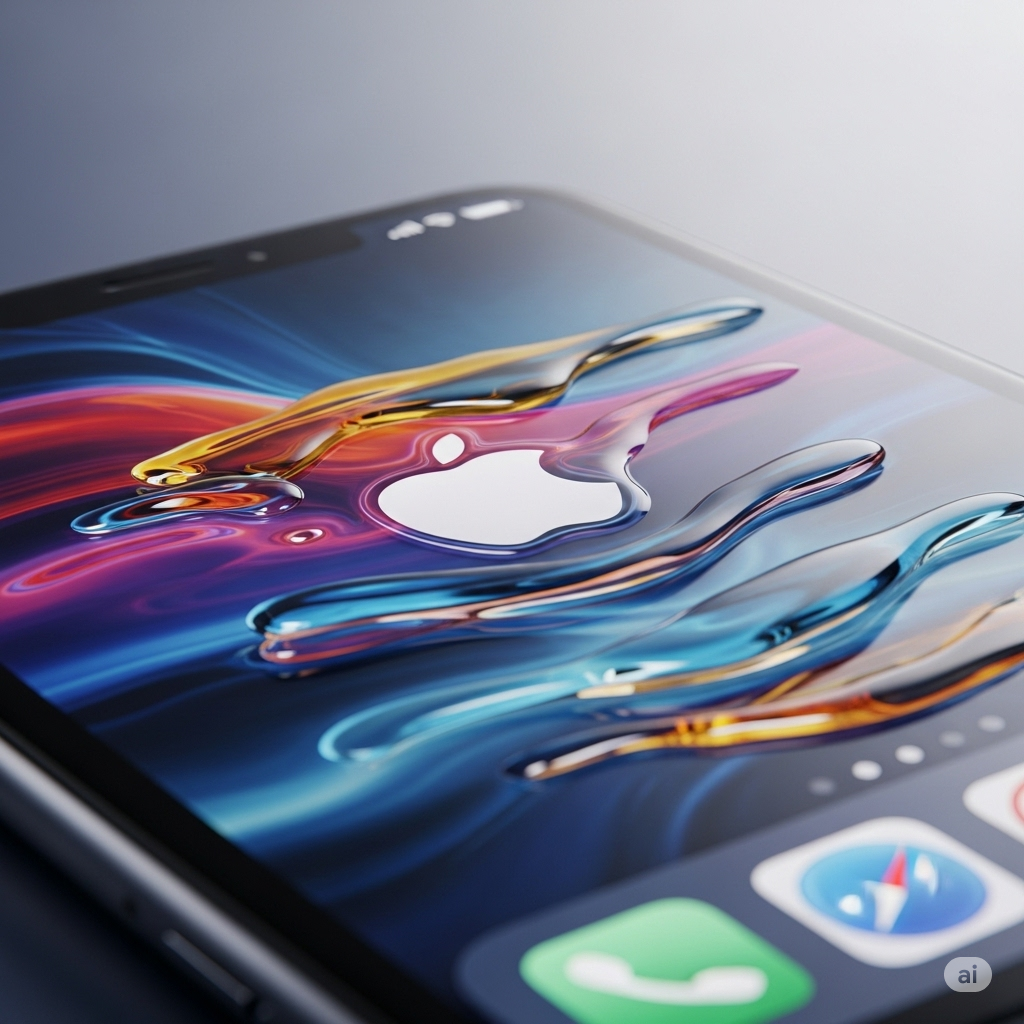
iOS 26 introduces a new design language called “Liquid Glass,” which transforms system menus, widgets, notifications, and the lock screen, giving them greater depth and movement while maintaining the central layout of the home screen.2This is the first significant design overhaul since iOS 7, underscoring its strategic importance.2macOS Tahoe 26 fully embraces this new aesthetic, incorporating refreshed designs for the menu bar and window buttons, and a redesigned Control Center that, for the first time, will support third-party apps.1
This initiative goes beyond a mere aesthetic update; it represents a deliberate effort to harmonize the visual experience across all Apple platforms. The translucent “Liquid Glass” material reflects and refracts the surroundings, creating a dynamic and immersive experience.1Elements like refined docks, sidebars, transparent menu bars, and customizable app icons contribute to a highly individualized yet consistently unified aesthetic.1This design consistency extends to native apps like Photos and Camera, which feature updated designs focused on ease of use and consistency across all devices.2
The deployment of this unified design language is a fundamental strategic tool for ecosystem cohesion and user retention. By implementing a visually striking and consistent aesthetic across iOS, macOS, iPadOS, and watchOS, Apple fosters a powerful sense of familiarity and intuitive usability across its various devices.3This significantly reduces the cognitive load for users when switching from their iPhone to their iPad or Mac, making the entire ecosystem feel like a seamless, integrated experience, rather than a collection of disparate products. This consistency improves user convenience, minimizes friction, and reinforces the brand’s premium perception.
By making the user experience feel truly unified and aesthetically superior, Apple implicitly increases the “friction for users considering switching to competing platforms.”3The unified aesthetic sets a new standard that can make Android or Windows interfaces look dated by comparison.3This strategic use of design deepens customer attachment, directly contributing to user retention.6and increasing Apple’s customer lifetime value. It also subtly encourages multiple device ownership, as the experience is so cohesive. Design isn’t just about beauty; it’s a powerful barrier to exit and a driver of ecosystem loyalty and adherence.
1.2. The Magic of Continuity: Seamless Experiences Across Devices

Apple’s Continuity features allow for seamless collaboration across Apple devices.13Key examples include Universal Control, which lets you use a single Mac keyboard, mouse, or trackpad to control up to two nearby Mac or iPad devices, allowing you to drag and drop files and content between them.13Handoff allows you to start a task on one device and continue it seamlessly on another.13Universal Clipboard makes it easy to copy text, images, photos, and videos from one Apple device and paste them onto another.13Other notable features include AirDrop for quick content sharing, Continuity Camera, which lets you use an iPhone as a webcam or microphone for a Mac, and Sidecar, which turns an iPad into a second display for a Mac.13The Phone app comes to the Mac thanks to Continuity, allowing users to relay cellular calls from their nearby iPhone, including familiar features like Recents, Favorites, and Voicemail, as well as updates like Call Screening and On-Hold Assistance.1Nearby iPhone Live Activities now appear in the Mac menu bar, offering real-time updates on Uber rides, flights, or live sports scores.1
These features are not standalone apps, but rather core elements of the Apple ecosystem, designed to make the user’s workflow incredibly smooth and convenient.13The ability to seamlessly transition from one task to another or share content between devices without interruption is a key differentiator that improves productivity and user satisfaction.13All of these features are deeply integrated into the operating systems and many everyday apps, and only require signing in with the same Apple account (with two-factor authentication) to activate them.13
The breadth and depth of these interconnected functionalities create a powerful network effect within the Apple ecosystem. Once a user integrates these features into their daily workflow (for example, using Universal Remote to manage Mac and iPad, taking calls on their Mac, or using iPhone Mirroring), their productivity and efficiency become intrinsically linked to the use of multiple Apple devices. The collective utility of these features far exceeds the sum of their individual parts, creating a synergistic effect.
This fluid interconnection acts as the ultimate retention mechanism.7It significantly increases switching costs for users. If a user switched to a non-Apple device, they would lose not just an individual product, but an entire integrated workflow, the convenience, and the substantial productivity gains associated with it. This deepens customer loyalty and reduces churn.12and actively encourages multiple device ownership11, directly contributing to Apple’s large and active installed base6and its ability to maintain premium prices. It’s a strategy that makes the ecosystem indispensable by making it genuinely more powerful when used together.
Table: Unification of the Apple Ecosystem: Key Continuity Features and Their Benefits
| Continuity Feature | Description | Compatible Devices | Main Benefit |
| Universal Control | Use a single keyboard/mouse to control up to 3 nearby Macs/iPads with drag and drop. | Mac, iPad | Improved productivity, seamless workflow, cross-device convenience |
| Handoff | Start a task on one device and continue exactly where you left off on another. | iPhone, iPad, Mac, Apple Watch | Seamless task transitions, efficiency |
| Universal Clipboard | Copy content (text, images, videos) from one device and paste it on another. | iPhone, iPad, Mac | Effortless content sharing, convenience |
| AirDrop | Share photos, videos, contacts, and more with nearby Apple devices. | iPhone, iPad, Mac | Quick and easy file sharing |
| Continuity Camera | Use your iPhone as a webcam or microphone for your Mac, with video effects. | iPhone, Mac | High-quality video conferencing, flexibility |
| Sidecar | Use your iPad as an extended or mirrored second display for your Mac. | iPad, Mac | Expanded workspace, multitasking |
| Phone App on Mac | Forward cellular calls from your iPhone to your Mac, using the full features of the Phone app. | iPhone, Mac | Unified communication, convenience |
| Live Activities in the Menu Bar | Display real-time updates (travel, flights, sports) from your iPhone in the Mac menu bar. | iPhone, Mac | Real-time information, convenience at a glance |
| Unlock with Apple Watch | Unlock your Mac or approve authentication requests with your Apple Watch. | Mac, Apple Watch | Quick and secure access |
| Personal Hotspot | Connect your Mac to the internet using your iPhone or iPad’s cellular connection. | iPhone, iPad, Mac | Connectivity on the go, internet access |
| Insert Sketches, Photos, Scans | Take a photo or scan a document with your iPhone/iPad and have it instantly appear on your Mac. | iPhone, iPad, Mac | Smooth content creation, rapid digitization |
1.3. OS 26: More than a Name, a Declaration of Unity

Apple’s announcement of a unified “OS 26” brand across all of its platforms—iOS, iPadOS, macOS, and visionOS—marks a strategic shift toward ecosystem cohesion.4This transition to a year-based operating system nomenclature, formalized in 2023 and refined through 2025, represents a fundamental strategic pillar to unify its ecosystem, strengthen user loyalty, and outperform competitors like Android and Windows.12
This naming convention eliminates ambiguity for both users and developers, allowing them to effortlessly track updates and align with Apple’s annual innovation cycle.12It also signals Apple’s ambition for a truly integrated future, where the intelligence and underlying design principles of OS 26 permeate every device, creating a visually and functionally consistent experience.12
The unification of operating system branding and the adoption of a year-based naming convention across iOS, iPadOS, macOS, and VisionOS is more than just a simplification; it provides a clear and predictable roadmap for both consumers and, crucially, developers. This standardization signals Apple’s unwavering commitment to an annual, synchronized innovation cycle across its ecosystem. This predictability reduces uncertainty for developers planning app updates, feature integrations, and overall product roadmaps, as they can anticipate when new operating system capabilities will be available.
This “developer alignment”12generates a powerful “flywheel effect”12, where developers are more confident investing time and resources into Apple platforms because they know what to expect and can plan accordingly. This reliable integration of third-party tools and features accelerates the adoption of new operating system capabilities, such as Apple Intelligence.12For users, it ensures that operating system updates are perceived as “essential, not optional.”12, which drives recurring revenue streams (especially for services) and reinforces the value proposition of remaining within the Apple ecosystem. It’s a subtle but powerful measure to optimize the evolution of the entire ecosystem and maintain its competitive advantage by fostering predictability and trust.
Section 2: Apple Intelligence: Privacy, Productivity, and Creativity
2.1. Apple Intelligence: The Heart of Innovation
Apple Intelligence introduces a set of intelligent features built into the OS 26 platforms.3These include Live Translation, built into Messages, FaceTime, and Phone, with on-device processing to ensure privacy.15There are also improvements to Genmoji and Image Playground, allowing users to mix emojis with descriptions, change expressions or personal attributes, and take advantage of new styles with ChatGPT integration, while maintaining user control and privacy.15Visual Intelligence allows users to search and act on any content they’re viewing on their iPhone screen, recognize events for Calendar, and ask ChatGPT questions about the content on the screen.15Additionally, Writing Tools are included to rewrite, correct, and summarize text, the Clean Up feature in Photos, notification summaries, and previews in Mail/Messages.16For Apple Watch, a new “Workout Buddy” powered by Apple Intelligence generates personalized motivational insights using fitness data.16
These features are designed to enhance user productivity, creativity, and communication by making intelligence feel natural and deeply integrated rather than an add-on.5Apple Intelligence is even more deeply integrated into the apps and experiences users rely on every day, such as Reminders (which categorizes relevant actions from emails/notes) and Apple Wallet (which summarizes order tracking details from emails).13
Apple’s approach to artificial intelligence is characterized by widespread integration and a firm commitment to privacy, with a measured pace of implementation. This “quiet and unobtrusive utility” approach5suggests that Apple prioritizes seamless integration, reliability, and user value over the flashy, potentially error-prone, or privacy-compromising AI features seen in competitors. On-device processing, combined with Private Cloud Computing16, directly addresses growing user concerns about data security and builds deep trust, representing a significant competitive advantage in the age of artificial intelligence.6
By building AI with privacy at its core, Apple seeks to establish deeper, long-term user trust. This allows them to introduce AI capabilities in sensitive areas like personal communication (Live Translation in Messages/FaceTime) and health (Workout Buddy analyzing fitness data), where users might be hesitant with cloud-based solutions.15Although this could generate short-term criticism about the pace of innovation in artificial intelligence18, positions Apple for sustainable growth by differentiating itself through trust and delivering a consistently high-quality, privacy-respecting experience. This strategy aligns with its long-standing approach of “execution over experimentation.”3, betting that users ultimately want AI that “just works”5without compromising your privacy. This strategy ensures that Apple’s artificial intelligence is not just smart, but atrusted intelligence.
2.2. Privacy First: A Key Differentiator in the Age of AI
Apple aims to lead the field of artificial intelligence with a privacy-first approach, evidenced by its ambitious goal of delivering Apple Intelligence to 100% of its product lines with on-device processing by the end of the fourth quarter of 2025.6The company aims to achieve an industry-leading on-device throughput rate of 95% or higher, compared to its competitors’ estimated average of 30%.6For larger model requests, Private Cloud Compute extends iPhone privacy and security to the cloud, ensuring that user data is “never stored or shared with Apple” and is “used solely to fulfill your request.”16Independent experts can inspect the code on Apple silicon servers to verify this privacy promise.16Apple’s data privacy practices include end-to-end encryption for iMessage and FaceTime, data minimization, privacy protection by default, and keeping user data on the device where it is generated.17
Apple’s commitment to privacy is deeply rooted in its hardware, software, and services, powered by custom Apple silicon.19This “privacy by design” approach significantly differentiates them from competitors whose business models often rely on extensive data collection and advertising.17Apple’s business model, primarily focused on selling hardware and services, inherently aligns with its privacy promise, as it eschews the data-sharing business models common among its major technology competitors like Google and Facebook.17
Apple’s privacy stance is a fundamental pillar of its AI strategy and overall approach. The explicit prioritization of a “privacy-first” approach to Apple Intelligence, with high goals for on-device processing, is notable.4The company also highlights “Private Cloud Computing,” where data is neither stored nor shared.16Their general privacy practices emphasize end-to-end encryption, data minimization, and user control.17
This approach to privacy is not just a feature, but a “competitive advantage”10and a fundamental alignment with its business model. By keeping sensitive data on the device or within its secure servers, Apple reinforces its identity as the privacy-first option.10This is particularly valuable for developers targeting security-conscious markets.10Apps built with Apple’s AI tools can offer features like real-time language translation or personalized recommendations without compromising user data, a crucial selling point in an era of growing privacy concerns.
Apple’s differentiation lies in the fact that its core business model does not depend on monetizing user data through advertising, unlike many of its competitors.17This allows them to adopt highly restrictive privacy policies, with minimal or no data collection and minimal tracking by advertising or social media companies.17This alignment between the business model and the privacy promise creates a stronger foundation of trust with users, resulting in greater loyalty and retention. Apple’s ability to allow independent experts to inspect the code on its Private Cloud Compute servers also underscores its commitment to transparency and external verification of its privacy claims.16This strategy not only protects users, but also builds a reputation of trust that is difficult for competitors to replicate.
Section 3: Empowering the Ecosystem: Developer Strategy and Service Growth
3.1. AI-Powered Xcode: A Catalyst for Developer Loyalty
Apple is integrating generative AI directly into Xcode, its flagship development tool, with the goal of redefining how developers build apps.10The latest Xcode updates, which include a collaboration with Anthropic’s Claude Sonnet, introduce AI features like a chat-based coding interface, automated UI testing tools, and bug fix support.10These features are designed to significantly reduce development costs and increase productivity by minimizing time spent on repetitive tasks, allowing developers to focus more on innovation.10The vision is for Xcode to be able to write code, test it on different devices, and suggest optimizations based on the developer’s natural language description of a feature.10
The provision of these advanced AI-powered tools makes Apple’s platform indispensable for developers. Those who invest time in mastering Xcode’s AI features will have little incentive to switch to competing ecosystems, especially as these tools become more sophisticated.10This creates a “virtuous cycle” where more developers stay on Apple’s platform, leading to an increase in apps, which in turn attracts more users and ultimately generates more revenue for Apple’s Services segment.10
Unlike rivals that primarily offer cloud-based AI tools, Apple emphasizes on-device processing and private cloud computing.10This approach keeps sensitive data located on the user’s device or within Apple’s secure servers, reinforcing Apple’s reputation as a privacy-first company.10This focus on privacy is a significant advantage for developers targeting markets where security is a primary concern.10Apps built with Apple’s AI tools can offer features like real-time language translation or personalized recommendations without compromising user data, a crucial selling point given growing privacy concerns.10The collaboration with Anthropic’s Claude Sonnet model aligns with this strategy, prioritizing control and security over reliance on cloud infrastructure, thereby attracting developers in sensitive industries such as healthcare, finance, and government.10
3.2. Unified Application Framework: SwiftUI and Mac Catalyst
Apple is pushing developers toward a unified UI development framework with SwiftUI, its declarative language for building user interfaces.20The promise of SwiftUI is a single codebase for the user interface across all Apple platforms, greatly simplifying the development of applications that run on multiple devices, which is a clear strategic goal for Apple.20This contrasts with the imperative approach of UIKit/AppKit, where developers must specify step-by-step how to do things.20SwiftUI’s declarative approach results in more concise and readable code, leading to less repetitive code, fewer bugs, and faster development in the long run.20
Mac Catalyst, on the other hand, allows developers to bring their iPad apps to the Mac, sharing the same codebase and project.21Desktop-class features on iPad are natively translated to the Mac, with streamlined toolbars and the addition of key features like menu items and the ability to rename documents in the toolbar.21Developers can use new Mac Catalyst APIs to enhance multi-window behavior and add custom views to their toolbars.21This not only makes it easier to expand applications to new platforms, but also ensures a consistent and optimized user experience on the Mac.21Mac Catalyst also supports a wide range of frameworks, including Accounts, Contacts, Core Audio, GameKit, MediaPlayer, PassKit, and StoreKit, extending the capabilities of applications on the Mac.21
Apple’s investment in SwiftUI and Mac Catalyst is a strategy to unify, modernize, and accelerate user interface development across its growing ecosystem of devices.20SwiftUI provides a more flexible architecture for Apple to innovate in user interface and interaction, especially for new form factors and technologies like visionOS, which relies heavily on SwiftUI.20Adopting a declarative paradigm also aligns Apple with modern industry trends (React, Jetpack Compose, Flutter), making its ecosystem more attractive.20
This strategy of unifying development frameworks is crucial for “ecosystem adhesion.”10By simplifying cross-platform development and reducing complexity for developers, Apple increases the value of building within its ecosystem. Developers who invest in SwiftUI and Catalyst find it easier and more efficient to create consistent experiences across all Apple devices, which in turn fosters developer loyalty and the proliferation of high-quality apps. This abundance of well-integrated apps reinforces the ecosystem’s value for end users, creating a positive feedback loop that drives both hardware sales and services growth.
3.3. Services Growth: A High-Margin Revenue Driver
Apple’s Services segment, already a significant source of revenue, is poised for substantial growth driven by the integration of artificial intelligence.6Apple is pushing ahead with the expansion of its services division, aiming to reach an annualized revenue run rate of $110 billion by the fourth quarter of 2025, representing 30% year-over-year growth.6The company plans to significantly increase paid subscriptions across all services, aiming to increase from 1 billion to 1.5 billion by the end of the fiscal year.6Improving customer retention is also a goal, with a target of 90% or higher retention for Apple One bundles, in part through the integration of AI-powered features.6The plan also includes the introduction of three new AI-enhanced service offerings, projected to generate more than $5 billion in annualized revenue.6
Integrating AI into Xcode and other developer tools creates upsell opportunities. Developers who use Xcode’s advanced AI features could opt for premium subscriptions, access to proprietary AI models, or enhanced analytics tools.10Additionally, the App Store could implement AI-powered recommendation engines to improve app visibility, resulting in higher transaction fees.10Analysts project that Apple’s services revenue could reach $100 billion annually by 2026, up from $78 billion in 2023, with the integration of artificial intelligence into Xcode and upcoming tools like Swift Assist crucial to reaching this goal.10
This focus on growing high-margin services is a key strategy for Apple. By expanding its services offering and making it more attractive through artificial intelligence, Apple is diversifying its revenue streams beyond hardware sales, which have historically been the mainstay of its business.7The growth of services not only provides more stable and predictable revenue, but also strengthens ecosystem “stickiness.” The more services and subscriptions a user uses, the harder it is for them to leave the Apple ecosystem, increasing customer retention and customer lifetime value. The strategy of driving services growth through artificial intelligence and developer empowerment is a strategic move that ensures Apple’s long-term profitability and dominant market position.
Section 4: Marketing Strategy and Replication of Apple’s Success
4.1. Successful Marketing Campaigns: Key Lessons
Apple’s marketing campaigns offer valuable lessons for elevating any brand’s strategy.22A key principle is to emphasize values and innovation, consistently aligning marketing messages with the brand’s core values to create a strong and coherent identity.22Apple’s campaigns consistently highlight innovation, creativity, and user empowerment.22By clearly communicating your brand’s purpose and how it seeks to make a difference, you can build a deeper connection with your audience, fostering a loyal customer base that resonates with your brand’s mission and values.22
Quality and creativity are paramount.22Investing in high-quality production and creative concepts is essential to standing out in a saturated market.22Apple’s ads are known for their cinematic quality, compelling storytelling, and innovative visuals.8Prioritizing creativity in campaigns helps capture attention and leave a lasting impression.22High-quality content enhances brand perception and demonstrates a commitment to excellence, encouraging customers to associate the brand with superior products and services.22
Audience participation is another successful tactic.22Creating interactive and participatory campaigns can foster a sense of community and loyalty.22Apple’s “Shot on iPhone” campaign is a prime example of how engaging users through user-generated content can generate excitement and build a loyal fan base.22Marketers should encourage their audiences to participate in campaigns through contests, social media interactions, and user-generated content, which not only improves brand loyalty but also provides authentic content that can be leveraged to attract new customers.22
Apple is also distinguished by its focus on simplicity and elegance in its advertising campaigns, focusing on the unique features and benefits of its products to create a sense of desire among customers.8The company leverages the power of social proof, incorporating customer testimonials, reviews, and endorsements to build trust and credibility, forging a powerful emotional connection by showing how its products have benefited real people in their everyday lives.8
4.2. Marketing Strategies for OS 26 and the Apple Ecosystem
The OS 26 updates (iOS 26, macOS 26, and watchOS 26) introduce new opportunities for brands to connect with customers beyond the initial purchase, focusing on post-purchase infrastructure, real-time visibility, and brand utility.9These updates create “micro-moments” for customer interaction.9
For iOS 26, the new Order Tracking feature in Wallet allows brands to send real-time transaction updates, status changes, or pickup notifications directly to the Wallet app, eliminating the need for additional apps.9This is a significant improvement for post-purchase interaction, bringing consistency and visibility to an often overlooked touchpoint.9Brands should explore creating branded Wallet cards that provide live order updates, even if payment wasn’t made through Apple Pay, and consider implementing transactional push notifications that link to Wallet, keeping customers informed throughout the ordering process.9Additionally, CarPlay now supports Live Activities and widgets, offering a new surface for delivering at-a-glance updates while customers are on the go, such as rideshare ETAs or food delivery milestones.9
In macOS 26, Apple has introduced a refined layer of Apple Intelligence to Spotlight search, allowing brands to display personalized recommendations for their apps.9Brands can offer native desktop commands like “Find My Card” or “Track My Payment” that work across all devices.9Live Activities in the menu bar allow brands to display persistent and useful information, such as loyalty points or billing reminders, without taking up screen space.9
watchOS 26 improves the Smart Stack widget experience, allowing marketers to display contextual reminders on the wrist, triggered by time or location, such as expiring payment links or limited-time discounts.9Gesture Control makes it easier to interact with brand notifications, allowing customers to act on notifications with a simple flick of the wrist—ideal for brands that offer time-sensitive notifications in banking, retail, or quick-service environments.9
The common thread across iOS, macOS, and watchOS is clear: Apple is expanding the interface between brand and customer beyond traditional app silos.9These native, frictionless “micro-moments” will significantly influence how brands are perceived and remembered.9Marketers should start testing these new surfaces now, especially in high-retention categories like banking, retail, travel, and personal finance.9
4.3. Boosting Hardware Sales and User Retention
Apple’s operating system updates are intrinsically linked to hardware sales and user retention. Apple’s strategy of shifting to a year-based operating system naming convention, formalized in 2023 and refined through 2025, is a strategic cornerstone for unifying its ecosystem, strengthening user loyalty, and outperforming competitors.12This clarity in nomenclature accelerates the adoption of features like Apple Intelligence, a layer of artificial intelligence now built into iPhones, iPads, and Macs.12For example, iOS 26 and macOS Tahoe 26 introduce visionOS-inspired UI elements such as translucent menus, dynamic icons, and unified accessibility tools, creating a visually and functionally consistent experience.1
This uniformity is a tool against market fragmentation. While the Android and Windows ecosystems suffer from disjointed updates and inconsistent interfaces, Apple users enjoy a frictionless transition between devices.12Features like Continuity Camera, which allows Mac users to access an iPhone camera to scan or zoom in, exemplify this synergy.12Such innovations deepen customer loyalty to the Apple ecosystem, reducing churn and increasing customer lifetime value.12
Apple’s operating system strategy directly impacts its financial health. The year-based naming ensures that users perceive operating system updates as essential, not optional, fueling recurring revenue streams.12The backward compatibility policy, which allows iPhones as old as the 2019 iPhone 11 to receive iOS 26, extends their lifecycle.5This not only retains users, but also postpones hardware upgrades, reducing the risk of market saturation.12At the same time, the integration of visionOS into iOS and macOS opens up new revenue streams in AR/VR, positioning Apple to capitalize on emerging markets ahead of its rivals.12
Apple’s success is based on its ability to create an integrated ecosystem of hardware and software.7The company offers an end-to-end system that includes the hardware device, the software systems that run on it, and integration with a service.7This high level of control over access and use of iPhone components by software application developers is the main reason why Apple is so successful in the ecosystem.7The expansion of the ecosystem with the App Store has been instrumental, creating a thriving market for developers and generating significant revenue for Apple.7A thriving software ecosystem increases the value of Apple’s hardware and attracts more customers.7
Conclusions and Recommendations
An analysis of iOS 26, macOS 26, watchOS 26, and iPadOS 26 reveals that Apple’s market dominance strategy relies on a deep interconnectedness of design, technology, and marketing. The company doesn’t just sell products; it cultivates a cohesive ecosystem that becomes indispensable to its users.
Key Findings:
- Design as Strategic Cohesion:The “Liquid Glass” design language is more than an aesthetic enhancement; it’s a deliberate tool to unify the user experience across platforms. This visual and functional consistency increases familiarity, reduces friction, and raises the bar for competition, creating a powerful barrier to exit for users.
- Continuity as Fundamental Retention:Continuity features, such as Universal Control and Handoff, weave a web of seamless interactions between devices. This synergy not only improves user productivity but also creates significant “lock-in,” making the cost of switching to a different ecosystem prohibitively high due to the loss of integrated workflows.
- Trustworthy and Useful Artificial Intelligence:Apple’s approach to AI focuses on “quiet utility” and on-device privacy. By prioritizing user data security and seamless integration into existing apps, Apple builds deep trust. This AI strategy, while perhaps slower than some competitors in terms of flashy features, positions Apple for sustainable growth in sensitive areas like communications and healthcare, where privacy is paramount.
- Developer Empowerment as a Growth Engine:Investing in tools like AI-powered Xcode and unified frameworks like SwiftUI and Mac Catalyst simplifies cross-platform development. This fosters developer loyalty, leading to a proliferation of high-quality apps that, in turn, increase ecosystem value and stickiness for end users.
- Holistic Marketing and Ecosystem Boosting:Apple’s marketing campaigns focus on values, innovation, quality, and user engagement. OS 26 updates expand marketing opportunities for brands by enabling “micro-moments” of post-purchase interaction through Wallet, Spotlight, and Smart Stack, integrating the brand more deeply into users’ daily lives.
Recommendations to Replicate Apple’s Success:
For companies looking to emulate Apple’s market dominance and customer loyalty, the following recommendations are crucial:
- Prioritize Ecosystem Cohesion over Isolated Products:
- Action:Develop a unified vision for all products and services. Invest in a consistent design aesthetic and seamless user experience across the portfolio.
- Justification:The strength of the Apple ecosystem lies in the sum of its parts. Visual and functional consistency reduces user friction and encourages adoption of multiple products, creating a more valuable and indispensable experience.
- Investing in Continuity Capabilities:
- Action:Identify and develop features that enable seamless interaction and task transfer between your different products or platforms.
- Justification:Apple’s loyalty features are its most powerful retention mechanism. By making users more productive and efficient within its ecosystem, it reduces switching costs and deepens loyalty.
- Adopt a “Privacy First” Approach to Innovation:
- Action:Integrate privacy and security into the core design of products and services, especially those powered by artificial intelligence. Transparently communicate data practices.
- Justification:In the age of artificial intelligence, user trust is a key differentiator. Apple’s unwavering stance on privacy builds a foundation of trust that enables the adoption of intelligent technologies in sensitive areas.
- Fostering Developer Loyalty Through Superior Tools:
- Action:Invest in development tools that simplify the creation of cross-platform applications and leverage emerging technologies (such as AI). Provide a clear and predictable roadmap for platform updates.
- Justification:A thriving developer community is vital to the ecosystem’s growth. By making it easier to build high-quality applications, developers are attracted and retained, which in turn enriches the offering for end users.
- Design Marketing Strategies that Resonate with the Ecosystem’s Utility:
- Action:Go beyond product-centric marketing to tell stories that emphasize ecosystem synergy and the benefits of integrated workflows. Leverage “micro-moments” to engage with customers at native, frictionless touchpoints.
- Justification:Apple’s marketing sells not just products, but a lifestyle experience. By highlighting how products work seamlessly together and integrate into the user’s daily life, it creates a deeper emotional connection and reinforces the value of remaining within the ecosystem.
By adopting these principles, companies can begin to build their own robust ecosystems, fostering customer loyalty and ensuring a sustainable competitive advantage in an increasingly interconnected marketplace.
Be the “Chief Architect” of your brand’s ecosystem. Just as Apple unified its branding under OS 26, you must unify your strategy. Use the Planily module within GGyess to map out your long-term roadmap. Set SMART goals and use Kanban boards to ensure every team member is aligned with a single, cohesive innovation cycle. Architect your strategy at GGyess.com
Sources cited
- macOS Tahoe 26 makes the Mac more capable, productive, and …, acceso: junio 10, 2025, https://www.apple.com/newsroom/2025/06/macos-tahoe-26-makes-the-mac-more-capable-productive-and-intelligent-than-ever/
- iOS 26: Check release date, full list of supported iPhones, new …, acceso: junio 10, 2025, https://m.economictimes.com/news/new-updates/ios-26-check-release-date-full-list-of-supported-iphones-new-features-and-why-apple-skipped-ios-19/articleshow/121745238.cms
- Analysis: Beyond the Interface: What WWDC 2025 reveals about Apple’s direction, acceso: junio 10, 2025, https://www.mobilenewscwp.co.uk/Features/article/analysis-beyond-interface-wwdc-2025-reveals-apples-direction
- Apple’s WWDC 2025: A Strategic Reset for AI, Ecosystem Dominance, and AAPL’s Rebound, acceso: junio 10, 2025, https://www.ainvest.com/news/apple-wwdc-2025-strategic-reset-ai-ecosystem-dominance-aapl-rebound-2506/
- WWDC 2025 Recap: Apple’s Biggest Updates | 7Span, acceso: junio 10, 2025, https://7span.com/blog/apple-wwdc-2025-recap
- Apple SWOT Analysis & Strategic Plan (2025) – Alignment.io, acceso: junio 10, 2025, https://www.alignment.io/blog/apple-swot-analysis-strategic-plan-2025
- Product Innovation and Ecosystem: Apple’s ability to create … – Aithor, acceso: junio 10, 2025, https://aithor.com/essay-examples/product-innovation-and-ecosystem-apples-ability-to-create-integrated-hardware-and-software-ecosystems
- The Competitor Advantage: How Apple’s Innovation and Marketing …, acceso: junio 10, 2025, https://markitome.com/the-apples-advantage/
- Apple WWDC 2025: A marketer’s guide to post-purchase, on-wrist …, acceso: junio 10, 2025, https://www.financialexpress.com/business/brandwagon-apple-wwdc-2025-a-marketers-guide-to-post-purchase-on-wrist-and-in-car-engagement-3874541/
- Apple’s AI-Powered Xcode: A Catalyst for Developer Loyalty and …, acceso: junio 10, 2025, https://www.ainvest.com/news/apple-ai-powered-xcode-catalyst-developer-loyalty-services-dominance-2506/
- Apple Readies Dramatic Software Overhaul for iPhone, iPad and Mac – Reddit, acceso: junio 10, 2025, https://www.reddit.com/r/apple/comments/1j86mu2/apple_readies_dramatic_software_overhaul_for/
- Apple’s Year-Based OS Rebrand: A Masterstroke for Ecosystem Dominance – AInvest, acceso: junio 10, 2025, https://www.ainvest.com/news/apple-year-based-os-rebrand-masterstroke-ecosystem-dominance-2505/
- Use Continuity to work across Apple devices – Apple Support (VN), acceso: junio 10, 2025, https://support.apple.com/en-vn/guide/mac-help/mchl1d734309/mac
- Universal Control: Use a single keyboard and mouse between Mac …, acceso: junio 10, 2025, https://support.apple.com/en-us/102459
- Apple Intelligence gets even more powerful with new capabilities across Apple devices, acceso: junio 10, 2025, https://www.businesswire.com/news/home/20250609210514/en/Apple-Intelligence-gets-even-more-powerful-with-new-capabilities-across-Apple-devices
- Apple Intelligence gets even more powerful with new capabilities across Apple devices, acceso: junio 10, 2025, https://www.apple.com/newsroom/2025/06/apple-intelligence-gets-even-more-powerful-with-new-capabilities-across-apple-devices/
- Apple’s Strong Data Privacy Practices. | Free Essay Example for …, acceso: junio 10, 2025, https://aithor.com/essay-examples/apples-strong-data-privacy-practices
- Apple’s WWDC Was a ‘Yawner,’ Wedbush Says, But Analysts Are Still Bullish – Investopedia, acceso: junio 10, 2025, https://www.investopedia.com/apple-wwdc-was-a-yawner-wedbush-says-but-analysts-are-still-bullish-11751348
- Apple Platform Security, access: June 10, 2025,https://help.apple.com/pdf/security/en_US/apple-platform-security-guide.pdf
- Understanding SwiftUI: Why Apple Wants You to Eventually Abandon UIKit/AppKit, acceso: junio 10, 2025, https://dev.to/matheussricardoo/understanding-swiftui-why-apple-wants-you-to-eventually-abandon-uikitappkit-g9f
- Mac Catalyst Overview – Apple Developer, acceso: junio 10, 2025, https://developer.apple.com/mac-catalyst
- Analyzing Apple Marketing Campaign: Lessons from the Best …, acceso: junio 10, 2025, https://www.flyingvgroup.com/apple-marketing-campaign/
- Global App Store helps developers reach new heights – Apple, acceso: junio 10, 2025, https://www.apple.com/newsroom/2025/06/global-app-store-helps-developers-reach-new-heights/