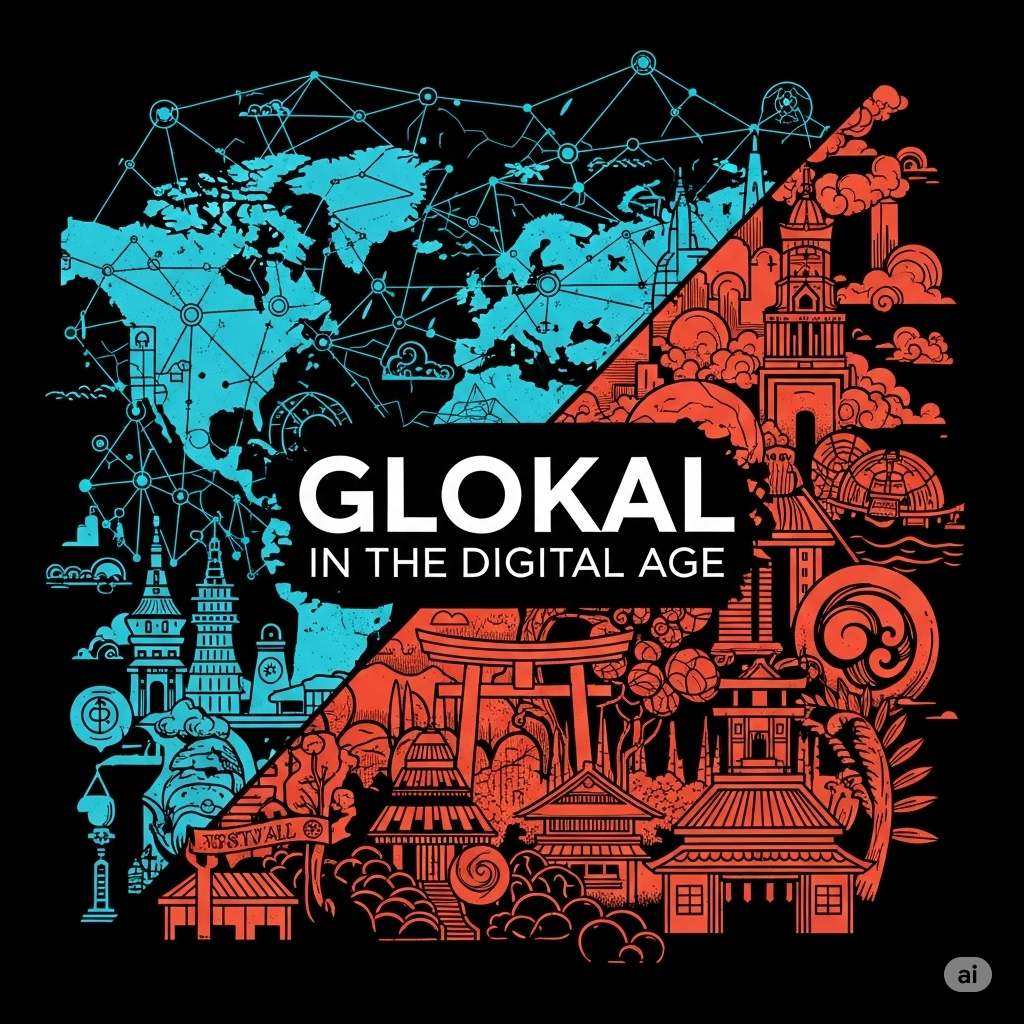
The dynamics of the contemporary global marketplace have transformed the way brands interact with their audiences. A unified strategy for all markets, nor complete fragmentation, is no longer sufficient. In this context, the concept of “glokal” marketing is emerging strongly, a strategic amalgamation that fuses a global vision with profound local adaptation. This approach has become imperative for companies seeking to authentically resonate with their consumers worldwide.
Definition and Relevance of “Glokal” Marketing in the Current Panorama
Global marketing represents the strategic union of the global and the local, an essential tactic for international brands. Its purpose is to adapt to the specificities of local markets without sacrificing the brand’s global essence.1This approach involves meticulous customization of products, services, and campaigns, designed to meet the linguistic, cultural, and traditional preferences of each region, while maintaining consistency in the brand’s core message.2The term, coined by sociologist Roland Robertson in the 1980s, underscores the coexistence of universalizing and particularizing tendencies in today’s business environment.3
The paradox inherent in global marketing lies precisely in this tension: how can a brand maintain a coherent global identity while deeply adapting to local sensibilities? This challenge is not solved with simple compromise, but through dynamic management. Certain brand elements, such as its logo or core values, may be immutable globally, while others, such as the tone of voice or cultural references in advertising, must be flexible for local adaptation.1This duality requires a thorough understanding of both the brand’s essence and the cultural nuances of each market. Success in global marketing lies not in a single solution, but in the organization’s ability to navigate this paradox, fostering fluid internal communication and empowering local teams to instill regional authenticity without diluting the brand’s global identity.
Growing Global Interconnectedness and the Demand for Local Authenticity
The intensification of glocalization in the current context is largely due to the rapid advances in technology and communications. These factors have blurred the boundaries between markets, facilitating unprecedented interaction between the global and the local.6This strategy is no longer a mere option, but a pressing necessity for companies seeking international expansion.2Today’s consumers, immersed in a hyperconnected world, increasingly demand products and experiences that resonate with their cultural identities and individual needs.7
Digitalization acts as a fundamental catalyst in accelerating the “glokal” approach. Digital tools, such as artificial intelligence (AI) and big data analytics, allow brands to capture and process insights into local preferences at a scale and speed previously unimaginable.6This transforms glocalization from a mere strategic option into an operational imperative. AI’s ability to analyze large volumes of data and predict consumer behavior facilitates personalization on a massive scale, allowing brands to tailor their offerings precisely and efficiently.8Thus, brands that fail to leverage technology to achieve granular understanding and agile adaptation to local markets will find themselves at a significant competitive disadvantage, given that digitalization has not only globalized markets but also strengthened demand for local products.
The Challenge of the Attention Economy and Information Overwhelm
In the fast-paced digital age, consumers are constantly inundated with an overwhelming amount of information, a phenomenon known as “infoxication.”12This overabundance of content, as Herbert Simon pointed out, creates a shortage of human attention, elevating attention to the status of an extremely valuable resource.16Attention spans have been drastically reduced; some estimates suggest the average is less than 8 seconds.20This information overload not only affects decision-making, but also increases stress levels and decreases productivity.13For brands, the challenge of standing out in this saturated environment is monumental.22
In this context, the “glokal” approach emerges as a strategic antidote to information overload. Information overload occurs when information is generic and overwhelming, leading to analysis paralysis and cognitive fatigue.13“Glokal” marketing, focusing on personalization and cultural relevance1, offers a way to transcend the noise. A message that resonates directly with local values and needs is much more likely to capture and retain attention, as it is perceived as valuable and not just “more noise” in the digital cacophony.13In the attention economy, global marketing is not simply an expansion strategy, but a survival tactic. It allows brands to transform information overload from an obstacle into an opportunity to build deeper, more meaningful connections with their audiences.
II. Fundamentals of Global Thinking with Deep Local Execution

Global marketing is built on a foundation of strategic principles that seek to harmonize a brand’s global presence with its local resonance. This delicate balance is the key to sustainable expansion and success in an increasingly interconnected and diverse global marketplace.
The Essence of “Glokal” Marketing: Balancing Global Brand Consistency and Cultural Adaptation
Discover how to build a memorable brand Download your guide here
The essence of global marketing lies in a careful balance: maintaining a consistent global brand identity while demonstrating the flexibility to adapt to local needs and cultures.1This involves carefully personalizing products, services, and campaigns to fit the preferences, languages, and traditions of each region, without compromising the brand’s core message.2The “glokal” approach is not a binary choice between global and local, but rather the search for the “perfect mix” for each product and market.7
This dynamic manifests itself in a “glokal” spectrum, which represents a constantly evolving strategy, not a static choice. Brands don’t rigidly adhere to a fixed “glokal” model, but rather adjust their level of standardization or adaptation based on various factors, such as product type (industrial versus mass-market), market maturity, and the competitive landscape.5For example, technology or luxury products often benefit from a more global strategy, while food or clothing products require more in-depth adaptation to local tastes and traditions.7This flexibility requires agility and continuous evaluation. Brands must be prepared to adjust their approach in different markets and for different product lines, recognizing that the optimal balance may change over time and with market circumstances.
Strategic Benefits
Adopting a “glokal” strategy brings with it a series of strategic benefits that go beyond mere market expansion, directly impacting brand perception, profitability, and long-term resilience.
- Expansion to New Markets:Global marketing facilitates brand acceptance in new markets by allowing them to communicate directly with local audiences in a way that resonates deeply with them.2This authentic connection opens doors to previously unexplored markets and confers a significant competitive advantage by overcoming the cultural and linguistic barriers that often hinder entry.3
- Improving Brand Reputation and Trust:By demonstrating genuine understanding and respect for local cultures, brands build a positive and trustworthy reputation.2This translates into greater consumer trust and loyalty, as lasting relationships are forged when consumers perceive that the brand values their habits and needs.4In an environment of hypertransparency28, this authenticity is an invaluable asset.
- Profitability and Return on Investment (ROI):The “glokal” strategy allows you to optimize marketing efforts by adapting existing content rather than creating entirely new campaigns for each region.2This approach not only saves resources and reduces unnecessary expenses, but also results in increased ROI by expanding the customer base and fostering a community of loyal consumers.3Operational efficiency is combined with connection effectiveness.
- Competitive Advantage:The originality and surprise factor inherent in “glokal” campaigns allow brands to stand out in saturated markets.5By offering experiences and products that feel intrinsically local, brands can compete effectively even with established local businesses, differentiating themselves through their ability to connect culturally.
- Customer Satisfaction:By offering highly personalized experiences that align with local expectations and preferences, customer satisfaction is significantly improved.3Consumers feel understood and valued, which strengthens their bond with the brand.
Beyond the tangible benefits in sales and ROI, global marketing acts as a builder of brand equity and long-term resilience. While increased sales and ROI are obvious results2, the strategy also emphasizes building “brand reputation and consumer trust.”2In an environment of hypertransparency, where information flows freely and perceptions are formed quickly28Authenticity and cultural respect translate into long-term loyalty. This loyalty is a crucial intangible asset that gives a brand greater resilience in the face of crises and competition. A trusted and respected brand not only attracts new customers but also retains existing ones, generating sustained value over time. Therefore, global marketing should be conceived not only as a tactic for short-term growth, but as a strategic investment in building strong and lasting relationships with consumers, which generates significant brand equity and greater resilience in the market.
Table 1: Global vs. Local vs. “Glocal” Marketing

To fully understand the value proposition of glokal marketing, it’s essential to contrast it with traditional global and local marketing strategies. The following table summarizes the key differences, providing a clear visual reference for how the glokal approach integrates the best of both worlds for today’s context.
| Key Feature | Global Marketing (Standardization) | Local Marketing (Adaptation) | “Glokal” (Hybrid) Marketing |
| Main Objective | Efficiency, economies of scale, uniform image. | Local relevance, deep connection, meeting specific needs. | Global expansion with authentic local connection, maximizing impact and ROI. |
| Scope | Global, treating the world as a single market. | Regional, focused on a limited geographic area. | Global, but with customized execution in each local market. |
| Brand Identity | Consistent, coherent and internationally unique (e.g. Apple, Lego).7 | It can vary significantly by region, being fully adaptable. | Consistent global core with flexibility for local nuances (e.g. McDonald’s, Coca-Cola).1 |
| Product/Service Adaptation | Same product in all countries (e.g. technology products, luxury products).7 | Adjustment to the different needs and conditions of each market (e.g. food, clothing).7 | Adaptation of products and services without losing the global essence (e.g. McDonald’s menu).1 |
| Communication/Message | Standard, often without translation or literal translation.7 | Fully adapted to the local language, customs and idioms.3 | Global core message with culturally tailored tone, idioms, and storytelling.27 |
| Costs | Cost reduction through economies of scale in production and communication.7 | Increased costs due to deep research and adaptation.7 | Cost optimization by adapting existing content, higher ROI.2 |
| Response Speed | Slow, centralization in decision-making.7 | Agile, quick adaptation to changes in local tastes.7 | Balance, leveraging local agility within a global framework. |
| Competitive Focus | In scale, price, average quality. | In local relevance, emotional connection. | In authentic connection, differentiation, long-term loyalty.5 |
| Challenges | Subordination of consumer needs, loss of local share.7 | Difficulty of coordination, high costs, in-depth market research.7 | Maintaining consistency, managing diverse teams, and ethical data considerations.2 |
III. Pillars of Deep Local Execution in Latin America
Successfully implementing global marketing in a region as diverse and vibrant as Latin America requires a deep understanding of its cultural and consumer specificities. Local execution isn’t superficial; it’s based on solid foundations that ensure an authentic and lasting connection.
Cultural Intelligence and Knowledge of the Latin American Consumer
Cultural intelligence is an essential component for designing and executing effective global campaigns, allowing brands to authentically connect with diverse audiences and avoid misunderstandings that could damage their reputation.27This requires extensive research into the target audience’s traditions, values, consumer habits, and cultural sensitivities.4It’s crucial to understand how symbols, colors, and humor are perceived in each culture, as what works in one market may be offensive in another.4Qualitative tools such as
Focus Groupsand in-depth interviews are invaluable in obtaining this nuanced information.31
The depth of cultural nuance goes far beyond mere language. Multiple sources emphasize that cultural adaptation is not limited to literal translation, but rather involves a deep immersion in the specificities of each region.4This is especially relevant in Latin America, a region characterized by its immense cultural wealth and variety, where an idiom in Mexico can have a completely different meaning in Argentina or Chile.36“Cultural sensitivity”3It requires continuous immersion to decipher the subtleties that define each subculture’s identity. Ignoring these particularities can result in a disconnect with the audience or, worse, unintentional offense.31
Avoiding cultural mistakes and stereotypes is therefore a priority. A cultural misstep can seriously damage a brand’s reputation.7Historical examples such as Clairol’s “Mist Stick” or Gerber’s campaign in Africa illustrate the importance of verifying how product names or images are perceived in different languages and cultural contexts.37Brands should strive to avoid stereotypes and represent their audiences authentically and respectfully.27
Regarding the specific characteristics of Latin American consumers, the region is characterized by an increasingly connected population (more than 61% of the population has internet access) and by more active and proactive consumers in their relationships with brands.28There is a growing “Local Pride, Going Global” trend, where consumers value individuality and a locally inspired national identity.38Confidence in business, however, varies significantly by country, being highest in Mexico, Panama, and the Dominican Republic, and lowest in Chile, Argentina, and Peru.28“Hypertransparency” is a key demand, and credibility and integrity are crucial factors in building trust in the region.39
Trust is emerging as the new currency in the Latin American market. An analysis of the region reveals that “no sector enjoys excessively strong trust” and that “transparency and ethical issues” significantly influence consumer perception.28This suggests that, for “glokal” brands, cultural adaptation alone is not enough. They must actively build trust through ethical practices, honest communication, and genuine engagement with local communities.39Trust is a key differentiator in a region where consumers are increasingly demanding and conscious.
Authentic Communication and Emotional Connection
A successful “glokal” strategy goes beyond mere literal translation. It requires the brand to communicate with consumers in their native language, incorporating local idioms and expressions to generate genuine connection.3 He
storytellingplays a fundamental role, adapting tone and style to specific cultural contexts.27For example, while some cultures, such as Spain, may prefer more sentimental messages, in Latin America, commercials tend to be friendlier and less emotionally charged, seeking a more subtle and empathetic connection.30
The role of storytelling and emotion in connecting with the audience is crucial. The goal is to inspire positive feelings and make consumers feel that the brand is “theirs,” part of their identity and everyday life.25The stories told should reflect the unique aspects of the local culture, as well as the aspirations and challenges the audience faces in their own context.31
Emotion becomes a vital cultural bridge in glokal communication. Glokal communication is not limited to linguistic precision; it seeks “emotional connection.”40In a region with a rich narrative tradition and strong emotional expression, the
storytellingand the use of local idioms3They become powerful tools for transcending cultural barriers and establishing authentic connections. By evoking emotions and reflecting the local spirit, brands can transform communication from a simple exchange of information to a shared cultural experience.
Adaptation of Products and Services
Customizing offers to meet regional needs is a fundamental pillar of glokal marketing. Glokal strategies involve adapting products and services to local laws, customs, and preferences, all while maintaining a global brand identity.2Iconic examples of this adaptation include McDonald’s, which adjusts its menus to offer beef-free options in India or kosher products in Israel, responding to specific dietary and cultural needs.1Similarly, Starbucks customizes its beverages by region, offering unique flavors that resonate with local tastes.37Consumer goods, such as food and clothing, are particularly well-suited to a localization strategy because of the strong influence local tastes and traditions have on their demand.7
There are numerous successful examples of product adaptation that illustrate this principle. Volkswagen, for example, adapted a car model for the Arab world, including a compartment for the Quran and a compass that indicates the direction of Mecca, demonstrating deep respect for local religious customs.7Another example is Danone, which modified its yogurt recipe in China to adapt to the high prevalence of lactose intolerance among the population, allowing it to successfully penetrate that market.7
Product adaptation is, in essence, a tangible manifestation of cultural respect. Changes to McDonald’s menus or Danone’s yogurt recipes1They go beyond a simple business decision; they are a concrete demonstration of a brand’s respect for a culture’s customs, beliefs, and dietary needs. Notable failures in cultural adaptation37They emphasize that ignoring these specificities can be catastrophic for the brand. For Latin American consumers, adapting a product is a powerful signal that the brand is not just trying to sell, but truly understands and values their unique context, thus fostering deeper loyalty and a perception of authenticity.
Collaboration with Local Talent and Influencers
Building credibility and humanizing the brand in a “glokal” context greatly benefit from collaboration with talent andinfluencersHiring local experts—such as translators, copywriters, and marketing professionals—is a highly effective strategy for adapting content and ensuring its cultural resonance.44Partnering with local agencies also provides invaluable market insights, allowing for a deeper understanding of its dynamics.44 The
influencersLocal media, with their strong following, are crucial for promoting products, offering authentic feedback and building credibility, humanizing the brand and establishing genuine connections with the audience.44Marketing of
influencershas experienced exponential growth in Latin America, becoming an indispensable tool for effectively connecting with the target audience.45
Managing diverse teams is essential for effective global marketing. Empowering local teams is essential for infusing local flavors into the brand.25Diversity in teams not only improves performance, but also drives innovation and problem-solving skills, which are vital for leadership in the global marketplace.34These teams bring a wealth of skills, experiences, languages, and diverse cultural perspectives, enriching the brand’s overall strategy.35Additionally, flexible working, including remote work, can increase the geographic diversity of your team, allowing you to access valuable talent without geographic restrictions.34
Local talent acts as an indispensable human bridge in the “glokal” digital landscape. In a world saturated with information and with increasing dependence on artificial intelligence, authenticity and human connection are more valuable than ever.influencersand local experts act as a crucial bridge between the global brand and the local community, providing a credibility and a “human touch” that technology alone cannot replicate.44The ability to “humanize the brand”45It’s a key differentiator in the digital age. Therefore, a successful “glokal” strategy not only invests in technology, but also prioritizes investing in local human capital and building genuine relationships, recognizing that the authentic voice of the community is the most powerful amplifier in the Latin American market.
IV. Innovative Strategies to Capture Attention in the “Glokal” Era
In the digital age, attention has become the scarcest and most valuable resource. Brands face an unprecedented challenge to stand out in an information-saturated environment. To thrive, it is imperative to adopt innovative strategies that not only capture but also retain consumer attention.
The Battle for Attention in a Saturated World
The digital age is characterized by “information overload,” a phenomenon known as infoxication, which makes it extremely difficult for brands to capture consumers’ attention.12Consumers are exposed to an overwhelming amount of content daily, from thousands of blogs and videos to social media posts.20This overload can lead to decreased productivity, poor decision-making, and increased stress and mental exhaustion.13Attention spans have decreased dramatically, with some estimates suggesting an average of less than 8 seconds, comparable to that of a goldfish.20
The concept of the “attention economy”16It postulates that the abundance of information has transformed attention into a scarce and, therefore, monetizable resource.16In the “glokal” context, this scarcity is accentuated by the need to resonate culturally. Generic or irrelevant content is easily ignored by consumers, who develop defense mechanisms to filter out the noise.13Brands must therefore shift from a model of “broadcasting” messages to one of “winning” attention through highly relevant, personalized, and engaging experiences that stand out in the vast digital tide. This reinforces the need for a deep “glokal” approach, where local relevance becomes a magnet for attention.
Emerging Technologies at the Service of “Glokal” Marketing
Integrating cutting-edge technologies is critical for brands to effectively execute global strategies, personalizing the customer experience and optimizing engagement in a complex digital environment.
Artificial Intelligence and Predictive Marketing
Artificial Intelligence (AI) has established itself as a central pillar of digital marketing, enabling precise and efficient personalization in real time.8Predictive marketing, powered by algorithms
machine learningand statistical models, allowing companies to anticipate consumer behavior, identify trends, and proactively personalize offers.47The benefits of this technology are extensive, including improved customer experience, increased conversion and retention rates, optimized advertising campaigns, and fraud detection.48
AI stands as the key enabler of “deep local execution” at scale. The “glokal” marketing promise of deep local execution implies large-scale personalization that would be unmanageable manually. AI and predictive marketing, with their ability to process “big data,”8and “anticipate future behaviors”48, become the essential technological infrastructure. They enable “global thinking”—AI’s ability to process data at scale—to translate into “deep local execution”—the delivery of culturally relevant and personalized content and offers. The future of “glokal” success intrinsically depends on the sophisticated adoption of AI, transforming data into actionable, culturally relevant insights that drive a more meaningful connection with the consumer.
Immersive Experiences (AR/VR and Metaverse)
Augmented Reality (AR) and Virtual Reality (VR) are revolutionizing marketing by offering immersive experiences that allow consumers to interact with products and services in innovative ways, significantly increasing theengagement.9Concrete examples include virtual product trials, such as those offered by Gucci or L’Oréal,
showroomsvirtual spaces that allow users to view IKEA furniture in their own spaces, and virtual events that transcend geographical barriers.9The metaverse, as a constantly evolving virtual environment, offers business opportunities and more active interaction through avatars, generating highly personalized and emotionally resonant experiences.73
These immersive technologies bridge the gap between the physical and digital worlds for a deeper emotional connection. The core value of immersive technologies lies in their ability to create “deeper emotional connections.”40In the glokal context, this represents a unique opportunity to translate and amplify local cultural experiences in interactive digital environments. Imagining a virtual Latin American party in the metaverse, where avatars can dance to regional music, or AR filters celebrating traditional festivities, can generate a memorable impact that traditional advertising fails to achieve. Immersive experiences, therefore, represent a key frontier for glokal brands to design culturally resonant interactions that transcend geographical barriers and strengthen emotional loyalty.
Gamification
Gamification is a powerful strategy that increases theengagementand user motivation by transforming brand interactions into fun and rewarding experiences.8This technique improves user interaction, increases customer loyalty, boosts conversion rates (up to 8%), and provides valuable data on consumer behavior.8By integrating game elements such as rewards, challenges, and leaderboards, gamification transforms passive interactions into immersive and dynamic experiences.75
Gamification not only entertains, but also becomes a tool for cultural immersion and the collection of behavioral data. Beyond the fun, gamification allows for the collection of “valuable information about user behavior.”75This behavioral data, which includes browsing patterns, interactions and preferences53, can feed into predictive AI models, enabling even more refined “glokal” personalization. By observing how users interact with culturally relevant gamified elements—for example, a game celebrating a local holiday or a challenge incorporating regional idioms—brands can gain deeper insights into regional preferences and sensitivities. Gamification, therefore, offers an innovative way for “glokal” brands to not only foster loyalty and
engagementthrough interactive and culturally tailored experiences, but also gather crucial data to optimize future strategies.
Social Commerce and User Generated Content (UGC)
Social media platforms have evolved dramatically, transforming into direct purchasing channels, a phenomenon known as social commerce, which is emerging as a key trend for 2025.9Notable strategies in this area include:
live shopping, where products are presented and sold in live broadcasts, and collaborations withinfluencers, which generate trust and increase conversions.9User-generated content (UGC) is emerging as one of the most effective tactics78, and it is actively encouraged to share it on the brand’s official channels and establish ambassador programs to encourage its creation.9UGC can significantly increase brand visibility and authenticity, as it comes from sources perceived as more genuine.79
Social commerce and UGC have a profound “glokal” implication: they enable the amplification of local voices through global platforms. In this ecosystem, consumers andinfluencersLocals become authentic storytellers for the brand. This decentralized, organic content, amplified by global platforms, has the ability to build trust and cultural resonance in ways that traditional advertising cannot.5The “Latin touch” here manifests itself in the community-based nature and power of digital word of mouth, where peer recommendations and community-created content carry considerable weight. “Glokal” brands should actively encourage the creation of UGC, empowering local voices to tell the brand’s story from their cultural perspective, thus building a sense of belonging and authenticity that drives the brand’s brand.
engagementand loyalty.
Ethical Considerations and Data Privacy
Handling personal data in the era of predictive marketing and AI requires scrupulous adherence to privacy regulations, such as the GDPR in Europe, and full transparency in its use.54Challenges in this area include algorithmic bias, where algorithms can replicate or amplify existing inequalities if the training data contains biases.49Furthermore, data quality is crucial, as incorrect or incomplete information can lead to irrelevant recommendations and erroneous decisions.49It is essential that AI models be interpretable and auditable, allowing their decisions to be understood and justified.49Data minimization and anonymization are important practices to protect user identity and reduce risk.81
Glokal ethics focuses on building trust in a data-driven world. The ethical considerations of AI and data privacy49are crucial for “glokal” marketing. If a brand seeks a “deep local” connection and trust4, any perception of data misuse or algorithmic bias can seriously erode your reputation. “Integrity” and “transparency” are key factors of trust in Latin America, where consumers are increasingly aware of how their data is used.39Therefore, global brands must prioritize ethical governance of AI and data, not only for regulatory compliance, but as a fundamental component of building and maintaining authentic and trusting relationships with diverse local communities. This includes transparent communication about data use and proactive measures to mitigate algorithmic bias.
V. Success Stories of “Glokal” Marketing in Latin America
The theory of “glokal” marketing comes to life through concrete examples of brands that have successfully combined their global vision with profound local execution in the vibrant and diverse Latin American region. These cases demonstrate the versatility and impact of this strategy.
Analysis of Featured Campaigns Demonstrating the Effective Application of “Glokal” Strategies in the Region
- McDonald’s:A classic example of menu adaptation to local dietary needs and cultural preferences. The global chain offers beef-free options in India or kosher menus in Israel, demonstrating how a global brand can integrate deeply into a region’s foodways.1
- Coca-cola:This iconic brand adapts the sweetness of its beverages to local tastes and uses culturally resonant campaigns, such as the Christmas campaign with Santa Claus or “Taste the Feeling,” which connects with everyday moments and festivities.7Additionally, it uses AI for predictive social media analytics and campaign personalization, optimizing reach and relevance.67
- Natura (Brazil/LatAm):A Brazilian brand that has achieved significant expansion in Latin America. Its success is based on a strong emphasis on sustainability and the use of natural ingredients from the Amazon. Its “We Are One Nature” campaign promotes environmental conservation and establishes a deep connection with the Amazon and local communities, solidifying its position as a leader in beauty products with a sustainable commitment.83
- Corona “Desfronterízate” (Mexico):This campaign for Mexican beer Corona positioned itself as a symbol of freedom and adventure, encouraging consumers to step out of their comfort zones. It featured Mexican actor Diego Luna and capitalized on the nationalist sentiment against “walls” to promote overcoming fears and pursuing dreams, generating a strong emotional connection.83
- Panama (Mexico):A 100% Mexican footwear brand that has achieved global expansion while maintaining its urban and authentic identity. It connects with new generations and diverse urban tribes, reaffirming its place as a symbol of cultural identity in Mexico.36
- Volkswagen (Mexico/Arab World):In Mexico, it has implemented local marketing strategies for “glokal” positioning.38A notable example of deep cultural adaptation is his car model for the Arab world, which included a compartment for the Quran and a compass to Mecca.7
- Mercado Pago (GUT Argentina):This campaign took advantage of the massive popularity of thereality show“Big Brother” during a period of high inflation in Argentina. It promoted an inflation-proof investment product, showing real-time returns on the show’s prize, which generated high visibility andengagement.91
- Mercado Libre “Handshake Hunt” (Brazil):In an innovative partnership with Globo TV, Mercado Libre used AI to scan live shows for handshakes. Each handshake activated QR codes offering real-time discounts, generating a wave of user-generated content and a significant increase in sales, gaining international recognition.91
- Let’s Change the Rule (PHD Costa Rica):This social campaign used a clever integration of media and psychology to advocate for the passage of the Menstrual Justice Act, seeking to eliminate luxury taxes on menstrual products in Costa Rica.91
- President Brand “Untold Verses” (Dominican Public):The brand addressed responsible alcohol consumption in a culturally relevant way, “hacking” popular merengue songs, a musical genre deeply rooted in Dominican culture, to promote a message of social responsibility.91
- Netflix, Amazon, Spotify, Sephora, Airbnb, Starbucks, Nike, BMW, Unilever:While these are global examples, these brands demonstrate how AI and predictive analytics are being used for hyper-realistic personalization and an enhanced customer experience—principles that are directly applicable and scalable in global marketing strategies.51
The “glokal” spectrum in action is evident in the diversity of these applications. The examples presented illustrate the flexibility of the “glokal” approach, which ranges from product adaptation (McDonald’s, Danone, Volkswagen) and emotional communication (Coca-Cola, Corona, Panam) to connections with cultural phenomena or social causes (Mercado Pago, Cambiemos La Regla, Presidente Brand). This demonstrates that the “glokal” approach is not a rigid formula, but rather an adaptable framework that adjusts to the nature of the brand, the product, and the specific market. “Glokal” success in Latin America is often achieved by integrating the brand with deep cultural values, national pride, or social concerns, elevating marketing from a mere commercial transaction to a meaningful cultural dialogue.
Table 2: Examples of Successful “Glokal” Campaigns in Latin America
The following table offers a concise and structured overview of how various brands have successfully implemented “glokal” marketing in Latin America, highlighting its key elements and the impact achieved.
| Brand / Campaign | Country / Region | Element “Glokal” Key | Impact / Result |
| McDonald’s | Global (with implicit Latin American examples) | Menu adaptation to local dietary and cultural preferences (e.g. vegetarian/meat-free options).1 | Wide acceptance and perception of local brand despite being global. |
| Coca-cola | Global (with implicit Latin American examples) | Adapting sweetness and emotional campaigns that resonate with everyday moments and local festivities.7 | Strong emotional connection, high loyalty and close brand perception. |
| Nature | Brazil / Latin America | Committed to sustainability and the use of natural ingredients from the Amazon, connecting with local communities.83 | Positioning ourselves as a leading beauty brand with purpose and environmental awareness. |
| “Desborderize” Crown | Mexico | A message of personal growth and national pride, using figures and narratives that resonate with Mexican identity.83 | Strong emotional connection, increased loyalty and brand recognition. |
| Panam | Mexico | Maintaining a 100% Mexican, urban, and authentic footwear identity, connecting with diverse urban tribes.36 | Consolidation as a symbol of cultural identity and expansion while maintaining local roots. |
| Volkswagen | Mexico / Arab World | Local marketing strategies in Mexico; adapting car models with cultural and religious elements (e.g., a compartment for the Quran).7 | Success in market penetration by demonstrating cultural respect and understanding. |
| Mercado Pago (Big Brother) | Argentina | Taking advantage of areality showpopular and the inflationary crisis to promote a relevant and tangible financial product.91 | High visibility,engagementand promotion of an innovative financial product. |
| Mercado Libre “Handshake Hunt” | Brazil | Using AI to link a universal cultural gesture (the TV handshake) to real-time discounts, generating UGC.91 | Significant increase in sales,engagementviral and international recognition. |
| Let’s Change The Rule | Costa Rica | A social campaign that used media integration to advocate for a menstrual justice law, connecting with a relevant social cause.91 | Impact on legislation and increased social awareness on a taboo subject. |
| Presidente Brand “Untold Verses” | Dominican Republic | Addressing alcohol consumption through piracy of popular merengue songs to promote a responsible message.91 | Deep cultural connection, message of social responsibility andengagementwith the audience. |
VI. Building the “Glokal” Future: Key Recommendations for Brands
The future of global marketing is seen as a dynamic playing field, where the intelligent integration of technology with human sensitivity will be the determining factor for success. Brands that wish to not only survive, but thrive, will need to adopt a proactive and strategic approach.
Integrating Data and Technology with a Human Focus
The future of marketing is inevitably moving toward an “AI-first” approach, where artificial intelligence and automation will transform audience segmentation, content personalization, and trend prediction.9However, human interpretation of AI predictions remains essential, as algorithms are guides, not absolute certainties.48Data quality is crucial for effective predictive analytics, as an analysis is only as good as the data it uses.49Furthermore, human creativity remains vital to designing and delivering unique and engaging customer experiences that AI alone cannot generate.71
The synergy between humans and AI is key to scaling local authenticity. AI’s ability to process large volumes of data and personalize at scale9It is the driving force behind profound “glokal” execution. However, the need for the “human touch” for creativity, cultural interpretation, and relationship building is emphasized.48True “glokal” innovation lies in the symbiotic collaboration between the efficiency of AI and human emotional and cultural intelligence. Brands must invest in building hybrid teams that can leverage AI to gain valuable insights and automate repetitive tasks, freeing up professionals to focus on creative strategy, emotional connection, and deep cultural adaptation.
Promoting Agility and Continuous Adaptation
The digital marketing landscape is constantly evolving, requiring rapid adaptation to new technologies and trends that continually emerge.22Predictive models, by their nature, require continuous updates to reflect changes in market behavior, as consumption patterns are not static.48Agility is key to responding effectively to changing market preferences and ultimately strengthens business competitiveness in a dynamic environment.61
Global marketing should be conceived as an iterative, constantly learning process. The need to “monitor and optimize”48and the importance of “constant adaptation”22They suggest a continuous lifecycle of learning and refinement. This is especially true in dynamic and culturally complex markets like Latin America, where trends can emerge and evolve rapidly. Organizations must establish structures and processes that allow for constant feedback from the local market, facilitating rapid, strategic adjustments to their global campaigns and offerings to maintain relevance and effectiveness.
Prioritizing Sustainability and Brand Purpose
Sustainability and social responsibility have become key factors in consumers’ purchasing decisions, who increasingly value brands with a genuine commitment to social and environmental causes.9Fight the
greenwashingThrough corporate transparency, this is a key trend for 2025, as consumers seek authenticity in brand commitments.98Brands that authentically align themselves with meaningful causes not only build a positive image, but also gain a tangible competitive advantage.78
The “glokal” purpose focuses on forging deep loyalty through shared values. Beyond cultural and linguistic adaptation, the integration of an authentic and sustainable brand purpose9adds a layer of depth to the “glokal” strategy. By addressing local or regional concerns, such as sustainability in the Amazon in the case of Natura, brands can forge a connection based on shared values, transcending transactional loyalty to an emotional and ethical one. For “glokal” brands in Latin America, integrating a genuine social and environmental purpose into their local strategies is not just a trend, but a powerful differentiator that can generate deep loyalty and a
engagementsignificant community.
VII. Conclusion: The Path to a Deep and Lasting Connection
Global marketing has transcended a strategic option to become an imperative for global brands aspiring to sustainable growth and meaningful connections in markets as diverse and dynamic as Latin America. In a world where information overload threatens attention spans and the demand for local authenticity is stronger than ever, the ability to think globally and execute locally with depth is the key differentiator.
Success in this new era lies in the ability to merge a strategic global vision with meticulous local execution, driven by cutting-edge technologies such as Artificial Intelligence, immersive experiences, and gamification. However, this technological revolution must always be guided by human intelligence, deep cultural sensitivity, and an unwavering commitment to ethics and transparency in data management. The synergy between algorithmic efficiency and human creativity, along with the empowerment of local talent, is what will allow brands not only to personalize messages, but also to build narratives that resonate emotionally and foster trust.
Brands that master this delicate balance will not only capture attention in a saturated world, but will also build lasting relationships, transforming consumers into loyal ambassadors and communities into strategic partners. This “glokal” path is what will forge a future of authentic and resonant growth, where the brand doesn’t just sell a product, but becomes an integral part of the cultural fabric of each region.
Coordinate your global vision across local “Sprints.” Use the Planily module within GGyess to manage your expansion. Set up specific Kanban boards for each country—like Mexico, Brazil, or Argentina—to ensure that your global objectives are translated into local tasks, respecting regional holidays and cultural priorities. Plan your expansion at GGyess.com
Sources cited
- Glocal Marketing Definition | Loomly Blog, accessed June 25, 2025https://www.loomly.com/blog/glocal-marketing-definition
- Think global, act local: How glocal marketing drives customer engagement – Linguise, acceso: junio 25, 2025, https://www.linguise.com/blog/guide/think-global-act-local-how-glocal-marketing-drives-customer-engagement/
- GLOCALIZATION: THINK GLOBALLY; ACT LOCALLY – Montero Language Services, accessed June 25, 2025https://montero-ls.com/glocalizacion-pensar-a-nivel-global-actuar-a-nivel-local/
- How Glocal Marketing Drives Customer Engagement, accessed June 25, 2025,https://www.linguise.com/es/blog/guia/piense-en-el-acto-global-local-como-glocal-marketing-impulsa-la-participacion-del-cliente/
- Global Branding: Techniques to Position Your Brand Worldwide – Rock Content, accessed June 25, 2025,https://rockcontent.com/es/blog/global-branding/
- blog.mercately.com, accessed: June 25, 2025,https://blog.mercately.com/marketing/glocal#:~:text=La%20glocalizaci%C3%B3n%20se%20ha%20intensificado,negocios%20es%20mayor%20que%20nunca.
- Glocal marketing: the strategic mix to adapt to the new consumer – NSB, accessed: June 25, 2025,https://nsbagency.com/es/glocal-marketing-el-mix-estrategico-para-adaptarte-al-nuevo-consumidor/
- How to Use AI in Marketing: Personalization and Predictive Analytics – Skillnest, accessed June 25, 2025https://www.skillnest.com/blog/como-usar-la-ia-en-marketing/
- Emerging Trends in Digital Marketing for 2025, accessed: June 25, 2025,https://agenciakarmina.com/blog/tendencias-marketing-digital-2025-2/
- Emerging Marketing Trends to 2025: Innovation and…, accessed June 25, 2025,https://mk-ventas.blog/marketing/tendencias-emergentes-en-marketing-para-2025-innovacion-y-transformacion-en-la-era-digital/
- Marketing Innovation: How AI Is Transforming the Industry | APD, accessed June 25, 2025https://www.apd.es/innovacion-marketing-ia-ejemplos-estrategias/
- Information Overload – When Information consumes our Attention – Duffy Agency, acceso: junio 25, 2025, https://duffy.agency/blog/information-overload-when-information-consumes-our-attention/
- How can companies combat information overload and help potential customers? – Rock Content, accessed June 25, 2025.https://rockcontent.com/es/blog/infoxicacion/
- Information overload | EBSCO Research Starters, acceso: junio 25, 2025, https://www.ebsco.com/research-starters/library-and-information-science/information-overload
- The Impact of Information Overload – FasterCapital, accessed June 25, 2025,https://fastercapital.com/es/tema/el-impacto-de-la-sobrecarga-de-informaci%C3%B3n.html
- en.wikipedia.org, accessed June 25, 2025,https://en.wikipedia.org/wiki/Attention_economy
- Understanding the Attention Economy and its Negative Effects: Consumerism is Consuming Us, acceso: junio 25, 2025, https://surface.syr.edu/cgi/viewcontent.cgi?article=1531&context=intertext
- Attention economy and machine vision: towards an asignifying semiotics of the image9 – UNLP journals, access: June 25, 2025,https://revistas.unlp.edu.ar/hipertextos/article/download/7759/6788/
- Full article: Rethinking the cognitive foundations of the attention economy, acceso: junio 25, 2025, https://www.tandfonline.com/doi/full/10.1080/09515089.2025.2502428
- Have we reduced our attention span? – YouTube, accessed June 25, 2025,https://www.youtube.com/watch?v=lJN4JVZy5Cc
- How to Overcome Information Overload – ClickUp, accessed June 25, 2025,https://clickup.com/es-ES/blog/206032/sobrecarga-de-informacion
- Digital Marketing Challenges: Are You Ready to Face Them? – Micaela Sabja, accessed June 25, 2025https://micaelasabja.com/desafios-del-marketing-digital/
- Disruptive Marketing Strategies – Mailchimp, accessed June 25, 2025,https://mailchimp.com/es/resources/disruptive-marketing/
- elementor.com, accessed: June 25, 2025,https://elementor.com/blog/es/que-es-el-marketing-global-definicion-significado-y-ejemplos/#:~:text=El%20marketing%20global%20se%20centra,sea%20culturalmente%20relevante%20y%20atractiva.
- Glocal: How to dominate every corner of the world with your brand, accessed June 25, 2025,https://rockcontent.com/es/blog/glocal/
- www.linguise.com, accessed: June 25, 2025,https://www.linguise.com/es/blog/guia/piense-en-el-acto-global-local-como-glocal-marketing-impulsa-la-participacion-del-cliente/#:~:text=Una%20estrategia%20de%20marketing%20glocal,manera%20que%20resuene%20con%20ellas.&text=Glocal%20Marketing%20tambi%C3%A9n%20ayuda%20a,y%20respeta%20las%20culturas%20locales.
- Cultural Intelligence in Global Marketing: Keys to Campaigns…, accessed: June 25, 2025,https://www.itdo.com/blog/inteligencia-cultural-en-marketing-global-claves-para-campanas-culturales-y-efectivas/
- The New Latin American Consumer: A Question of Trust, accessed June 25, 2025,https://ideas.llorenteycuenca.com/wp-content/uploads/sites/5/2018/07/170718_DI_ConsumerTrust_LatAm_ESP.pdf
- What is Global Marketing? – Saint Leo University, accessed June 25, 2025https://worldcampus.saintleo.edu/blog/estudiar-marketing-que-es-la-mercadotecnia-global
- Glocal Strategy: A Key Approach to International Sales – Ontranslation, accessed June 25, 2025,https://ontranslation.es/estrategia-glocal/
- From Global to Local: The Importance of Local Adaptation of Content, accessed June 25, 2025,https://www.castleberrymedia.co/post/de-lo-global-a-lo-local-la-importancia-de-la-adaptacion-local-de-los-contenidos
- Overcoming International Marketing Challenges: A Strategic Guide to Global Success – Linguana, accessed June 25, 2025https://www.linguana.io/es/blog/international-marketing-challenges
- What is brand consistency? We explain how to strengthen it – Ibexa, accessed June 25, 2025https://www.ibexa.co/es/blog/que-es-la-consistencia-de-marca-te-explicamos-como-fortalecerla
- Diversity at Work: Practices for Developing Diverse Teams – Voxy, accessed June 25, 2025,https://voxy.com/es/blog/diversidad-en-el-trabajo/
- How Diversity in Your Team Helps Your Business – Deel, accessed June 25, 2025,https://www.deel.com/es/blog/diversidad-de-la-fuerza-de-trabajo/
- Glocal: What it means and how it is applied in Marketing – WOM GP, accessed: June 25, 2025,https://www.womgp.com/blog/glocal-que-signigica-y-como-se-aplica-en-marketing/
- Strategies for adapting a brand to different cultures – Trinexo …, accessed: June 25, 2025,https://trinexo.com/blog/estrategias-para-adaptar-una-marca-a-diferentes-culturas/
- Glocal consumption as a marketing strategy, access: June 25, 2025,https://soy.marketing/consumo-glocal-como-estrategia-de-marketing/
- Key Trends in Financial Services 2025-2030 – Heinsohn, accessed June 25, 2025,https://www.heinsohn.co/blog/tendencias-clave-en-servicios-financieros-2025-2030/
- What is immersive marketing? Definition, examples, and trends | Amazon Ads, accessed June 25, 2025https://advertising.amazon.com/es-es/library/guides/immersive-marketing
- How to Make Interactive Content a User Experience? – Vero Contents, accessed June 25, 2025https://verocontents.com.br/es/blog/como-hacer-contenido-interactivo-en-la-experiencia-del-usuario-2/
- 4 Keys to Experiential Marketing: Connecting Emotions and Brands, accessed: June 25, 2025,https://www.marketingdepymes.com/general/claves-del-marketing-experiencial/
- Experiential Marketing: Examples and Keys to Excite Your Customers – APD, accessed June 25, 2025,https://www.apd.es/cambios-en-el-marketing-superada-la-revolucion-digital-llega-la-era-de-la-experiencia/
- Localization Strategies: A Glocal Approach to Global Success – FasterCapital, accessed June 25, 2025,https://fastercapital.com/es/contenido/Estrategias-de-localizacion–un-enfoque-glocal-para-el-exito-global.html
- Influencer Marketing in Latin America 2021-2023: A Systematic Literature Review – ResearchGate, accessed June 25, 2025,https://www.researchgate.net/publication/380557996_Marketing_de_Influencers_en_Latinoamerica_2021_-_2023_Una_revision_sistematica_de_literatura
- The Marketing Vision 2025: Trends in Latin America and Spain…, accessed: June 25, 2025,https://offers.hubspot.es/vision-del-marketing-2025
- www.il3.ub.edu, access: June 25, 2025,https://www.il3.ub.edu/blog/que-es-el-marketing-predictivo/#:~:text=El%20marketing%20predictivo%20es%20aqu%C3%A9l,una%20experiencia%20de%20consumo%20personalizada.
- Predictive Marketing: The Evolution of Data-Driven Strategy – Bonner MX, accessed June 25, 2025,https://bonner.mx/marketing-predictivo-la-evolucion-de-la-estrategia-basada-en-datos/
- What is predictive marketing? – IL3 Blog – UB, accessed June 25, 2025https://www.il3.ub.edu/blog/que-es-el-marketing-predictivo/amp/
- What is Predictive Analytics? – AWS, accessed June 25, 2025https://aws.amazon.com/es/what-is/predictive-analytics/
- How data personalizes and improves customer experience in companies – ISDI, accessed: June 25, 2025,https://www.isdi.education/es/blog/datos-y-experiencia-del-cliente
- Predictive Models in Marketing: What They Are, Applications, and Benefits – APD, accessed June 25, 2025,https://www.apd.es/modelos-predictivos-marketing/
- Understand the Importance and Types of Behavioral Data, acceso: junio 25, 2025, https://www.customerlabs.com/blog/what-is-behavioral-data-in-marketing-importance/
- How AI-Based Predictive Marketing Transforms the…, accessed: June 25, 2025,https://byoptimos.com/como-el-marketing-predictivo-basado-en-ai-transforma-el-comportamiento-del-consumidor-2/
- Top 5 Analytics Models and Algorithms… – insightsoftware, accessed June 25, 2025,https://insightsoftware.com/es/blog/top-5-predictive-analytics-models-and-algorithms/
- Predictive Modeling Types and Algorithms for Data Success, acceso: junio 25, 2025, https://www.dasca.org/world-of-data-science/article/predictive-modeling-types-and-algorithms-for-data-success
- How Predictive Behavior Analytics Helps Businesses to Move Beyond Reactive Customer Insights – Xerago, acceso: junio 25, 2025, https://www.xerago.com/xtelligence/Predictive-behavioral-analytics
- Predictive Behavioral Analytics → Term, acceso: junio 25, 2025, https://prism.sustainability-directory.com/term/predictive-behavioral-analytics/
- The Power of Predictive Analytics in Business Decisions, accessed June 25, 2025,https://blog.bismart.com/kale/analisis-predictivo-decisiones-empresariales
- Hyperpersonalization Marketing with AI: Advanced Strategies to Segment Audiences in Real Time and Personalize Content – ICEMD, accessed: June 25, 2025,https://icemd.esic.edu/knowledge/articulos/marketing-de-hiperpersonalizacion-con-ia-estrategias-avanzadas-para-segmentar-audiencias-en-tiempo-real-y-personalizar-contenidos/
- Predictive Personalization and Competitive Advantage – rochiconsulting, accessed June 25, 2025,https://www.rochiconsulting.com/blog/personalizacion-predictiva/
- How AI-Based Predictive Marketing Transforms Consumer Behavior – Market Research in Colombia and Latin America. – Byoptimos, accessed June 25, 2025.https://byoptimos.com/como-el-marketing-predictivo-basado-en-ai-transforma-el-comportamiento-del-consumidor/
- Digital Marketing Trends for 2025: Innovative Strategies for Business Success – WindUp, accessed June 25, 2025,https://windup.es/blog/tendencias-de-marketing-digital/
- Predictive Marketing: What It Is, What It’s Used For, and Its Advantages – UNIR FP, accessed June 25, 2025,https://unirfp.unir.net/revista/comercio-marketing/marketing-predictivo/
- Five things you should know about predictive marketing – Impulsa Popular, accessed: June 25, 2025,https://impulsapopular.com/marketing/cinco-cosas-que-debes-saber-sobre-el-marketing-predictivo/
- 5 innovative examples of AI in marketing and customer experience strategies, accessed: June 25, 2025,https://blog.digimind.com/es/tendencias/5-ejemplos-innovadores-de-ia-en-estrategias-de-marketing-y-customer-experience
- 10 Success Stories of Artificial Intelligence Applied to Marketing, accessed: June 25, 2025,https://www.growfik.com/blog/10-casos-de-exito-de-inteligencia-artificial-aplicada-al-marketing
- Marketing Sales Strategies: What Is “Hyper-Personalization” of a Sale?, accessed June 25, 2025,https://www.zenvia.com/es/blog/estrategias-de-ventas-marketing/
- Immersive Marketing in the Metaverse: Opportunities for Brands in 2025, accessed June 25, 2025,https://csldigitalglobal.com/marketing-inmersivo-en-el-metaverso-oportunidades-para-las-marcas-en-2025/
- Do you want to do disruptive marketing or communication…, access: June 25, 2025,https://solodeinteres.com/quieres-hacer-marketing-o-comunicacion-disruptiva/
- 6 Immersive Marketing Trends That Will Grow Your Brand – Rebold, accessed June 25, 2025,https://letsrebold.com/es/blog/tendencias-de-marketing-inmersivo/
- 5 Challenges Every Business and Their Personal Brand Faces – Entrepreneur, accessed June 25, 2025,https://www.entrepreneur.com/es/estrategias-de-crecimiento/5-desafios-que-enfrentan-todas-las-empresas-y-su-marca/409452
- Innovative business ideas in the metaverse – Esade, access: June 25, 2025,https://www.esade.edu/beyond/es/ideas-negocio-innovadoras-metaverso/
- Using Gamification Techniques in Marketing – Mailchimp, accessed June 25, 2025,https://mailchimp.com/es/resources/gamification-marketing/
- Gamification in Brands: Revolutionizing Interaction in 2025 – ISDI, access: June 25, 2025,https://www.isdi.education/es/blog/la-gamificacion-en-las-marcas
- Gamification in Marketing: Trends for 2025 – Rhapsody, accessed: June 25, 2025,https://www.rhapsodymedia.com/es/blog/gamification-in-marketing-trends-for-2025
- Gamification: Why is it so useful in marketing? – Qualifio, accessed June 25, 2025https://qualifio.com/es/blog/gamificacion/
- Marketing in 2025: Six Key Trends That Will Shape the Future, accessed June 25, 2025,https://www.oppizi.com/es/es/blog/marketing-trends/marketing-in-2025-five-key-trends-that-will-drive-the-future/
- Experiential Marketing: What It Is and Why It Works – Mailchimp, accessed June 25, 2025https://mailchimp.com/es/resources/experiential-marketing/
- Ethical Challenges in the Age of Generative Artificial Intelligence…, accessed June 25, 2025,https://madisonmk.com/los-desafios-eticos-en-la-era-de-la-inteligencia-artificial-generativa
- Ethical Challenges of AI in Marketing: Data Privacy and Bias…, accessed June 25, 2025,https://econsultoria.net/blog/desafios-eticos-de-la-ia-en-marketing-privacidad-y-sesgo-de-datos/
- Predictions for the Future of Marketing by 2032 – Think with Google, accessed June 25, 2025,https://www.thinkwithgoogle.com/intl/es-es/colecciones/futuro-del-marketing-2032/
- 25 Examples of Super-Successful Advertising Campaigns, accessed: June 25, 2025,https://www.mailclick.com.mx/ejemplos-de-campanas-publicitarias/
- Content Marketing: 12 Examples of Inspiring Brands, accessed June 25, 2025,https://blog.impulse.lat/marketing-de-contenidos-12-ejemplos-marcas-que-inspiran
- Natura launches the #WeAreOneSameNature campaign – Shared Value, access: June 25, 2025,https://valor-compartido.com/natura-lanza-la-campana-somosunamismanaturaleza/
- We are all one nature – Natura Colombia, access: June 25, 2025,https://www.natura.com.co/blog/mas-natura/somos-todos-una-misma-naturaleza
- Deborderize Corona Campaign | PDF | Mexico – Scribd, accessed June 25, 2025https://es.scribd.com/document/375399188/Campana-Desfronterizate-Corona
- Projects | 1089 digital marketing, accessed: June 25, 2025,https://www.1089.com.mx/siemprepanam
- Strategy to protect the environment – Volkswagen, accessed: June 25, 2025,https://www.vw.com.mx/es/experiencia/cultura/way-to-zero.html
- Volkswagen: Marketing Strategies, access: June 25, 2025,https://mktadstrategies.wordpress.com/2016/03/23/volkswagen-estrategias-de-marketing/
- Four campaigns in Latin America that illustrate channel integration and creative use, accessed June 25, 2025,https://www.mercadonegro.pe/actualidad/cuatro-campanas-en-america-latina-que-ilustran-la-integracion-de-canales-y-su-uso-creativo/
- GUT and Mercado Pago present “Premio Invertido”, their campaign for Big Brother, access: June 25, 2025,https://www.totalmedios.com/nota/51245/gut-y-mercado-pago-presentan-premio-invertido-su-campana-para-gran-hermano
- BIG BROTHER goes to MERCADO PAGO and invests the prize – Advertising Argentina 2024, access: June 25, 2025,https://www.youtube.com/watch?v=vqt_bApHJEw
- Global Ads Spotlight: A Handshake and a deal – how Mercado Libre reinvented Black Friday marketing in Brazil – Storyboard18, acceso: junio 25, 2025, https://www.storyboard18.com/advertising/global-ads-spotlight-a-handshake-and-a-deal-how-mercado-libre-reinvented-black-friday-marketing-in-brazil-63181.htm
- FREE MARKET – HANDSHAKE HUNT (Case Study) | Campaign – YouTube, accessed June 25, 2025https://www.youtube.com/watch?v=Uc6Xgiizi8Q
- 5 Marketing Automation Success Stories in Real Companies – David González, accessed: June 25, 2025,https://davizgonzalez.com/blog/casos-exito-marketing-automation-empresas-reales/
- 20 Marketing Trends and Predictions for 2025 – Quad, accessed June 25, 2025,https://www.quad.com/es/insights/20-marketing-trends-and-predictions-for-2025
- Trends in Corporate Sustainability in 2025 – Global Compact, accessed: June 25, 2025,https://www.pactomundial.org/noticia/tendencias-sostenibilidad-empresarial-en-2025/
- These are the 10 marketing trends for 2025 – Global Compact…, accessed: June 25, 2025,https://www.pactoglobal-colombia.org/news/estas-son-las-10-tendencias-de-marketing-para-2025.html