Introduction:
Is it possible to start a business without money? For many, lack of startup capital is the biggest obstacle to pursuing their entrepreneurial dreams. However, the story of countless entrepreneurs shows that creativity, perseverance and the use of non-financial resources can overcome this barrier.
Although money facilitates certain stages of the process, it is not the only valuable resource when starting a business. Personal skills, networks and free tools available today can be the basis for turning an idea into reality. Starting a business without money is not only possible, but it can be the key to developing a more creative, resilient and strategic mindset.
In this article, you will discover:
- How to take advantage of the resources you already have at your disposal.
- Practical examples of businesses you can start with little or no capital.
- Tips to avoid common mistakes when starting out without money.
It doesn’t matter what your current situation is; If you have an idea, the motivation to work hard, and the willingness to learn, you can build a successful business from scratch. Let’s start this exciting journey towards your entrepreneurship!
Is it possible to start a business without money?

Starting a business without money may seem like an insurmountable challenge, but reality shows otherwise. Many of today’s most successful companies started with limited resources, but with great doses of creativity, focus and perseverance. The secret lies in changing your perspective: instead of focusing on what you don’t have (money), focus on what you do have (skills, contacts, free time and resources).
An iconic example is that of Howard Schultz, founder of Starbucks. Schultz was not born with great resources, but his vision for transforming a local coffee shop into a global brand led him to seek financial support, sell his idea and build strategic relationships that allowed him to advance. Another example is Sara Blakely, creator of Spanx, who started her business with less than $5,000 and no experience in fashion. Blakely used her wit and sales skills to position her brand as a leader in its industry.
In addition to these global cases, at the local level there are stories of entrepreneurs who started with simple services such as repair, graphic design or the sale of second-hand products and little by little they scaled their operations. This shows that, with a good idea and effort, you don’t need a fortune to take the first steps.
On the other hand, we live in an era where technology and digital tools have democratized access to entrepreneurial resources. Platforms such as Canva, Google Workspace, and social networks such as Instagram or TikTok allow you to promote products and services at no initial cost. You can even learn new skills for free through YouTube or online courses.
Starting a business without money is possible if you adopt a proactive and strategic mindset. It’s not just about working hard, but about working smart, making the most of what is already within your reach. With the right approach, you can transform an idea into a real business without the need for large investments.
Identify your non-financial resources
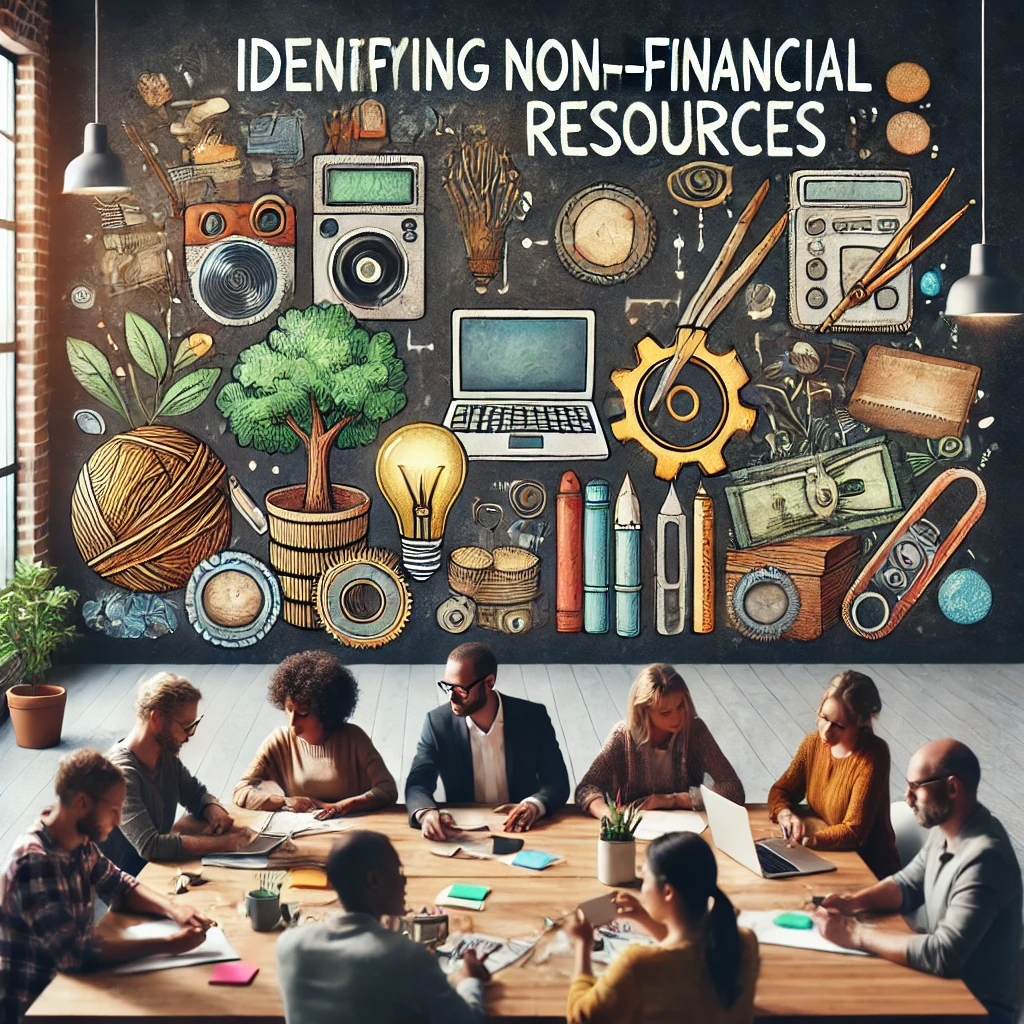
When you don’t have money to start a business, it is essential to take an inventory of the resources you already have at your disposal. These resources, although not always tangible, can be more valuable than money, as they represent skills, connections and tools that will help you build a solid foundation for your venture.
Personal skills: Your greatest asset
Your skills are one of the most powerful resources you have. Reflect on what you are good at and that could become a service or product. For example, if you have experience in graphic design, you could offer freelance services for small businesses. If you are a good communicator, you could explore coaching or online teaching.
Author Cal Newport, in his book So Good They Can’t Ignore You, mentions that the key to success is not in following a passion, but in developing valuable skills that solve specific problems. Thus, the question should not be “What do I like to do?” but “What can I do well that others need?”
Networking: Build strategic connections
Many times, the contacts you already have can provide you with opportunities, support or resources that are not available in the market. Friends, family or acquaintances can help you with advice, tools or even referrals for your first clients. For example:
- A designer friend could help you with an initial logo.
- A family member with business experience could mentor you.
- Your contacts on social networks can become your first clients or promoters.
Networking is not about asking for favors indiscriminately, but rather about building genuine relationships where both parties benefit. As Keith Ferrazzi suggests in his book Never Eat Alone, “The success of any project depends more on the people around you than on material resources.”
Free tools and platforms
Today’s technology offers endless free tools that eliminate the need for large initial investments. For example:
- Marketing and design: Canva, GGyess and Mailchimp let you create attractive designs and manage your marketing campaigns for free.
- Management and productivity: Trello, Notion, and Google Workspace help you organize tasks and collaborate efficiently.
- Sale and promotion: Social networks such as Instagram, Facebook Marketplace and TikTok are ideal for publicizing your product or service without investing in initial advertising.
These tools allow you to present a professional image, manage your business, and reach your target audience without spending a single cent. Remember that first impressions count, and with these platforms you can project quality from the beginning.
Identifying and utilizing your non-financial resources is the first step in turning an idea into a viable business. Even if you don’t have money, what you already have may be enough to take your first steps. The important thing is to take advantage of every opportunity and be willing to learn in the process.
The key to an unforgettable brand is here Click for more

Business ideas that require little or no capital
Starting a business without money may seem complicated, but there are multiple business ideas that require more creativity and effort than financial resources. Leveraging your skills, interests, and the free tools available allows you to get started with minimal investment, building a scalable business over time.
1. Freelance services: Offer your skills as a business
The freelance market continues to grow, and many people monetize their personal skills by offering services on platforms such as Fiverr, Upwork or LinkedIn. These services may include:
- Graphic design: Creation of logos, banners or visual content for social networks.
- Writing and editing: Writing articles, proofreading texts or creating SEO content.
- Programming and web development: Design basic websites or customize existing templates.
For example, a graphic designer could start by creating content for small local businesses in exchange for recommendations or an initial portfolio. As you gain experience, you can increase your prices and expand your reach.
2. Collaborative economy: Generate income with what you have
The concept of the sharing economy allows people to earn money using resources they already own. This includes:
- Sale of second-hand products: Applications like Mercado Libre or Facebook Marketplace allow you to sell items that you no longer use.
- Dropshipping: With this model, you can sell products online without needing to maintain inventory. AliExpress and Shopify are popular tools to get you started.
An example is entrepreneurs who start small shops on Instagram selling quality used clothing, using only their closet and mobile phone. This model eliminates the need for an initial investment and encourages reuse.
3. Online classes or advice: Share your knowledge
If you are an expert in a topic or have a specific skill, you can teach others through platforms such as Zoom, Google Meet or social networks. Ideas include:
- Private classes: Mathematics, languages or music.
- Personalized advice: Personal finance, digital marketing or personal development.
- Recorded courses: Platforms like Udemy or Teachable allow you to create courses that generate passive income.
For example, an English teacher who offers private classes online can start promoting themselves in Facebook groups or among friends, without needing to rent a physical space.
4. Content creation: Monetize your creativity
Digital content offers multiple ways to generate income without significant upfront capital. You can start a blog, YouTube channel, or TikTok profile and monetize it with advertising, sponsorships, or affiliate programs.
- Blog: Monetize with Google AdSense or affiliate links.
- YouTube: Generate income with ads or collaborations.
- TikTok: Promote products or services through viral content.
An example is that of influencers who started recording videos from their phones and then achieved collaborations with important brands thanks to their authenticity and creativity.
These ideas show that, with little or no capital, it is possible to take the first steps towards a successful business. The important thing is to identify your strengths, take advantage of free resources, and be willing to learn and grow.
How to get financial support or start-up resources

Although starting a business without money is possible, in some cases you will need access to additional resources to accelerate the growth of your business or cover specific needs. Here we will explore creative and accessible ways to obtain financial support or start-up resources, even without having any capital of your own.
Bartering services: A creative alternative
Bartering is an effective way to exchange skills or products without the need for money. For example, if you have graphic design skills, you could offer to create a company logo in exchange for legal or accounting advice. This approach allows you to acquire essential resources while strengthening business relationships.
A successful case is that of small local businesses that exchange products for advertising on social networks, allowing them to promote their services without incurring expenses. This model encourages mutual growth and can be particularly useful in the early stages.
Crowdfunding: Collective financing
Crowdfunding is a powerful fundraising tool, especially if you have an innovative idea or a cause that resonates with people. Platforms such as Kickstarter, GoFundMe or Indiegogo allow you to present your project to a global audience and receive financial contributions from people interested in supporting it.
To be successful in crowdfunding, it is crucial to create a clear and attractive campaign. Explain what problem you are solving, how you plan to do it, and why you need financial support. Accompany your proposal with videos or graphics that reinforce your message and detail benefits to donors, such as personalized rewards.
Incubator and accelerator programs
Business incubators and accelerators are initiatives that provide support to entrepreneurs, offering not only financing, but also mentoring, training, and access to a network of contacts. Many of these organizations look for innovative ideas and are willing to invest in projects with high growth potential.
For example, programs like Y Combinator and 500 Startups They have helped thousands of entrepreneurs launch successful businesses. Locally, you can also look for government institutions, universities, or chambers of commerce that offer similar resources.
Microcredits and specific loans for entrepreneurs
Microcredits are small loans designed to support entrepreneurs who do not qualify for traditional financing. Organizations like Kiva or Grameen Bank have transformed lives by offering affordable loans for small businesses.
Before applying for a microcredit, it is important to have a clear business plan that demonstrates how you will use the funds and how you plan to pay them back. This approach not only increases your chances of approval, but also helps you manage money more effectively.
Support from close networks: Friends and family
Although it can be a sensitive topic, turning to friends or family for initial support is a common option. The key thing here is to treat this support as a professional investment, setting clear terms and showing commitment. You can offer token rewards, such as a discount on your future services, or even a small percentage stake in the business.
These strategies show that lack of capital does not have to be an obstacle to starting your business. The important thing is to be clear in your vision, be transparent with your needs, and look for creative ways to get the support you need.
Common mistakes when starting a business without money and how to avoid them
Starting a business without capital can be an exciting but challenging path. Entrepreneurs often make mistakes that can slow down their progress or even lead to failure. Identifying these mistakes and knowing how to avoid them is crucial to building a solid business from the ground up.
1. Not having a clear plan
One of the most common mistakes when starting a business without money is not developing a business plan. Although you don’t need an extensive document, it is essential to have a guide that defines your objectives, steps to follow, and how you will generate income. Without this clarity, it is easy to lose direction and waste time on unproductive activities.
How to avoid it:
Create a basic plan that includes:
- Your value proposition: What problem do you solve?
- Your target audience: Who is your ideal client?
- Income strategies: How will you monetize your idea? This plan will serve as a compass to make strategic decisions.
2. Not validating your idea before investing time and resources
Many times, entrepreneurs fall in love with their ideas without checking if there is really demand in the market. This can lead to spending time and energy on something that doesn’t attract customers.
How to avoid it:
Validate your idea with simple and economical methods, such as:
- Surveys on social networks or among friends.
- Create a minimum viable prototype (MVP) to test your product or service.
- Analyze the response of your initial audience before scaling.
For example, if you want to offer online classes, try holding a free session to gauge interest and gather feedback.
3. Trying to cover too much without enough resources
Without a solid budget, it’s easy to fall into the trap of wanting to offer many products or services at once. Not only does this dilute your focus, but it can also lead to an unsustainable workload.
How to avoid it:
Start with a specific niche and one core product or service. Focus on doing well and build your reputation before expanding. This approach is not only more manageable, but also increases your chances of initial success.
4. Underestimate the importance of marketing
A business without promotion is like a well-kept secret. Many entrepreneurs believe that their customers will automatically come if they offer something valuable, but without marketing, your business can go unnoticed.
How to avoid it:
Take advantage of free or low-cost marketing tools, such as:
- Social networks to build an audience.
- Collaborations with other entrepreneurs.
- Create useful and relevant content to attract customers organically.
5. Not managing time efficiently
When you don’t have money, your time is your most valuable resource. Without good time management, you can end up working on tasks that don’t generate immediate impact.
How to avoid it:
Prioritize activities that add direct value to your business, such as finding customers, improving your product or service, and promoting your brand. Use organizational tools like Trello or Notion to stay focused.
Conclusion and final thoughts
Starting a business without money may seem like an intimidating challenge, but it is also an opportunity to develop skills, creativity, and a resilient mindset. Throughout this article, we have explored strategies to identify your non-financial resources, start businesses with little or no capital, and avoid common mistakes that often lead entrepreneurs off their path.
Money, although useful, is not always the most important resource. Personal skills, contact networks, free tools and the ability to adapt are factors that can be most influential in the success of a business. Examples of entrepreneurs who started from scratch, such as Sara Blakely and Howard Schultz, demonstrate that what is essential is a clear vision, a strong work ethic, and a willingness to learn in the process.
Reflect on the ideas shared here and find ways to apply them to your situation. It doesn’t matter if your journey starts with a small idea or a basic service; The important thing is to take the first step. Every satisfied client, every lesson learned and every opportunity taken are steps towards the business you dream of building.
The future of your business does not depend on how much money you have today, but on how much you are willing to work for your goals. With perseverance, creativity and strategy, you can overcome any obstacle and turn your vision into reality.
Launch your brand without an ad budget. In 2026, organic reach is driven by high-value content, not just paid spend. Use GGyess SocialSuite to manage your TikTok, Instagram, and LinkedIn presence for free. Leverage our AI-powered scheduling and insights to reach your first 1,000 customers using only your creativity and your smartphone. Start for free at GGyess.com
- Newport, Cal. So Good They Can’t Ignore You: Why Skills Trump Passion in the Quest for Work You Love. Grand Central Publishing, 2012.
- Ferrazzi, Keith. Never Eat Alone: And Other Secrets to Success, One Relationship at a Time. Currency, 2005.
- Fly, Simon. Start With Why: How Great Leaders Inspire Everyone to Take Action. Portfolio, 2009.
- Kaushik, Avinash. Web Analytics 2.0: The Art of Online Accountability & Science of Customer Centricity. Wiley, 2009.
- Blakely, Sara. Spanx history in interviews and reports. https://www.forbes.com.