Imagine this situation: you’ve just sent a brilliant proposal to a high-value prospect. The potential client is excited, replies within ten minutes, and says: “I love the strategy. Can we have a quick call to fine-tune a couple of details and sign?”
You feel the adrenaline of a new deal closing. You quickly respond: “Of course! How does your schedule look this Thursday at 10:00 a.m. or Friday at 3:00 p.m.?”
24 hours pass. The prospect replies: “Thursday got complicated and I’m leaving early on Friday. How about next Monday morning?”
You check your calendar. Monday morning is blocked with your weekly creative team meeting. You reply: “Monday is booked, would Tuesday at noon work for you?”
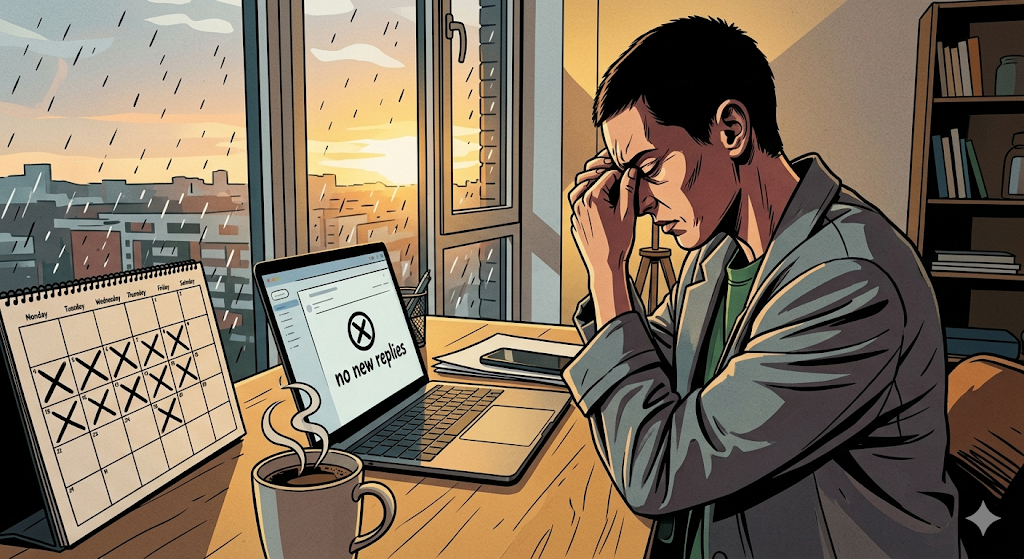
Silence. Three days go by and the client’s excitement has completely cooled off. What was going to be a sure close turns into a “I’ll get back to you next week.”
This phenomenon is known as the email ping-pong game. And in the digital marketing industry—where agility and perceived professionalism are everything—this small logistical issue is literally killing your sales and weakening relationships with your existing clients.
In this article, we’ll dive into the hidden cost of scheduling friction, why relying on fragmented external apps is no longer enough, and how to implement an automated scheduling system that projects authority, eliminates no-shows, and gives hours of time back to your account team.
The Psychology of Friction: Why Your Meeting Process Drives Clients Away
In the B2B (Business to Business) model, clients don’t just evaluate you based on campaign ROAS or how polished their website redesign looks. They evaluate you based on how it feels to work with you.
When a client hires you, they’re buying a solution to their problems—but also peace of mind. They expect your agency to be the organized partner that takes control.
Every time you force a client or prospect into a back-and-forth email exchange to align schedules, you’re injecting friction into the relationship. From a consumer neuroscience perspective, friction creates decision fatigue. Your client already has operational challenges; opening their calendar, comparing it with yours, suggesting a time, and waiting for confirmation is extra cognitive work they don’t want.
The most profitable agencies understand a golden rule: The path to a meeting should be one click.
The Anatomy of the Problem: Why Calendly or External Apps Are No Longer Enough
You might be thinking: “I don’t use emails anymore—I send my Calendly link.”
Moving to a scheduling tool is a great first step. However, in today’s agency ecosystem, relying on an external scheduling app creates a new set of problems that fragment your operation.
Let’s break down what actually happens when you use a disconnected scheduling tool:
- Information Silos: The client books a slot—then what? The event is saved in your Google or Outlook calendar, but that information doesn’t naturally flow into your project management system where the client’s history lives.
- The Lost Link Problem: The scheduler sends a confirmation email with a Zoom link (another external tool). On meeting day, the client can’t find the email. They message you five minutes before asking for the link. Chaos returns.
- Disconnection from Execution: You finish the call and take notes. Now you must open your task manager (Asana, ClickUp, etc.) and manually transfer everything.
Using an external scheduler solves the client’s problem—but transfers the operational burden to you and your team. You’re still paying the “disorganization tax” by jumping between tools to turn meetings into actual work.
The Silent Impact of No-Shows on Your Profitability
Let’s talk numbers. How much does it cost your agency when a client misses a meeting?
Imagine your Account Director and Creative Director have a campaign review scheduled at 11:00 a.m. Both pause their deep work at 10:50 to prepare. They join the call. Wait 15 minutes. The client doesn’t show. They try to reach them. At 11:20, the client replies: “Something urgent came up, I forgot.”
That lost 30 minutes from two of your most expensive team members is money evaporating. But the real damage goes deeper: their workflow is broken (context switching). Regaining focus adds another 30 minutes lost.
The lack of integrated smart reminders is a major leak. Generic automated emails often land in Promotions or Spam. You need a system that reliably notifies, allows frictionless rescheduling, and keeps your team informed within the same platform they work in.
The Blueprint: How to Build a Perfect Scheduling System
If you want to stop chasing clients and start operating like a high-level agency, you need a centralized workflow. Here’s the four-step system top agencies use:
Step 1: Protect Deep Work
Before sending scheduling links, protect your team’s productivity. Configure availability strategically.
For example: block Tuesday and Thursday mornings for strategy and copywriting. Only show availability on Monday, Wednesday, and Friday afternoons. Automation doesn’t mean being available 24/7—it means controlling your time predictably.
Step 2: One-Click Brand Experience
When a client needs a review or kickoff call, don’t send a generic link. Send a branded, integrated portal. The client should click, see real-time availability (adjusted to their timezone), and book in under 10 seconds. This signals order, scale, and control.
Step 3: Relentless Reminder Protocol
Once scheduled, the system must ensure attendance:
- 24 hours before: a soft reminder with date and agenda
- 1 hour before: an urgent reminder with direct access to the meeting
If the client needs to cancel, include a “Reschedule” button that restarts the process without manual intervention.
Step 4: Direct Transition to Call and Execution
This is where modern automation shines. When it’s time for the meeting, neither you nor your client should search for external Zoom or Meet links. The call should happen inside the same environment where it was scheduled and where the project is managed.
During the call, any agreement should instantly become a task assigned to your team with deadlines—all within the same screen.
Scalability: Free Your Account Managers to Do Real Marketing
An Account Manager’s role isn’t to act as a calendar assistant. Their real job is to build relationships, upsell services, interpret metrics, and ensure clients perceive value.
When you automate scheduling and integrate it into your workflow, you free up to 20% of your team’s weekly time.
That 20%—previously lost to emails, broken integrations, and missed meetings—can now be invested in campaign optimization, retention strategies, and revenue growth.
Automation doesn’t remove the human touch—it removes robotic friction so real human conversations become more valuable and strategic.
Unify Scheduling, Video Calls, and Projects with GGyess
The theory is clear: automate meetings without fragmenting your operation. But how do you do it without paying for multiple tools and spending weeks connecting them?
The answer lies in the evolution of agency software. You no longer need to choose between a great project management tool and a great scheduling system—you can have both in one place.
GGyess has evolved into the ultimate WorkSuite for digital marketing agencies, creating an ecosystem where the entire client lifecycle happens seamlessly.
By centralizing your operations with GGyess, you get exactly the system described in this article:
- Integrated Appointments (Smart Scheduling): Replace Calendly. Set your availability and share a professional link. Clients book, and everything is automatically integrated into your workflow.
- Reminders that protect your schedule: The system notifies both your team and clients, eliminating confusion and reducing no-shows.
- Native video calls: Say goodbye to Zoom subscriptions. Meetings happen directly within GGyess—no downloads, no broken links, complete professionalism.
- From conversation to execution: Notes and agreements from calls instantly become assigned tasks inside your project manager. Nothing gets lost—everything gets done.
Ending email ping-pong is a business decision. It’s what separates agencies stuck in micro-management from those ready to scale with high-value clients.
Bring order back to your agency, project authority, and reclaim your time. Visit ggyess.com today, discover the power of having your scheduling, video calls, and tasks in one place, and start closing more deals without friction.