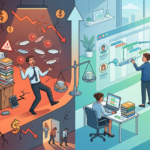
It’s Friday, 4:30 p.m. You’re about to close your computer and enjoy the weekend when suddenly your phone screen lights up with a WhatsApp message from your main client:
“Hi. I’m still waiting for the graphic assets for the Mother’s Day campaign that were supposed to go out today at noon. Everything okay?”
You feel a pit in your stomach. You frantically open your project manager. You search for the task. Indeed, the deadline was today at 12:00 p.m. The copywriter finished the texts yesterday, but the designer never saw the notification because they were working on another urgent task, and the Project Manager forgot to follow up manually.
The result: a disappointed client, your team working overtime on a Friday afternoon, a tense atmosphere, and a stain on your agency’s reputation.
In the world of digital marketing, deadlines are sacred. However, chronic delays are the leading cause of agencies getting fired worldwide. And here’s an uncomfortable truth: deadlines aren’t missed because of lack of talent or laziness; they’re missed because of the fragility of human memory and inefficient operating systems.
In this article, we’ll explore the psychology behind workplace forgetfulness, how much each delay really costs you, and how to implement a smart reminder ecosystem that works like an automatic “guard dog” for your agency—ensuring work is delivered on time, every time.
The Memory Trap: Why Your Team Forgets Important Tasks
To understand why deadlines fail, we must first understand how your agency’s creatives’ brains work.
Traffickers, Designers, and Copywriters handle a massive volume of information. Neuroscience explains that human working memory (short-term memory) can only hold between 4 and 7 pieces of information at once.
When you tell a designer in a hallway conversation (or in a quick chat): “Remember that the dental clinic logo is urgent for Tuesday first thing,” that instruction competes in their brain with 50 other micro-tasks: replying to an email, adjusting a banner, recalling their Adobe password, and thinking about what they’ll eat today.
This phenomenon is known as Cognitive Overload. Relying on your team to “remember” a deadline just because you mentioned it or because it’s written in a static document is operational negligence.
The human brain isn’t designed to retain long-term reminders; it’s designed to solve problems in the present. Therefore, your agency doesn’t need people to memorize dates—it needs a system that takes on that cognitive load for them.
The Illusion of the Static “Task Manager”
You might be thinking: “But we use Asana / Trello / Monday—our deadlines are there.”
Having a date written on a virtual card is not the same as having an alert system. Traditional project management models are usually passive. That means they require the employee to enter the platform, check the calendar view, and proactively review what’s due today.
The problem is that when a creative is in a “Flow” state (deep work), they rarely stop what they’re doing to check deadlines. And when task managers send notifications, they often do so through massive, generic emails (e.g., “You have 12 overdue tasks”), which end up being ignored, archived, or marked as spam. This is called “Notification Blindness.”
For a notification to work, it cannot be passive or generic. It must be active, contextual, and escalated.
The “Domino Effect”: The True Financial Cost of a Delay
In a digital marketing agency, workflow is linear and dependent. Imagine the production of a Facebook Ads campaign:
- The Strategist defines the angle.
- The Copywriter writes the text.
- The Designer creates the visuals.
- The Account Manager sends it to the client for approval.
- The Trafficker launches the campaign.
If the Copywriter is delayed by 24 hours because they “forgot” the deadline, they’re not just losing a day. They’re pushing the Designer’s schedule, forcing the Account Manager to make excuses to the client, and leaving the Trafficker with less time to optimize the budget.
This “Domino Effect” carries a silent but devastating financial cost:
- Non-billable hours: The time a Project Manager spends chasing the team and asking “How are we doing on this?” is administrative time the client doesn’t pay for.
- Advertising opportunity costs: If a Black Friday campaign launches two days late, the client misses the peak traffic window, directly affecting their ROAS (Return on Ad Spend) and, therefore, their willingness to renew the contract.
- Team burnout: Delays create false urgency. Working under chronic stress kills creativity and increases employee turnover. Hiring and training a new creative will cost you thousands of dollars.
Smart Reminders: Automating Accountability
The solution to the epidemic of missed deadlines isn’t hiring a stricter Project Manager or scolding your team. The solution is Automating Accountability through Smart Reminders.
Unlike a simple alarm clock, a smart reminder ecosystem in a modern WorkSuite understands project context and acts with surgical precision.
What makes a reminder truly “smart”?
1. Staggered Anticipation (The traffic light method)
There’s no point in alerting the team that an important task is due today if it takes three days to complete. The system must alert progressively:
- Green (3 days before): “Attention: The website redesign project is due in 72 hours. Everything on track?” (Ideal for raising blockers).
- Yellow (24 hours before): Direct alert to the responsible person and the Project Manager.
- Red (Overdue): High-priority notification to prevent escalation to the client.
2. Visibility in the Work Environment
The reminder shouldn’t get lost in an inbox full of promotional emails. It must appear—intrusively but respectfully—in the operations center where your team actually works. If they’re inside the platform designing or planning, that’s where the alert should appear.
3. Bidirectional Reminders (Clients Forget Too)
This is the best-kept secret of highly profitable agencies: 50% of delays are not your team’s fault—they’re the client’s fault.
The client forgot to send the brand guidelines, forgot to approve the copy, or simply didn’t show up to the review meeting.
A smart system doesn’t just chase your team—it chases the client with extreme politeness.
By integrating appointment scheduling with project management, the system sends automatic reminders to the client: “Hi Carlos, just a reminder that we have our monthly review meeting tomorrow at 10:00 a.m. Here’s your direct link to join the video call.”
This eliminates friction, reduces no-shows to zero, and transfers operational responsibility to technology.
How to Build a “Zero Delay” Culture in 3 Steps
Implementing the technology is vital, but you must pair it with a process your team respects. Here’s the three-step framework to eliminate missed deadlines:
Step 1: Eliminate Abstract Tasks
The brain ignores what is unclear. A task called “May campaigns” is an invitation to procrastinate. Force your team to break deliverables into actionable micro-tasks using Artificial Intelligence. When a project enters the agency, AI should break it down into steps of no more than 2 hours each. Micro-tasks create micro-wins, stimulating dopamine release and accelerating execution.
Step 2: The “Assigned and Dated” Rule
Establish a non-negotiable company policy: no action—no matter how small—exists unless it has two elements configured in the platform: one single owner and an exact deadline (with time).
If a client requests a quick change during a video call, the task is created immediately, assigned to the designer, given a deadline (e.g., today at 5:00 p.m.), and the system begins its reminder cycle.
Step 3: Centralize to Avoid Ignoring
If team chat is in one app, tasks in another, and client video calls in a third, reminders will disappear into the abyss of context switching. For reminders to be absolute, the work environment must be absolute.
Operational Evolution: Centralize and Automate with GGyess
The biggest headache for agency owners is trying to build this ecosystem by stitching together different software tools that eventually disconnect and fail.
That’s why agencies that are scaling today no longer use fragmented platforms. They’ve understood that real productivity requires a unified work environment.
This is where GGyess changes the game.
By evolving into the ultimate WorkSuite for digital marketing agencies, GGyess doesn’t just organize your projects—it integrates an intelligent automation and reminder engine that safeguards your business’s profitability.
By migrating your operations to GGyess, you eliminate missed deadlines thanks to infrastructure designed for total control:
- Unbreakable Project Management: Assign owners, define deadlines, and let the system become your team’s tireless “Project Manager.” Precise notifications ensure everyone knows what to do and when.
- Appointments & Client Reminders: Tired of clients forgetting meetings? Use GGyess’s native scheduling. The client chooses their time, and the system sends automatic (and impossible-to-ignore) reminders.
- Integrated Video Calls: When the reminder triggers and the meeting starts, no one has to hunt for Zoom or Meet links. The video call happens directly inside GGyess, keeping full project context visible.
- AI-Assisted Planning: Let built-in AI structure your projects and assign deadlines based on your team’s real availability—avoiding overload and bottlenecks.
Your agency can’t afford to keep losing credibility due to operational oversights. Trusting memory is a financial risk; trusting automated systems is the definition of scalability.
Regain your peace of mind and become the most reliable agency in your sector. Visit ggyess.com today, discover the power of centralizing your tasks, appointments, and video calls in a single WorkSuite, and say goodbye forever to the stress of missed deadlines.