We live in the cruelest paradox of modern work. We carry devices in our pockets with more processing power than NASA had in 1969. We have apps for everything. We can connect with anyone on the planet in milliseconds. And yet, we have never been slower, more scattered, or more inefficient.
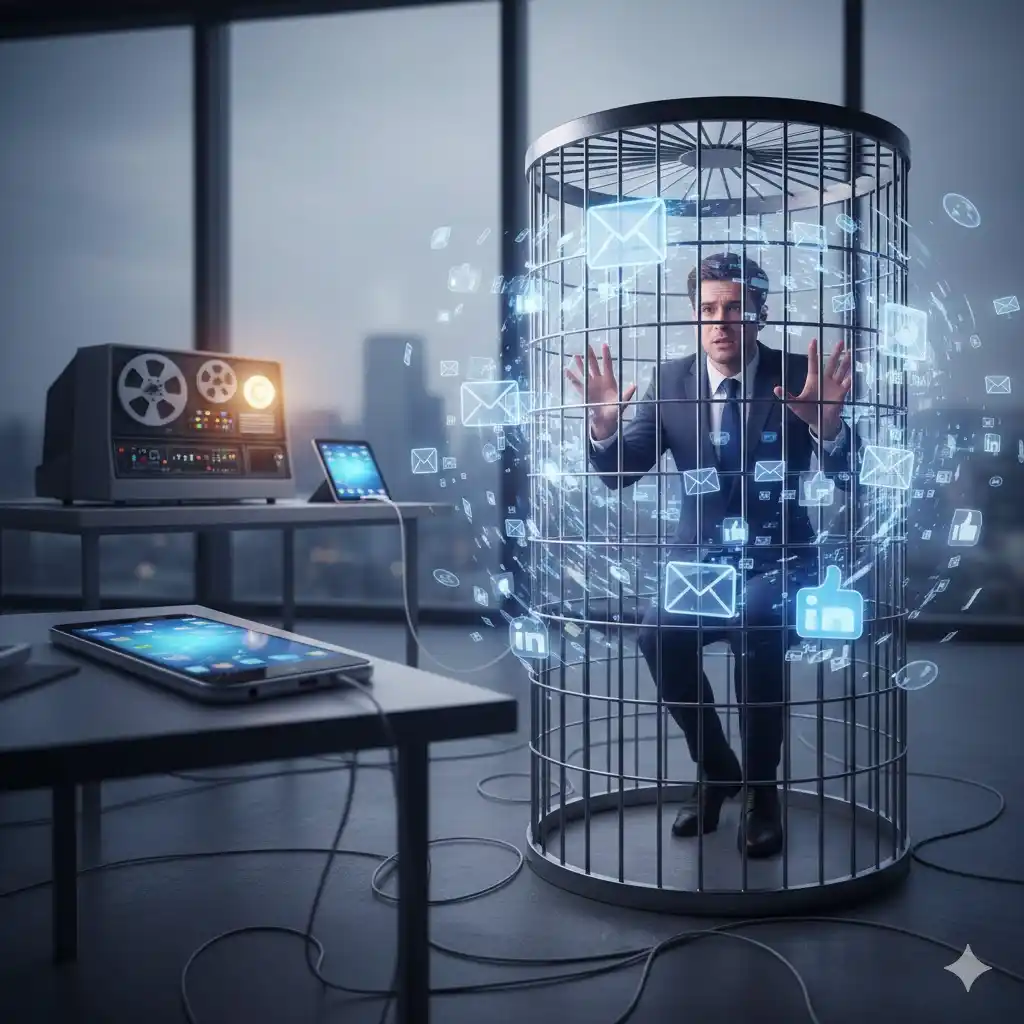
The digital channel, which promised to set us free, has become a prison of notifications. Most professionals don’t use technology; they are used by it. They spend their days reacting to digital stimuli (a Slack ping, a LinkedIn like, an “urgent” email) instead of creating meaningful work.
In the tenth chapter of Ultra Productivity, we face reality head-on: if you don’t put your digital life on a diet, the attention economy will eat you alive. This isn’t about disconnecting and living in a cave (that’s unrealistic). It’s about mastering digital immunity. Here’s how to stop being a slave to the algorithm and become the CEO of your attention again.
1. The Truth Audit: Where the Hell Does Your Time Go?
The first step out of the hole is to stop lying to yourself. We think we’re “working” when we’re actually just being. Spending two hours on LinkedIn reading guru posts isn’t work; it’s entertainment disguised as productivity. Answering trivial emails isn’t work; it’s bureaucratic housekeeping.
Ultra productivity requires data, not feelings. Tools like RescueTime (or your phone’s Screen Time reports) are mirrors that don’t lie. When you analyze your day, you’ll likely uncover an uncomfortable truth:
- Email is still the king of wasted time. It’s a to-do list written by other people for you.
- “Collaboration” tools (once Basecamp, now Slack, Teams, or Asana) often generate more noise than value.
- Social media steals life in 5-minute fragments that add up to hours.
The goal is to hit one key metric: 70%.
If 70% of your digital time isn’t spent in creation tools (writing, designing, coding, strategic planning), you’re not productive. You’re a digital janitor moving information around without creating value.
2. The Digital Diet: Stop Eating Information Junk
Today, information obesity is an epidemic. We’re infoxicated. We consume content compulsively out of fear of missing out (FOMO), without realizing that what we’re really missing is our own life and our own projects.
The digital diet proposed in the book—updated for today’s context—demands Spartan discipline:
- Social Media: Stop trying to be everywhere. You don’t need TikTok, Threads, X, Instagram, and LinkedIn all at once. Choose one or two platforms where your real audience lives and kill the rest. More importantly: shift from consumer to creator. If you log in, post and leave—don’t scroll endlessly.
- Subscriptions and Newsletters: Be ruthless. If you haven’t opened a newsletter in two weeks, unsubscribe. Keeping it “just in case” is mental noise. Limit your information sources to 3 or 4 high-quality ones and check them once a day, not in real time.
- Instant Messaging (WhatsApp / Telegram): The modern super-villain. The rule is simple: don’t use WhatsApp for work. Mixing personal and professional life in the same channel is a recipe for chronic stress. If it’s work, it belongs in an asynchronous channel where you control when you respond.
Remember: scarcity creates value.
If you’re always available, your time is worth zero. If you’re hard to reach, your attention becomes a premium asset.
3. Taming the Beast: Mastering Email
Email is both the most useful and the most destructive tool we have. To keep it from becoming your grave, apply guerrilla tactics:
- The Three-Email Rule: If an issue isn’t resolved within three emails (send, reply, close), cut the thread. Pick up the phone or schedule a 5-minute video call. Endless threads are productivity black holes.
- The One-Minute Test: Get in, process, get out. If reading and deciding on an email takes more than one minute, either delete it, delegate it, or turn it into a task for later. Don’t let it float in your inbox.
- The Power of Templates: 80% of what you write is repetitive—proposals, rejections, introductions. Build a template library in your notes app. Personalize the first and last line to keep it human, but never rewrite the body again.
- Action, Not Information: Every email you send must have a clear purpose. Don’t send “FYI.” Send “What do you think about this? I need an answer by Friday.” No call to action equals corporate spam.
4. The Art of Rejecting Opportunities (The “Life-Changing” Messages)
The better you do, the more “opportunities” show up: podcast invitations, collaboration proposals, virtual coffees “to connect.” They feel flattering—but they’re traps. These are life-changing messages: offers that promise a lot but, if misaligned with your goals, simply pull you off course.
Learning to say no with elegance is a survival skill. Use mental templates to decline without burning bridges:
- “I’d love to, but my full focus right now is on Project X, and I wouldn’t be able to give this the attention it deserves.”
- “I’m not taking on new collaborations until [future date], but thank you for thinking of me.”
You don’t owe long explanations. A firm, polite no is better than a reluctant yes that you later half-deliver or fail entirely. Protect your calendar like your bank account—because it is one.
5. Human Media: Don’t Be a Robot
In the age of AI—where ChatGPT can write your emails and bots can schedule your meetings—humanity becomes the premium asset. The concept of Human Media reminds us that technology should be a bridge, not a wall.
- Complementary, Not Substitutive: Don’t hide behind email to deliver bad news or avoid hard conversations. Use tech to schedule the meeting, then have the conversation face-to-face (or on video). Emotional resonance dies in text.
- Individualize: Even when using templates, make sure the other person knows you’re speaking to them. Reference a personal detail, something you learned about them. In a sea of automation, the human touch shines like a lighthouse.
- Disconnect to Reconnect: The best professionals know when to shut down. Distinguish between being an Integrator (mixing work and life all day) and a Segmenter (clearly separating them). Science suggests segmenters—those who close the laptop and don’t reopen it until tomorrow—have greater long-term resilience.
6. Metrics That Matter: Ignore Vanity Metrics
Finally, don’t be seduced by the wrong numbers. Ten thousand LinkedIn followers don’t pay the mortgage. A 50% newsletter open rate means nothing if nobody buys. Stop measuring likes, shares, and impressions. Those are ego metrics.
Start measuring what actually matters:
- Financial Impact: Are my digital actions generating real revenue?
- Human Impact: Am I changing my clients’ lives? Do I receive deep thank-you emails instead of superficial comments?
- Time Recovered: Am I doing the same work in fewer hours thanks to technology?
If your bank balance and your happiness levels are both in the green, you’re doing it right. If you have tons of followers but feel broke and stressed, you’re a successful digital slave—and a productivity failure.
Conclusion: Your Personal Operating System
The conclusion is unavoidable: digital chaos isn’t solved with more willpower; it’s solved with a better system. Trying to apply this digital diet and these communication rules “raw,” relying only on memory and discipline, is a losing battle. You need infrastructure that supports your decision to be ultra-productive. You need a digital environment designed for focus, not distraction.
This is where centralizing your operational life in a focus-first platform becomes essential. GGyess WorkSuite acts as the central nervous system your digital diet needs to be sustainable. Instead of jumping between five apps (which fractures attention and exposes you to distractions), GGyess lets you manage projects, communicate with your team, and control your time from a single, fortified dashboard. You can apply the “three-email rule” by moving complex conversations into structured tasks inside the platform, eliminating inbox noise. You can automate repetitive work so it doesn’t steal that vital 70% of your time. By centralizing your operation in an environment built for execution—not distraction—GGyess becomes the technological ally that lets you benefit from the digital channel without letting the digital channel benefit from you.