Sofía closed her office door and slumped into her chair, exhaling a sigh that seemed to have been held in for months. She had just come out of a review meeting with Miguel, one of her most talented designers, whose latest work was, frankly, a disaster. Sofía hadn’t told him. Instead of pointing out that the design failed to meet the brand’s objectives, she had said: “It’s fine, Miguel, maybe we just need to tweak a couple of colors.”
Sofía thought she was being a “good boss.” She thought she was protecting Miguel’s feelings. What she didn’t know was that she had just committed the capital sin of modern leadership: Ruinous Empathy. By not being clear, Sofía was condemning Miguel to mediocrity and the project to failure.
This is the dilemma Kim Scott addresses in her book Radical Candor. In a work world where we fear hurting sensibilities, we have forgotten that honesty is not cruelty, but an act of profound respect. But how do we tell the truth without triggering a panic response in our interlocutor’s brain? The answer lies at the intersection of neuroscience and the structure of our work tools.
1. The Biology of Criticism: Why feedback hurts physically
To apply Radical Candor, we must first understand why our brain reacts to criticism as if it were a physical attack. When someone tells us our work isn’t good, our amygdala—the brain’s threat radar—fires.
In evolutionary terms, being rejected by the tribe or labeled incompetent meant death. Therefore, criticism of a report or a poorly executed task is processed by the brain in the same way as a predator’s roar. Cortisol is released, the heart rate increases, and blood is diverted from the prefrontal cortex (the area of logical thought) to the muscles.
The result is “amygdala hijacking”: the person stops listening to you. It doesn’t matter how constructive your feedback is; if the other’s brain perceives a personal attack, it will shut down completely. The leader’s challenge is not to avoid the truth, but to present it in a way that the amygdala remains calm and the prefrontal cortex stays active.
2. The Radical Candor Framework: The four quadrants of leadership
Kim Scott proposes a simple yet devastatingly effective model based on two axes: Care Personally and Challenge Directly.
- Radical Candor (The Ideal): Occurs when you care about the person as a human being but are not afraid to tell them their work isn’t good enough. It is clear, direct feedback with a purpose for improvement.
- Obnoxious Aggression: You challenge directly but don’t care about the person. This is the boss who humiliates in public. The receiver’s brain enters “fight” mode, generating resentment and blocking learning.
- Ruinous Empathy (The Silent Danger): You care so much about the person that you don’t dare challenge them. This is the silence that kills startups. You don’t give feedback to avoid “making them feel bad,” and eventually, you fire the person because they never improved.
- Manipulative Insincerity: You don’t care about the person, nor do you care if they improve. You only care about looking good or avoiding conflict. This is the worst form of leadership, based on politics and hypocrisy.
From a neuro-writing perspective, we understand that Radical Candor is the only state that fosters psychological safety. When a team knows they will receive the truth, but that truth comes from a place of care, oxytocin levels increase, facilitating learning and innovation.
3. The Secret is in Specificity: Decoupling Ego from the Task
One of the biggest mistakes in giving feedback is globalizing. Saying “You’re a mess at organizing projects” is an attack on identity. Saying “In task X, the schedule was not met and this affected milestone Y” is an analysis of a fact.
The human brain has a very strong negativity bias. To compensate for one criticism, we need several praises. But beyond quantity, what matters is objectivity. When feedback focuses on a specific task within a shared platform, the receiver’s brain can see the problem as something external to themselves.
By saying “The task says A, but the result is B,” the feedback becomes a joint problem-solving exercise, not a value judgment on the person. This drastically reduces defensive resistance and allows the person to focus on the solution. The transparency of shared processes acts as a shield protecting the worker’s self-esteem while raising the standard of work.
4. The Cost of Lack of Feedback: Neuro-fatigue and Disorientation
The absence of clear feedback generates a state of uncertainty that is metabolically costly for the brain. If I don’t know if I’m doing well or poorly, my brain constantly spends energy trying to read subtle signals in the behavior of my boss or colleagues.
This state of “hypervigilance” depletes the glucose reserves of the prefrontal cortex, leading to errors, lack of creativity, and eventually, burnout. Radically candid feedback is, in reality, an act of cognitive generosity: you save your team the effort of having to guess what you think. Clarity is a form of care.
5. How to Build a Culture of Radical Candor
For Radical Candor to work, it cannot be an isolated event; it must be a habit embedded in daily operations. This is where many companies fail. They try to give feedback in quarterly meetings when the error is already history.
Effective feedback is immediate, specific, and private. It must occur in the context of work, not weeks later. For the brain, learning is much more powerful when the connection between action and consequence is close in time. Furthermore, feedback must be a two-way street. A leader who asks for feedback and reacts with gratitude is sending a powerful signal to the whole team: “Truth is safe here.”
6. The Role of Visibility in Honest Communication
It is impossible to be radically candid if there is no common database. If I see one thing and you see another, our feedback conversation will turn into an argument about who is right, not how to improve the work.
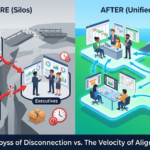
Total visibility of the workflow is the basis of objectivity. When all team members can see tasks, assignees, files, and deadlines in one place, the truth becomes indisputable. Feedback stops being “my opinion against yours” and becomes “what the data shows vs. what we agreed.” This visual alignment calms the limbic system and allows the team to focus on operational excellence.
GGyess: The Ecosystem where Radical Candor becomes Action
At GGyess, we have understood that the best professional relationships are based on radical clarity. That’s why our unified ecosystem not only organizes your work but also facilitates the honest and effective communication your team needs to scale.
GGyess is the tool designed so that feedback never feels personal. By centralizing all your operations—from AI planning to file and task management—we create an environment of absolute objectivity. When you need to give feedback on a specific task, you do it within the platform, directly linked to the work performed.
- Objective Evidence: Thanks to our shared boards (Kanban, Gantt, Table), feedback in GGyess is stripped of unnecessary emotional charge. You aren’t criticizing the person; you’re commenting on progress visible to everyone.
- AI Standards: Our integrated AI sets a quality standard from the start by generating surgical task breakdowns. If something isn’t met, the platform points it out visually, allowing for constructive, rapid intervention.
- Eliminating Ambiguity: By having a “single source of truth,” GGyess prevents the “who said what” arguments that fuel Obnoxious Aggression or Manipulative Insincerity.
In GGyess, feedback isn’t a moment of tension; it’s a comment on an optimized workflow. It’s the place where your team stops protecting their egos to start protecting their goals. By unifying your tools in GGyess, you are building the sanctuary of transparency that your collaborators’ brains need to flourish.