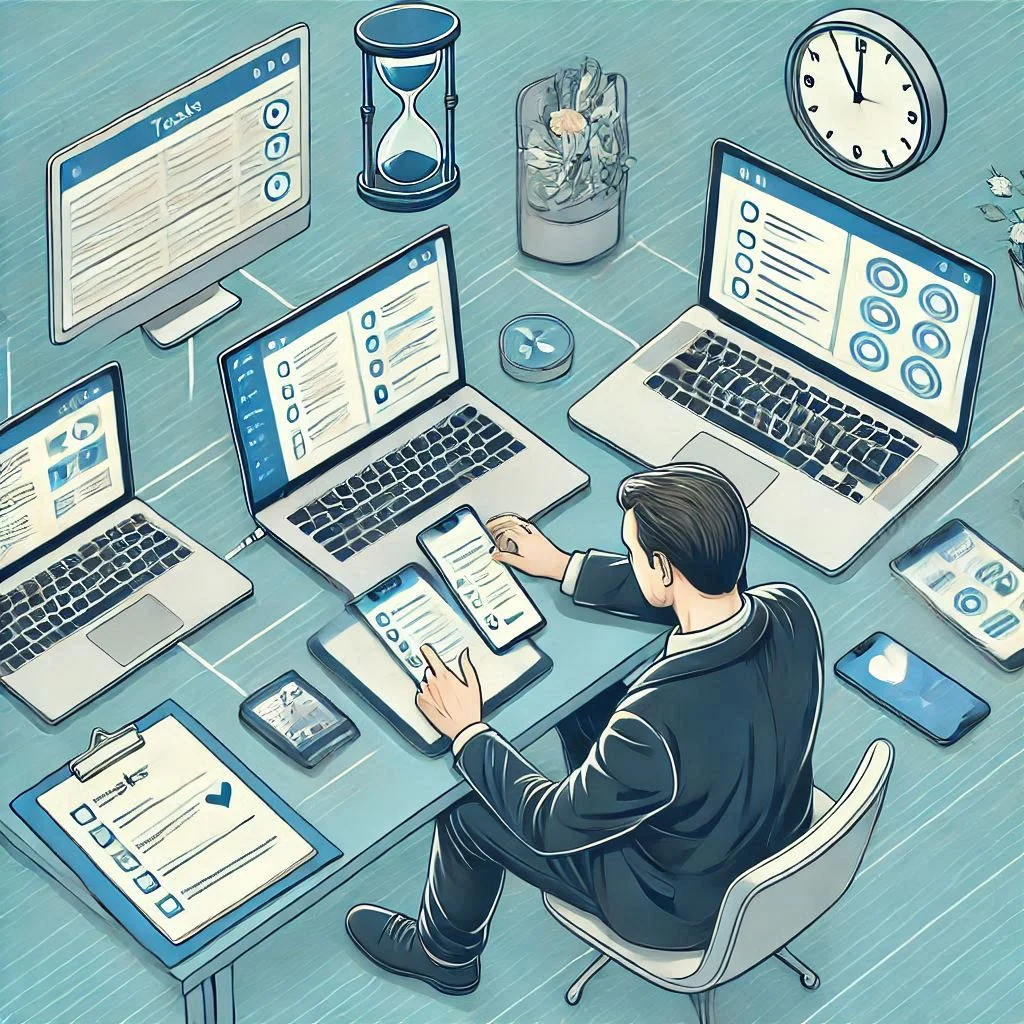

In an era of relentless hyper-connectivity, the global digital landscape operates at a staggering pace. Every single day, humanity generates over 13.7 billion Google searches, broadcasts 140 billion Instagram Reels, and exchanges more than 100000 million WhatsApp messages. Amidst this colossal roar of data, founders, executives, and creative leaders frequently fall into a dangerous psychological trap: confusing motion with progress. They allow their days to be consumed by an endless onslaught of “urgent” micro-tasks, mistaking a packed schedule for true productivity.
The harsh reality of modern business is that your brand cannot scale if your brain has 100 tabs open, leaving you paralyzed each morning, wondering whether you should design a graphic, write a pitch, or reply to customer messages. True organizational growth hinges upon a single, non-negotiable skill: the ability to ruthlessly audit your workflow and isolate the vital tasks that require your specific, irreplaceable expertise.
The Historical Context: From Henry Ford to the Digital Conglomerate
The struggle to separate high-leverage leadership from routine execution is not a novel modern affliction; it is a fundamental challenge that has shaped industrial history. In the early 20th century, as industrial manufacturing evolved, pioneering theorists recognized that a single individual trying to control every operational gear would inevitably cause a systemic slowdown. Henry Ford revolutionized production not by working harder, but by mastering the division of labor. He isolated his unique value—systemic engineering and macro-strategy—and built workflows that allowed specialized operators to handle the execution.
Decades later, in the mid-1950s, President Dwight D. Eisenhower formalized this mental model into what is now globally recognized as the Eisenhower Matrix. He famously noted that the urgent and the important are rarely the same thing. Yet, fast-forward to the digital age, and the average modern entrepreneur has completely inverted this timeless wisdom.
Today’s business ecosystem is profoundly fragmented. Leaders find themselves trapped in a state of constant context-switching—jumping between chaotic spreadsheets, file transfers, internal chats, and administrative tracking. This structural mess breeds a false sense of self-reliance. When you spend your afternoon digging through scattered folders, hunting for broken links, or manually setting up basic task structures, you are not acting as a CEO; you are acting as an underpaid administrator in your own company.
The Blueprint: Auditing Your True “Value Metric”
To break free from this operational paralysis, you must conduct a uncompromising audit of your daily activities. Every task you perform should be measured against your business’s ultimate value metric. If an activity does not directly expand the vision, secure high-level partnerships, or build the core creative architecture of your brand, it should not be on your desk.
To effectively categorize your responsibilities, apply the Three-Tier Operational Matrix:
| Category | Operational Definition | Actionable Response |
| The Genius Core | High-leverage strategic moves, vision casting, closing critical deals, and core creative conceptualization. | Protect & Retain (Spend 70% of your time here). |
| The Execution Layer | Necessary operational tasks, basic project coordination, routine document drafting, and file organization. | Systematize & Delegate (Build clear frameworks for others). |
| The Friction Layer | Repetitive administrative duties, scheduling logistics, and chasing updates across disconnected apps. | Automate & Eliminate (Offload to smart systems entirely). |
When you force yourself to look at your workload through this lens, you quickly realize that breaking large goals into prioritized checklists is the only path to real progress. The destination might be perfectly clear in your mind, but as long as you are stuck in the operational weeds, your business will remain stagnant.
The Story of the Overwhelmed Visionary
Consider the story of Julian, a brilliant digital strategist who launched an independent consulting agency. In the early days, Julian did everything. He met with clients, mapped out full marketing architectures, wrote project briefs, and manually tracked every single milestone on a chaotic whiteboard. His vision was profound, and his clients loved him.
However, as his portfolio grew from three clients to fifteen, his world fractured. Julian began starting his mornings in a state of total paralysis. He would spend four hours a day just trying to coordinate his small remote team, asking questions like “What is due this week?” or chasing down missing assets across scattered emails and messaging apps. Because his brain was constantly bogged down by coordination, he stopped innovating. He stopped selling. He missed critical deadlines, and his mental health deteriorated.
One evening, staring at a mountain of unorganized files and broken project links, Julian realized a sobering truth: his team didn’t need more of his hours; they needed a system they could actually trust. He didn’t need to work longer; he needed to step up into the role that only he could fulfill. He needed to build a centralized workspace where execution happened autonomously, leaving him free to innovate.
Reclaiming Your Focus with GGyess
This critical shift from operational chaos to strategic clarity is precisely why GGyess exists. Designed as the ultimate SaaS ecosystem for entrepreneurs, startup founders, remote teams, and growing creative agencies, GGyess eliminates the heavy lifting of project management so you can pour your energy exclusively into the work that only you can execute.
For detailed insights into the evolution of our intuitive user experience, you can reference the comprehensive design layouts found in GGyess Modules – User Interfaces.pdf and explore our deep operational framework within GGyess Business Presentation.pdf. The platform has systematically consolidated the features of multiple fragmented market tools into one seamless, ultra-affordable workspace starting at just $9.99 a month. By transitioning to GGyess, businesses completely replace their expensive, disconnected subscriptions to apps like Asana, Trello, Monday.com, ClickUp, Slack, and Microsoft Teams.
[Traditional Scattered Stack]                 [The GGyess Solution]
  Asana + Slack + Miro + Drive      --->     ONE Connected Workspace
(High Costs + Fragmented Data)               (Al Planning + Unified WorkHub)
In its powerful current evolution, GGyess has streamlined its architecture to focus entirely on WorkSuite, the definitive power-pack for organizational productivity and seamless team collaboration. Within this robust environment, the legendary Planily module has evolved into WorkHub—a dynamic, multi-view command center where you can track project progress across Kanban, Gantt, Calendar, and Table layouts instantly.
To completely remove the friction of manual delegation, GGyess features a built-in AI Assistant. You can simply paste a raw project brief or type out a basic goal, and the AI will instantly generate a prioritized task structure, establish smart dates, and suggest ideal task owners based on roles and current workloads. Collaboration happens directly next to the actual work. Team members are automatically notified of assignments, files are securely stored and shared inside folders right alongside your timelines, and the platform features integrated video calls, automated recordatorios (reminders), and streamlined appointment scheduling to keep everyone aligned without constant, grueling check-ins.
You don’t need more hours in the day; you simply need a plan you can trust. By shifting the operational friction to GGyess, you reclaim your time, eliminate the stress of lack of organization, and finally free yourself to focus on what truly matters: leading your business to the top. Create your free account today at ggyess.com.
Put your next project in motion.
Explore GGyess and find a place to organize the work with your team.
Explore GGyess ↗