

Mental Tricks and Sacred Spaces to Overcome Resistance
There is a dangerous chasm between knowing what you have to do and actually doing it. You may have read the previous chapters, understood the theory of emptying your mind, and agreed with natural planning, yet still remain paralyzed. Why? Because your environment is not designed for action. It is designed for accumulation. In this…
 Douglas Lux
Why Your Brain Plans Your Vacations Better Than Your Projects (And How to Fix It)
There is a moment in work life that we all dread. You’ve just been assigned a massive project. It’s complex, it’s important, and it has an aggressive deadline. You sit in front of your computer, open a new blank document, and type “Project Plan.” And then, it happens. You go blank. The cursor blinks mockingly….

How to Regain Control of Your Life in Five Master Moves
It’s three in the afternoon on a random Tuesday. You are sitting in front of your screen, trying to write an important report, but your mind isn’t there. One part of your brain is rewinding an uncomfortable conversation you had yesterday with a client; another part is trying to remember if you bought dog food;…

Why Your Anxiety Isn’t the Fault of Your Work, But of Your System
Have you ever felt like your head is about to explode—not because of the amount of work, but because of the mental noise of everything you have pending? We live in a modern paradox. We have more technology than ever to “save time,” yet we feel like we have less time than ever before. The…

Why You’re Still Using Your $4,000 Digital Camera Like It’s a Relic from 1990
There is a ghost sound that haunts old-school photographers, and even new ones who learned from them. It’s a mental “click-clack” that rings in the back of their brain every time they press the shutter. In the era of analog film, that sound had a very real price: 25 cents per negative, plus the cost…
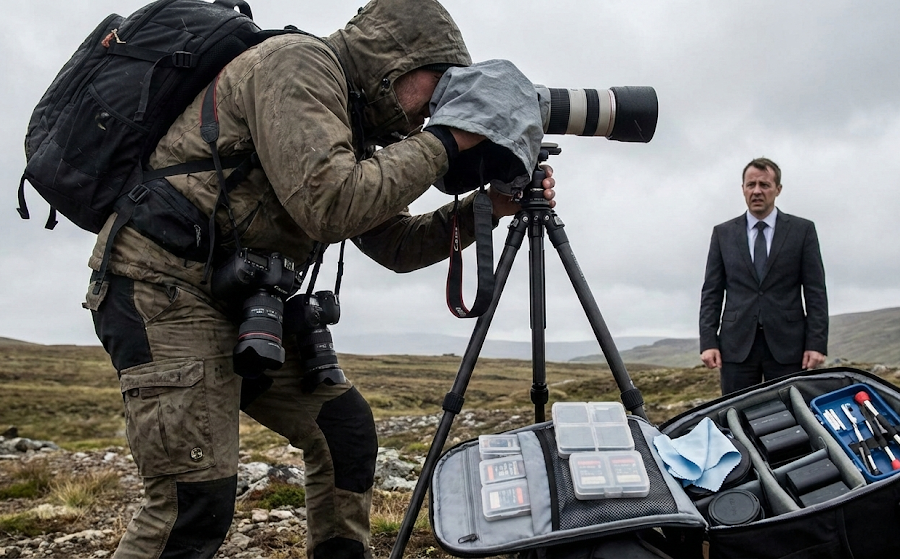
Photography Without Migraines: The Professional’s Anti-Disaster Manual
Professional photographers are always “out.” And I don’t just mean they are outdoors; they are out of their comfort zone, dealing with variables that would make an accountant weep. We mortals take photos when our partners give us permission or when we are on vacation. If something goes wrong, we delete the photo and that’s…
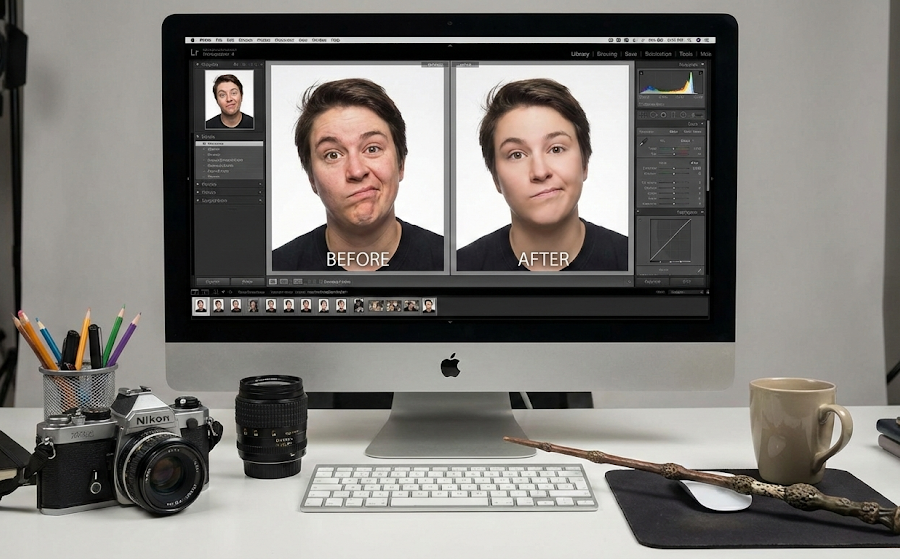
The Inconvenient Truth About Portraits: How to Make People Look Better Than They Are (And Avoid Them Hating You Later)
The title of this lesson is, let’s admit it, a bit misleading. It promises to teach you how to make people look “better.” But let’s be brutally honest: if the person has been touched by the magic wand of ugliness, there is no digital camera, lens, or Photoshop plugin (yet) that will magically transform them…

The Most Expensive Sport in the World: Why Your Camera Gear Is Worth More Than Your Car (And How to Amortize It)
This is the only moment where we will be brutally honest about money. Scott Kelby begins his lecture on sports photography with a cruel but necessary survey. Look at the price of an average photography book (say, 20 dollars). A) You think: “That’s reasonable, I’ll buy it.” B) You think: “Oof, 20 dollars… I hope…
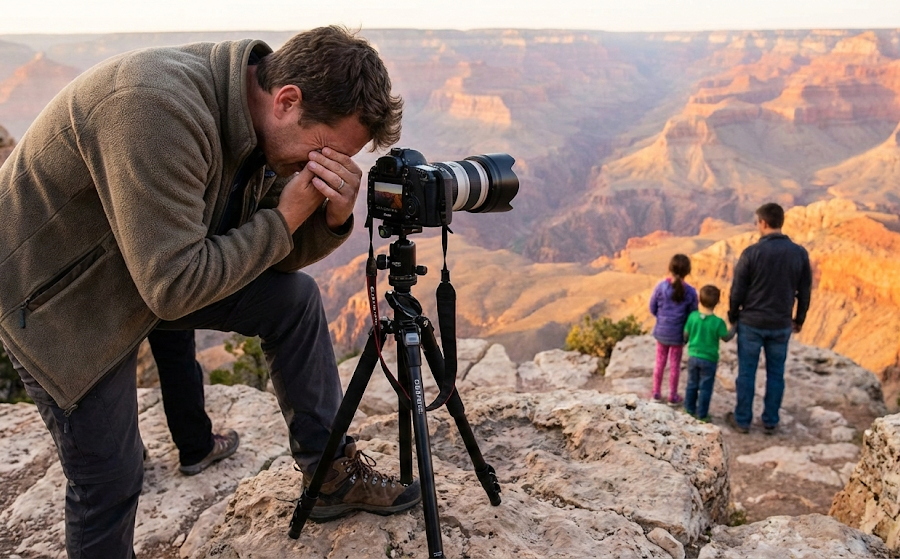
Why Your Landscapes Are Depressing (And the Field Manual to Fix It)
It’s happened to you. You save up all year. You ask for your two weeks of vacation. You rent an SUV, load up the family, and drive to the edge of the Grand Canyon or Yosemite Park. You stand before the abyss. The view is so majestic, so imposing, that you think: “Even a chimp…

Weddings: The Extreme Sport of Photography (Survival Manual with No “Second Takes”)
At the precise moment you tell yourself: “My life is too quiet, I need a little excitement,” is when, for some cosmic reason, you decide to agree to photograph your first wedding. Unlike the controlled studio, where you can adjust the light fifty times until it is perfect, or the landscape, where the mountain will…