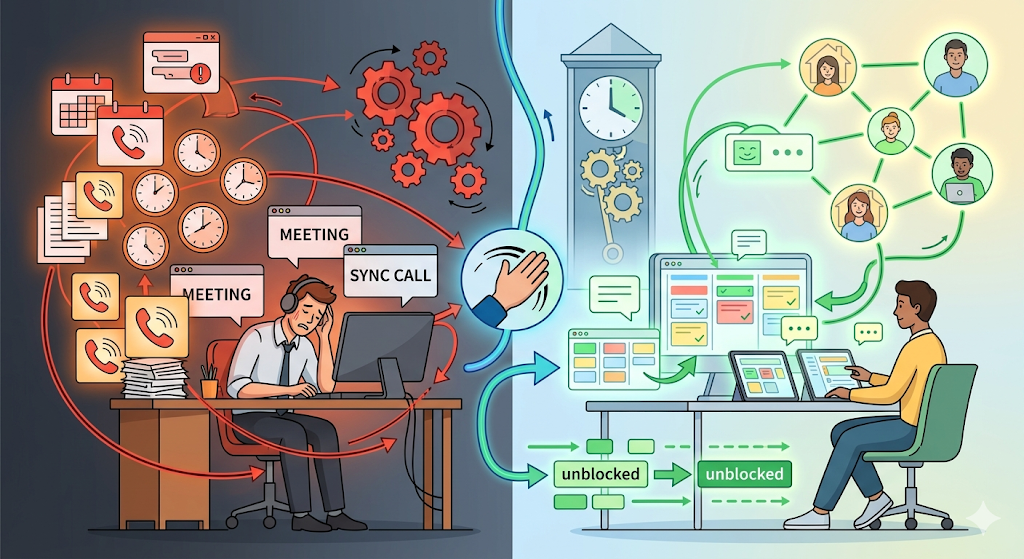
Asynchronous synchronization is a work methodology where communication and project progress occur without the need to coincide in real time. It eliminates “meetingitis” by centralizing progress in visual boards and contextual comments, returning hours of uninterrupted productivity to remote and hybrid teams.
In the era of remote and distributed work, the default response to any operational question has been to schedule a call. This culture of “meetingitis” (the excess of unproductive meetings) has become the greatest enemy of Deep Work and business productivity. Daily status meetings not only interrupt your team’s flow state but also represent a massive capital leak in wasted billable hours.
The Hidden Cost of Daily Status Meetings
Forcing a team of developers, creatives, or managers to stop their activities just to report progress that could have been summarized in a single line of text is a strategic mistake. In hybrid models, dependence on real-time synchronization creates bottlenecks: if a key person cannot attend the video call, the entire workflow stalls.
True operational agility is not achieved by talking more about the work, but by creating ecosystems where the work speaks for itself.
Strategies to Implement Asynchronous Synchronization with GGyess
GGyess is structurally designed to make status-update meetings obsolete. By centralizing operations, the platform allows teams to move forward at their own pace while leaders maintain full visibility.
To eradicate meetingitis, implement these actionable strategies within GGyess:
- Visual progress management (Kanban and Gantt): Transform verbal updates into visual movements. By using dynamic boards in GGyess, any team member or executive can see exactly which phase a task is in at a glance, eliminating the question “how are we doing with this?”
- Strictly contextual communication: Prohibit task updates through general chats or emails. Use the internal comments within each task in GGyess to request approvals, attach files, or resolve questions while keeping the context intact.
- Custom statuses and priority tags: Define clear approval workflows (e.g., “In Review,” “Approved by Client”). When a task changes status in GGyess, automatic notifications alert the next responsible person without the need for a follow-up message.
- Centralized documentation: Attach documents, links, and resources directly to the project card. If someone needs context, they will find it there, reducing the friction of having to repeatedly request access.
Comparison: Synchronous Management (Traditional) vs. Asynchronous Synchronization with GGyess
| Management Criteria | “Meetingitis” Culture (Synchronous) | Asynchronous Synchronization with GGyess |
|---|---|---|
| Progress Updates | Daily 45-minute meetings (“Daily Stand-ups”) that break concentration. | 24/7 visibility through Kanban boards and Gantt charts updated in real time. |
| Resolving Blockers | Teams wait for the next scheduled meeting to discuss and unblock a problem. | Direct mentions (@user) in the specific task for immediate response and resolution. |
| Time Management | Overloaded calendars, fragmented schedules, and low daily execution rates. | Protected time blocks for deep work; the team responds during their assigned time windows. |
| Decision Traceability | Verbal agreements that get lost without detailed meeting minutes. | Immutable history of comments, changes, and approvals automatically documented in the task. |
Benefits of Eliminating “Meetingitis” in Hybrid Environments
When you migrate your team management toward an asynchronous model with GGyess, the impact on profitability and workplace culture is immediate:
- Drastic performance increase: Up to 15 hours per week per employee are recovered, time that is now invested in strategic execution.
- Inclusion across multiple time zones: Global teams can collaborate without forcing anyone to connect at dawn; work progresses 24 hours a day.
- Reduction of mental exhaustion (Burnout): Eliminating video call fatigue (“Zoom fatigue”) exponentially improves morale and talent retention.
- Micro-management eliminated: Leaders move from being “task chasers” to true resource facilitators, trusting the data reflected in the platform.
Frequently Asked Questions About Asynchronous Synchronization
What is “meetingitis” and how does it affect business productivity?
“Meetingitis” is the toxic corporate tendency to schedule meetings to resolve matters that could have been solved asynchronously. It destroys productivity by fragmenting the workday, preventing deep work, and generating a high financial cost in wasted man-hours.
Is it possible to manage complex projects without daily status meetings?
Absolutely. The key is radical transparency of information. When a centralized platform reflects the status of every deliverable, responsible person, and deadline through Gantt or Kanban views, the need to verbally confirm status disappears completely.
How does GGyess facilitate the transition to asynchronous work?
GGyess acts as the single source of truth for your company. By unifying task assignment, file storage, and communication in one place, GGyess allows each team member to have all the context they need to execute their work autonomously, reporting progress with a simple click.
Meetings should be for making critical decisions, not for reading task lists.
Give your team back its most valuable resource: uninterrupted time. Visit ggyess.com, create your free account today, and transform the way your company collaborates—adopt true asynchronous synchronization and scale your operations without friction.