The most expensive resource in any organization isn’t software, office space, or even base salaries. It is the cognitive energy spent on deciding who should do what.
For decades, project management has relied on intuition, infinite spreadsheets, and reactive micro-management. The average manager spends up to 30% of their workday simply organizing the work of others rather than executing their own. This phenomenon, known as “the bureaucracy of the self,” is the primary killer of scalability.
However, we are entering an era where management is no longer a series of hallway conversations or email threads. Management has become a Natural Language Processing (NLP) problem. Today, a leader’s ability to automate their operation depends on their skill in writing intelligent prompts.
The Crisis of “Manual Assignment”
When a manager assigns a task manually, they face three invisible frictions:
- Availability Bias: We tend to assign tasks to the person who replied to the last message, not necessarily the most capable.
- Workload Opacity: It is mentally impossible to process the real-time workload of multiple people without making overloading errors.
- Instructional Ambiguity: Vague requests like “take care of this” generate unnecessary feedback loops that drain time.
The solution isn’t to “try harder,” but to delegate the logic of delegation to a system that doesn’t suffer from decision fatigue.
1. The Rise of the “Algorithmic Manager”
Automating task assignment isn’t about robots replacing humans; it’s about using Artificial Intelligence to process the complexity that the human brain cannot handle efficiently. To achieve this, the manager must stop being a taskmaster and become a Prompt Designer. An intelligent prompt is a structured instruction that allows an AI to understand context, team skills, and business priorities to execute logical actions.
The Formula for Delegation Efficiency
We can model the efficiency of an assigned task using the following mathematical relationship:
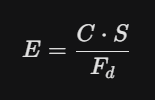
Where:
- E is the Efficiency of the output.
- C is the Clarity of the context (defined in the prompt).
- S is the Skill match.
- Fd is the Decision Friction (the time spent on assignment).
If your decision friction (Fd) is high because you are doing it manually, your efficiency (E) drops drastically, regardless of how good your team is.
2. Anatomy of an Intelligent Prompt for Task Assignment
Not all prompts are created equal. A mediocre prompt generates chaos; an intelligent prompt generates autonomy. To automate assignment, the system needs four critical components:
- A. Business Context (The “Why”): Is the task an “emergency” to be solved today or a strategic pillar for next quarter?
- B. Capability Mapping (The “Who”): Access to a tag database (e.g., John = Senior, Python, Backend).
- C. Load Parameters (The “When”): Instructions like: “Assign this to the person with the lowest occupancy rate over the next 48 hours.”
- D. Definition of Success (The “What”): Granular acceptance criteria.
3. Strategies to Automate Workflow
Strategy 1: Atomic Decomposition
An intelligent prompt takes an instruction like “Launch a landing page for Product X” and breaks it into 15 atomic tasks (copywriting, design, deployment, tracking).
| Traditional Method | Structured AI Method |
| Manager writes 15 tasks manually. | Manager writes one phrase; AI builds the board. |
| Manager hunts for who is free. | AI analyzes calendars and assigns by workload. |
| Team asks for clarification. | Prompt includes all necessary files and refs. |
Strategy 2: Predictive Role-Based Assignment
Instead of saying “Assign to Peter,” the prompt says: “Assign to the person with the [QA-Tester] tag who has the highest rating from previous projects for this client.” This eliminates favoritism and optimizes quality.
4. Overcoming “Manager’s Block”
Many leaders suffer from a specific block: they have so much to do that they end up doing simple operational tasks because their brain can no longer process the logistics of delegating complex ones.
“Delegating feels like extra work until you have a system that understands your intentions.”
A well-configured AI system can process thousands of variables (deadlines, time zones, dependencies) in milliseconds. What takes a human a 30-minute meeting takes an intelligent prompt 0.8 seconds.
5. The Logic of “Feedback Prompts”
Automation doesn’t end when the task is assigned. Intelligent prompts manage follow-ups autonomously:
- “If task X is not completed 4 hours before the deadline, notify the lead and find an available replacement.”
- “If output is marked as ‘rejected,’ automatically reassign to the Senior Designer for review.”
6. From Tool Chaos to Unified Execution
The current problem is that most managers try to apply this logic across fragmented tools—chat in one place, tasks in another, files in a third. Real power happens when the AI is embedded where your team, files, and communications live.
The Transition: Reality with GGyess
Everything we have discussed—reducing decision fatigue, using prompts to break down projects, and intelligent workload assignment—is the core of GGyess.
In a world where digital noise is deafening, GGyess was born to bring order to chaos. You no longer need to be a programming expert to automate your company; you just need to know what you want to achieve.
How GGyess applies these concepts:
- Instant Structuring AI: No more blank slates. Tell GGyess what you want to do, and our system creates the structure and assigns owners in seconds.
- Real Load Management: GGyess understands who is doing what. No more “status meetings” just to see if someone is overwhelmed.
- Intelligent Centralization: Because your projects, files, and team are in one place, the GGyess AI has the full context. Information is never lost between apps.
The future of management belongs to those who design better systems. By adopting prompt-driven automation and leaning on an ecosystem like GGyess, you stop being a bottleneck and become a catalyst.