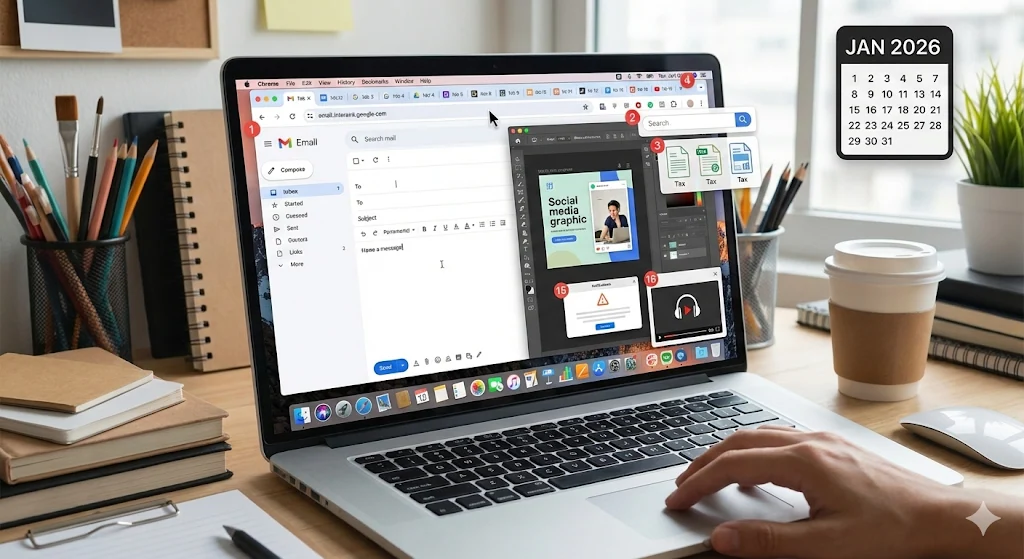

For the vast majority of professionals, the workweek does not feel like something they designed; it feels like something that happens to them. From the moment the alarm clock rings on Monday morning, they are thrust into a reactive posture. They open their email inbox to find other people’s priorities dictating their schedule, their calendars become fragmented with ad-hoc meetings, and their most critical projects are perpetually pushed to the margins of the day. This reactive cycle breeds a chronic sense of overwhelm, leading to the inescapable feeling that you are working harder than ever but making absolutely no meaningful progress.
Breaking free from this exhausting cycle requires a radical shift in perspective. You must transition from being a passive consumer of your own time to an active architect of it. The ultimate tool for this transformation is not a new organizational app or a complex time-management philosophy; it is a profound, foundational practice known as the Ideal Week Vision Exercise.
Designing your ideal week is the process of creating a visual, strategic blueprint for how you would spend your time if you had absolute control over your schedule. It acts as a master template, aligning your daily actions with your highest professional ambitions and your deepest personal values. In this comprehensive guide, we will explore the psychology of proactive time management, the essential components of a balanced schedule, and the exact, step-by-step exercise to draft an ideal week that fundamentally changes how you operate.
The Philosophy of the Ideal Week
Before diving into the mechanics of the exercise, it is crucial to understand the philosophy behind it. The ideal week is not meant to be a rigid, unforgiving prison. It is not an expectation of perfection. In the real world, client emergencies happen, software crashes, and urgent requests materialize out of thin air.
Instead, your ideal week is a compass. It represents your default state. When the inevitable chaos of the workday subsides, the ideal week tells you exactly where your attention should return.
Furthermore, this exercise forces you to confront the unyielding mathematics of time. There are exactly 168 hours in a week. When you begin to plot your responsibilities on a blank calendar grid, you quickly realize that you cannot do everything. If you want to allocate uninterrupted time to master complex UI/UX designs in Figma, you mathematically cannot also attend five hours of status meetings on the same day. The ideal week exercise forces you to make hard, strategic trade-offs before you are in the heat of the moment, ensuring that your time is spent on high-leverage activities that truly move the needle.
The Core Components of a Master Schedule
To design a week that sustains high performance without leading to burnout, you must intentionally balance different modes of work and rest. An effective ideal week typically consists of four distinct types of time blocks:
1. Deep Work Blocks
Deep work is the prolonged, uninterrupted, and highly focused effort required to push your cognitive capabilities to their limit. This is the “maker” time. Whether you are leveraging a Mac with an M-series chip to render heavy Adobe Creative Cloud files, analyzing market data to build a campaign targeting the lower-middle class demographic, or writing complex technical documentation, this work cannot be done in five-minute increments between emails. Deep work blocks should be treated as sacred and impenetrable.
2. Collaborative and Managerial Blocks
No professional operates in a vacuum. You need dedicated time to sync with your team, provide feedback, and strategize collaboratively. If you manage a dynamic creative team—coordinating the efforts of colleagues like Josué, Keila, Martín, and Brandon—you must batch this “manager” time. By consolidating your meetings and collaborative sessions into specific blocks, you protect the rest of your week from continuous interruptions.
3. Administrative and Shallow Work Blocks
Shallow work consists of the logistical tasks that keep the lights on: replying to emails, paying invoices, routing documents, and organizing files. These tasks are necessary but rarely generate massive value. The key is to heavily restrict the time allocated to shallow work. By confining administrative tasks to specific, limited blocks (e.g., 30 minutes at the start and end of the day), you prevent them from bleeding into your deep work time.
4. Rejuvenation and Personal Blocks
A sustainable week must account for your humanity. Burnout is the enemy of productivity, and rest is the premium fuel that drives creative output. Your ideal week must explicitly protect time for personal rejuvenation. This might mean blocking out Friday evenings to disconnect entirely and play a few hours on the Nintendo Switch, dedicating Saturday mornings to self-portrait photography with your Sony alpha camera, or ensuring you have a protected, uninterrupted block on Sunday to set up elaborate DIY party decorations for a family event. When you schedule your rest, you actually take it without guilt.
The Step-by-Step Vision Exercise
Now it is time to build your blueprint. Open a blank spreadsheet, take out a large sheet of paper, or use a digital calendar grid. You are going to map out Monday through Sunday, hour by hour.
Step 1: Anchor the Non-Negotiables
Do not start by scheduling your work; start by scheduling your life. Block out eight hours for sleep. Block out your morning routines, your exercise, your commute, and your protected family time. If you have a standing tradition of ordering a vegetable-based Veggy or Margarita pizza loaded with mushrooms, olives, and onions on Friday nights to decompress, block that time out. These are the fixed pillars around which everything else must adapt.
Step 2: Establish Your Deep Work Sanctuary
Identify your biological peak hours. Are you most sharp and creative at 8:00 AM, or do you hit your stride at 4:00 PM? Take your most critical, cognitively demanding tasks and place them directly into your peak biological windows. Aim for two to three hours of unbroken deep work per day.
Step 3: Batch Your Collaborative Chaos
Look at the spaces remaining in your workdays and designate specific windows for collaboration. For example, you might decide that Tuesdays and Thursdays between 1:00 PM and 4:00 PM are your designated windows for all team syncs, client calls, and project reviews. By grouping these together, you create vast, empty stretches on Monday and Wednesday for deep focus.
Step 4: Assign Administrative Boundaries
Sprinkle shallow work blocks strategically. Many highly effective professionals use a “bookend” strategy: they spend 30 minutes processing emails and organizing their day at 8:30 AM, and another 30 minutes at 4:30 PM to close loops and prepare for tomorrow. Outside of these blocks, the inbox remains closed.
Step 5: The Buffer Zones
The greatest mistake people make when designing an ideal week is packing every single minute tightly, creating a schedule that crumbles the moment a task takes ten minutes longer than expected. You must engineer “buffer zones” into your week. Leave a few hours completely blank on Wednesday afternoon or Friday morning. This buffer absorbs the shock of unexpected emergencies, overrunning meetings, or complex tasks that require extra attention.
Bridging the Gap: From Ideal to Reality
Once your ideal week is fully drafted, you will likely notice a significant, perhaps painful, gap between your beautiful new blueprint and the chaotic reality of your current calendar. Do not panic, and do not attempt to overhaul your entire life overnight.
The transition from a reactive week to your ideal week is a gradual, iterative process. Start small. For the first week, focus solely on protecting your newly established deep work blocks. Politely decline meetings that overlap with that sanctuary time. In the second week, begin aggressively batching your emails.
Use your ideal week as an active negotiation tool. When someone asks for an hour of your time on a Tuesday morning—a time you have designated for focused design work—you can confidently say, “My mornings are currently blocked for deep execution, but I have availability during my collaborative window on Thursday afternoon. Does that work for you?” Over time, your colleagues, clients, and team will naturally adapt to your newly established boundaries, and the gap between your reality and your vision will steadily close.
Executing Your Ideal Week with GGyess
Designing your ideal week is a transformative psychological exercise, but turning that vision into a sustainable, daily reality requires an uncompromising operational system. If you attempt to execute your meticulously planned week using a cluttered array of disconnected apps, the friction of context switching will rapidly pull you back into chaos.
To truly protect your time and execute your vision, you need a quiet, unified, and highly intelligent workspace. That is the exact philosophy behind the newly reimagined GGyess.
We understand that to achieve elite focus, you must eliminate the noise. That is why we have made a monumental update to our platform: we have entirely removed the fragmented SocialSuite and MasterSuite modules. GGyess is no longer a collection of distinct tools; it is one singular, incredibly powerful productivity workspace simply named GGyess. It provides everything you need to plan, organize, and deliver, replacing the need for multiple, scattered applications that drain your budget and attention.
At the center of your new workflow is WorkHub (the fully evolved successor to what was previously known as Planily). WorkHub acts as the visual command center for your ideal week. You can seamlessly map out your tasks and projects, switching instantly between intuitive Kanban, Gantt, Calendar, or Table views to perfectly align with how your brain processes your schedule. Because true productivity requires flexibility, we have officially removed the restrictive One-Thing mode, ensuring that you maintain absolute, fluid control over your daily execution.
To support the boundaries of your ideal week and keep you locked into your workflow, GGyess now introduces critical native features designed for the modern professional:
- Integrated Video Calls: Batch your collaborative blocks effortlessly. You can now host high-quality video syncs with your team directly within the platform, eliminating the friction of hunting for third-party links.
- Smart Appointments: Protect your deep work sanctuary. Our new native appointment system allows you to manage your calendar smoothly, ensuring meetings are only booked during your designated collaborative windows.
- Automated Reminders: Offload the anxiety of the ticking clock entirely. GGyess provides intelligent, automated reminders, carrying the cognitive load of tracking deadlines so your mind remains entirely focused on your deep work.
Furthermore, GGyess continues to leverage its built-in AI assistant to handle the administrative heavy lifting. You can type out a project brief in plain language, and the AI will instantly generate a complete, prioritized task structure, assigning roles and suggesting deadlines in seconds.
Your ideal week is not just a dream; it is a highly achievable operational standard. Stop letting your calendar dictate your life. Start for free today, and let GGyess be the ultimate engine that transforms your visionary blueprint into your daily reality.
Put your next project in motion.
Explore GGyess and find a place to organize the work with your team.
Explore GGyess ↗