In 2024, artificial intelligence (AI) has already transformed how we live, work, and communicate. From virtual assistants managing our daily tasks to advanced algorithms diagnosing diseases, AI is at the forefront of innovation. But if AI has achieved so much in under a decade, what will it be like by 2040?
This question invites imagination, prompting a projection into a future not far away where AI won’t just be a powerful tool, but an omnipresent force reshaping the very foundations of society. In this blog, we’ll explore the potential advancements, challenges, and ethical dilemmas we’ll face as AI reaches new levels of maturity by 2040.
AI in 2040: What Can We Expect?
The evolution of AI by 2040 promises a quantum leap in processing power and the range of applications it can tackle. Much like the predictions surrounding the impact of the internet in the 1990s, our current expectations may seem conservative compared to what will actually unfold. However, based on current trends and expert insights, we can glimpse some of the most probable developments:
1. Artificial General Intelligence (AGI): Superintelligence on the Horizon
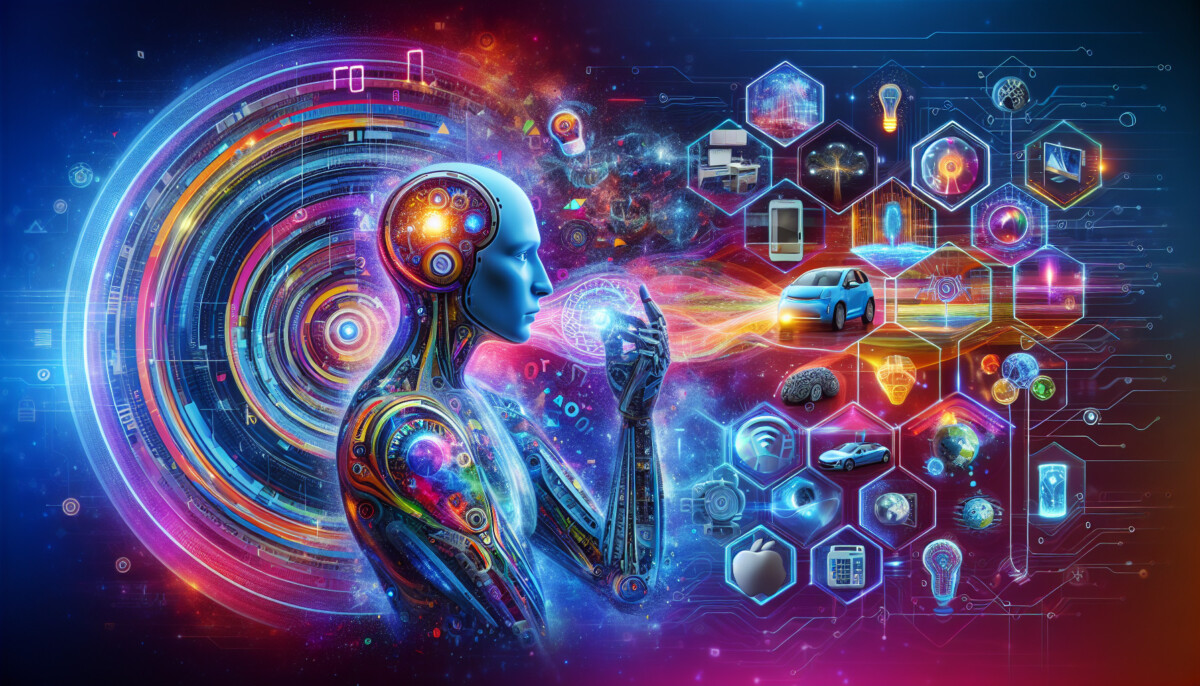
The concept of Artificial General Intelligence (AGI)—an AI capable of performing any cognitive task that a human can—is the Holy Grail of AI development. By 2040, we are likely to be much closer to achieving this. AI systems will no longer be limited to specific tasks or isolated contexts but will be able to adapt and learn much like humans.
This advancement will not only lead to greater efficiency across all sectors but also fundamentally change how we interact with technology. Machines capable of reasoning, understanding context, and autonomously learning will become partners in decision-making processes in businesses, medicine, and governance.
2. The End of Work as We Know It

In his famous book Rise of the Robots, Martin Ford predicted that automation and AI would eliminate many jobs, particularly in sectors like transportation, manufacturing, and retail. While we’re already seeing a trend toward automation, by 2040, advances in AI could lead to the majority of manual, administrative, and even creative tasks being performed by machines.
This raises important questions: How will the workforce adapt? Will there be enough jobs in non-automated sectors to sustain the economy? One possible answer is the implementation of Universal Basic Income (UBI), a measure that some governments are already exploring as a way to counteract mass unemployment caused by automation.
3. Extreme Personalization: AI and the Individualization of Experience
By 2040, AI will have a much deeper understanding of each individual. Through massive data collection and predictive analytics, AI systems will be able to anticipate our needs and desires before we even recognize them ourselves. From personalized healthcare to entertainment recommendations and adaptive education, AI will be behind every aspect of our lives, offering solutions perfectly tailored to our preferences.
We’re already seeing the beginnings of this personalization in services like Netflix, Amazon, and Spotify, but by 2040, AI will create experiences so precise they will feel as if they were designed just for us. While this level of individualization could enhance quality of life, it also raises concerns about privacy and the possibility of living in highly controlled information bubbles.
4. AI Ethics: Are We Ready to Face It?
The march toward more powerful and autonomous AI brings with it complex ethical and philosophical questions. In his work Superintelligence, Nick Bostrom discusses the inherent risks of developing AI that could surpass human capabilities. An AI that evolves beyond our control poses existential questions: How do we ensure AI remains aligned with human interests? What rights, if any, will artificial beings have? Can we trust AI to make critical decisions on our behalf?
By 2040, ethical algorithms will be crucial to ensuring that AI-driven decisions benefit society as a whole. But this is an emerging field, and the challenge of balancing AI autonomy with human values will be one of the great debates of the next two decades.
5. Human-AI Integration: Expanding Human Intelligence

One of the most exciting areas of AI development over the coming decades is the possibility of merging human intelligence with AI. With technologies like neural implants, brain-computer interfaces, and advanced bionic prosthetics, humans in 2040 may not just coexist with AI but also integrate with it.
Companies like Neuralink, founded by Elon Musk, are already exploring the possibility of enhancing the human brain with implants that allow direct connection to AI systems. This could lead to a world where the barriers between humans and machines blur, creating superhumans capable of accessing vast amounts of information and enhancing cognitive abilities to levels previously unimaginable.
Challenges and Dilemmas: The Flip Side of the Coin

With all these advancements, significant challenges also emerge. One of the biggest will be managing technological inequality. If only a portion of the population has access to cognitive enhancements via AI, the gap between the wealthy and the poor will widen even further. This is a dilemma humanity will need to face urgently.
Moreover, AI dependence brings risks. What happens if our most critical systems become so reliant on AI that, in the event of a failure, everything collapses? As Mary Shelley warned in Frankenstein, our technological creations, if not handled carefully, could turn against us.
Where Are We Headed? AI as the Catalyst of the Future
If there’s one certainty about AI in 2040, it’s that it will continue to challenge our notions of what it means to be human. Much like electricity, the automobile, or the internet, AI will be one of those technologies that forever changes the very fabric of society.
Some envision a future where AI liberates humanity from monotonous work, improves health, and creates a more efficient world. Others fear a future where AI exacerbates inequalities and dehumanizes certain aspects of life. The reality, as always, will likely fall somewhere in between.
You might be interested in
AI-Centered Customer Service: Transforming the User Experience
In any case, the journey to 2040 will be one filled with challenges, breakthroughs, and critical decisions that will shape the future of AI and its role in our lives. As French philosopher Jean-Paul Sartre once said, “Man is condemned to be free.” And in this freedom, we must decide how to handle the immense responsibility of creating and managing artificial intelligence that may one day surpass our own.
Prepare for the era of “Mind2.” Experts predict that by 2040, we will transition from individual insights to a “collective shared brain” powered by AI. Use GGyess SocialSuite to start building your brand’s digital footprint now, creating the high-quality data and community trust that will define your influence in a future of interconnected human-AI intelligence. Future-proof your brand at GGyess.com